
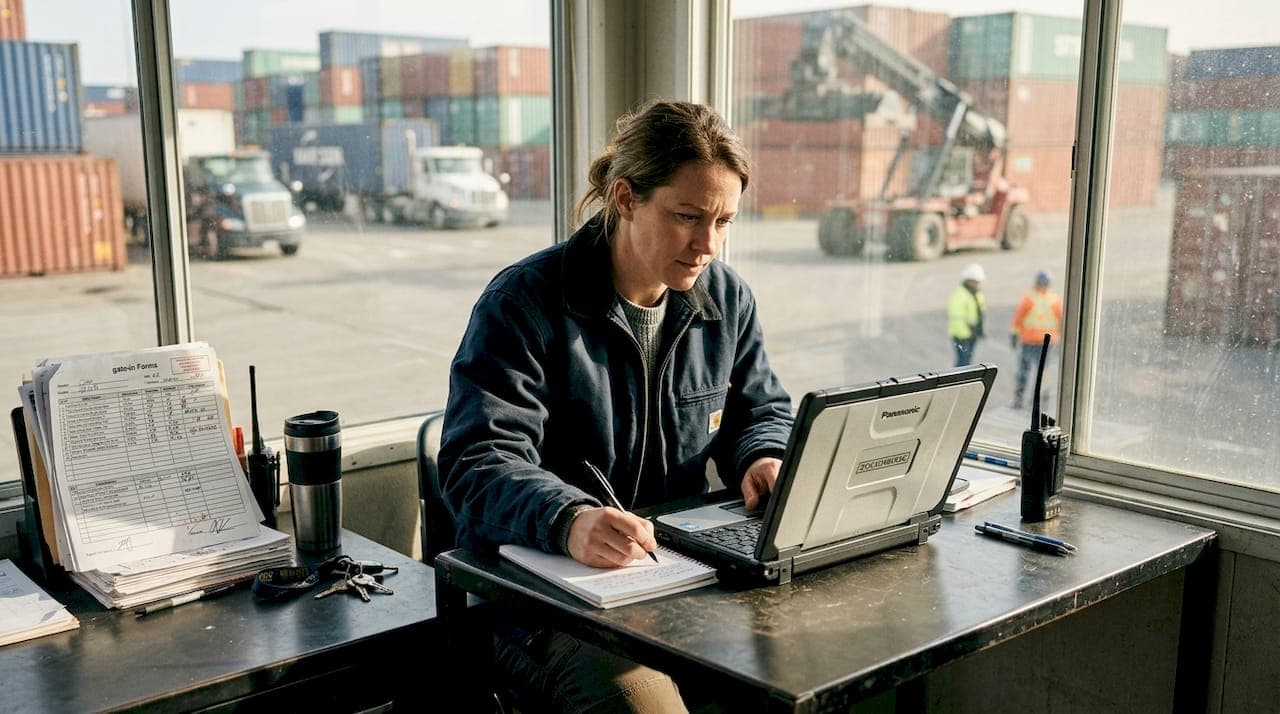
Lost inventory, missed dispatch windows, and trucks idling for 30 minutes while your team scrambles to locate a container — these aren’t minor inconveniences. They’re profit killers. For business owners and project managers running commercial operations, an inefficient shipping container storage workflow can cascade into costly delays, damaged goods, and frustrated clients. The good news: a structured, step-by-step approach to container management can cut turnaround times dramatically, reduce reshuffles, and keep your yard running like a well-oiled machine. This guide walks you through every stage, from gate-in to gate-out, with the tools, benchmarks, and best practices you need.
Table of Contents
-
Step-by-step guide: Executing an efficient container workflow
-
Our perspective: Sustainability and smarter trade-offs for modern depots
Key Takeaways
| Point | Details |
|---|---|
| Clear workflow stages | Every step from gate-in to dispatch impacts overall efficiency and cost. |
| Right tools and prep | Proper equipment and site readiness lay the groundwork for safe container handling. |
| Avoid common errors | Mistakes like poor packing and missing weight checks cause most issues and delays. |
| Monitor benchmarks | Keep dwell time under 15 days and truck turnaround at 6–12 minutes for best results. |
| Invest in sustainability | LED lighting and electric assets reduce operating costs long term. |
Understanding the shipping container storage workflow
Before you can fix a broken workflow, you need to see the whole picture. A shipping container storage workflow in a commercial yard or depot typically moves through five distinct stages: gate-in processing, yard placement and stacking, inventory tracking, maintenance and repairs, and gate-out dispatch. Each stage has a direct impact on your cost per move and your clients’ satisfaction.
Gate-in is where everything starts. Containers arrive, get inspected, and are assigned a yard slot. Slow gate-in processing creates a bottleneck that ripples through every stage downstream. Yard placement determines how easy or hard it will be to retrieve a container later. Poor placement means more reshuffles, which means more crane time and higher labor costs. Inventory tracking keeps you from losing containers in plain sight. Maintenance ensures containers stay cargo-worthy and compliant. Gate-out is the finish line — and your truck turnaround time here is one of the clearest indicators of overall workflow health.
Here’s a quick look at key operational benchmarks you should be targeting:
| Metric | Target benchmark |
|---|---|
| Container dwell time | Less than 15 days |
| Truck turnaround time | 6 to 12 minutes |
| Crane productivity | 25 to 35 moves per hour |
| Slot utilization boost | 10% increase cuts waits by 15% |
These numbers aren’t aspirational. They’re achievable with optimized storage processes and the right operational discipline. The yards that consistently hit these benchmarks share one thing in common: they treat each stage as a connected system, not a series of isolated tasks.
Key workflow principles that separate high-performing yards from struggling ones:
-
Assign every container a designated slot at gate-in, not after the truck leaves
-
Use a digital yard management system to track container positions in real time
-
Set dwell time alerts so long-sitting containers get flagged before they become problems
-
Schedule maintenance windows during low-traffic periods to avoid disrupting dispatch
-
Build gate-out confirmation steps into your process to prevent documentation errors
Think of your yard as a living inventory system. Every container that enters without a clear plan adds friction to every container that comes after it.
Essential tools, prep steps, and site requirements
A great workflow on paper falls apart without the right physical setup. Before your first container arrives, you need to make sure your site and your team are ready to handle volume safely and efficiently.
Safe container stacking requires level ground, proper lifting equipment, and the right securing hardware. Stacks can reach 7 to 9 containers high when done correctly, but that height demands precision at every level. One misaligned stack creates a safety hazard and a logistical headache.
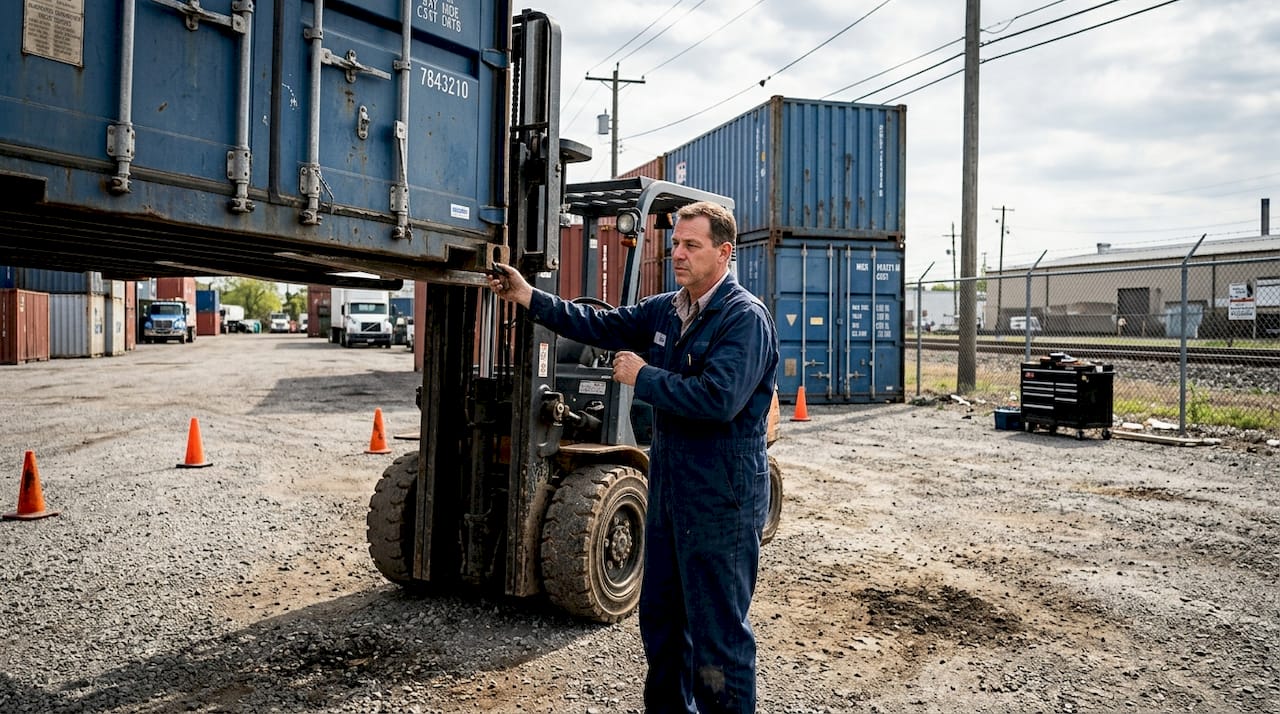
Here’s a comparison of the primary lifting equipment options for container yards:
| Equipment type | Best use case | Typical stack height |
|---|---|---|
| Reach stacker | Mid-size yards, flexible ops | Up to 5 high |
| Rubber-tired gantry crane | High-volume, dense yards | Up to 7 high |
| Rail-mounted gantry crane | Large terminal operations | Up to 9 high |
| Forklift with spreader | Small yards, low volume | Up to 3 high |
Beyond equipment, your site prep checklist should cover:
-
Level ground: Uneven surfaces cause container lean, which increases tipping risk and makes stacking unreliable
-
Slot planning: Map your yard into clearly marked rows and bays before containers arrive
-
Twist locks and corner cones: These are non-negotiable for any stack above two containers
-
Drainage: Standing water under containers accelerates corrosion and creates unsafe ground conditions
-
Lighting: Adequate lighting for night operations reduces accidents and speeds up gate processing
Staff training is equally critical. Equipment operators need certification, but your gate staff and yard coordinators also need to understand the slot plan and the tracking system. A well-trained team moves faster and makes fewer errors.
Pro Tip: Document every container’s weight and dimensions at gate-in. Overloaded stacks are a leading cause of equipment damage and overload fines, which can exceed $10,000 per incident. Getting this right upfront saves you far more than the time it takes.
If you’re sourcing containers for your yard, shipping containers for sale from a reliable supplier come with verified specs, making this documentation step much faster.
Step-by-step guide: Executing an efficient container workflow
With your site prepped and your team trained, here’s how to move containers through each stage without losing time or money.
-
Gate-in processing: Inspect the container on arrival, photograph any existing damage, record the container number, ISO type, and gross weight, then assign a yard slot immediately. Don’t let trucks wait while you figure out placement.
-
Yard placement and stacking: Place containers according to your slot plan. Use FIFO and clustering to group containers by dispatch date and destination. This minimizes reshuffles when retrieval time comes. Containers due out soonest go on top or in accessible positions.
-
Inventory tracking: Update your yard management system immediately after every move. Real-time tracking prevents the most common and embarrassing problem in container yards: not knowing where a container is.
-
Maintenance and repairs: Inspect containers during dwell time, not at gate-out. Schedule repairs proactively. A container flagged as damaged at gate-out creates delays, disputes, and sometimes lost business.
-
Gate-out dispatch: Confirm the container number, check documentation, verify the truck’s authorization, and release. Your target is a truck turnaround of 6 to 12 minutes. Anything longer signals a process gap.
Safety warning: Always verify weight distribution before stacking. An unevenly loaded container placed high in a stack can shift during crane operations, creating serious risk for operators and equipment.
The FIFO principle deserves extra attention. First-in, first-out isn’t just a best practice for non-fee storage periods. It’s a discipline that keeps your yard from becoming a puzzle where every retrieval requires moving three other containers first. Clustering by destination adds another layer of efficiency, cutting crane moves significantly on busy dispatch days.
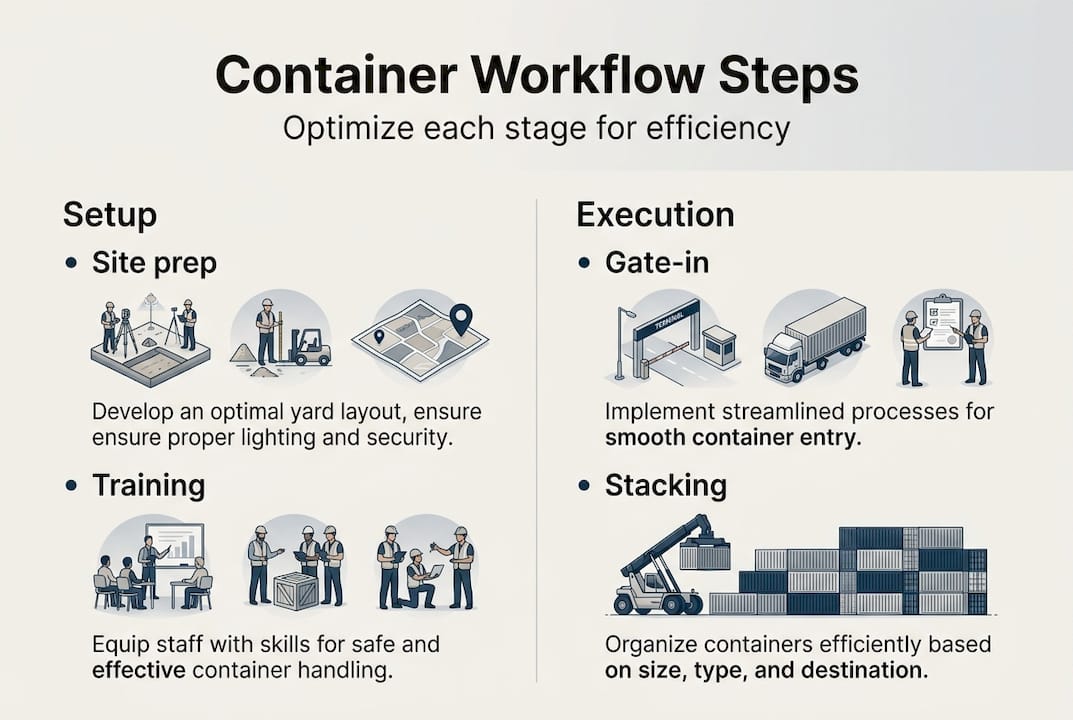
Pro Tip: A 10% increase in slot utilization can cut truck wait times by 15%. Review your slot plan monthly and adjust for seasonal volume changes. Small adjustments to your container workflow steps compound into big time savings over a quarter.
Troubleshooting, edge cases, and common mistakes
Even a well-designed workflow will hit unexpected situations. Knowing how to handle them before they happen is what separates a resilient operation from a reactive one.
Reefer containers require continuous power monitoring. If your yard handles refrigerated units, you need dedicated power points, temperature logging, and a clear escalation process for power failures. A missed alarm on a reefer can mean total cargo loss.
Hazardous materials require strict segregation from standard containers. Check your local regulations and the container’s IMDG classification before placement. Mixing hazmat with general cargo in adjacent slots is a compliance violation and a safety risk.
Unexpected weight issues are more common than most managers expect. Poor packing causes 70% of cargo damage, and weight uncertainty leads directly to reshuffles when stacks need to be reconfigured for safety. Verifying weights at gate-in is your first line of defense.
Research shows that weight variance reduction using verified weight systems cuts variance by 78%, and 65 to 70% of cargo damage traces back to improper loading. These aren’t edge-case statistics. They describe what happens in yards that skip verification steps.
Common mistakes that cost yards time and money:
-
Skipping the slot plan and placing containers wherever there’s space
-
Failing to update the tracking system after every move
-
Ignoring maintenance during dwell time and discovering damage at gate-out
-
Stacking without verifying twist lock engagement
-
Not training gate staff on documentation requirements
For multi-stop shipments, sequencing matters. Load containers in reverse order of delivery stops so the first delivery is the last loaded. This sounds obvious, but it’s frequently overlooked and leads to costly unloading and reloading at intermediate stops.
The fix for most of these mistakes is the same: build checklists into every stage. Checklists don’t slow operations down. They prevent the expensive rework that does.
Our perspective: Sustainability and smarter trade-offs for modern depots
Here’s what most workflow guides won’t tell you: obsessing over slot density can actually hurt your operation. Managers who pack their yards to maximum capacity often create a situation where every retrieval requires multiple reshuffles. The math looks good on paper until you calculate the crane hours burned on moves that add zero value.
The smarter trade-off is intentional underutilization. Keeping 10 to 15% of slots open as buffer capacity gives your team flexibility and cuts rehandle rates significantly. It feels counterintuitive, but it’s one of the highest-return decisions a yard manager can make.
On the sustainability side, LED lighting and electric movers can cut operating costs by more than 30%. That’s not a marginal gain. For a mid-size yard running 24 hours, that’s a material budget impact within the first year. Electric reach stackers also reduce noise and emissions, which matters increasingly for yards near residential or commercial zones.
Weight verification deserves its own emphasis here. Overload fines exceed $10,000 per incident, and they’re entirely preventable. Investing in a verified weighing process at gate-in pays for itself the first time it catches an overloaded container. Explore sustainable container storage practices that combine cost savings with operational resilience.
Partner with America Conex for container storage solutions
If you’re ready to put this workflow into action, having the right containers is the foundation everything else is built on.
America Conex supplies new and used shipping containers nationwide, with access to 30+ depots for fast, reliable delivery wherever your project is located. Whether you need used wind and water tight units, one-trip containers in like-new condition, or standard and high cube options in 20ft and 40ft sizes, we have inventory that fits your workflow requirements. Our team provides transparent pricing and verified container specs so your gate-in documentation starts right. Browse shipping containers for your project and get a quote today. We make the sourcing side simple so you can focus on running an efficient, profitable operation.
Frequently asked questions
What is the typical dwell time for containers in an optimized yard?
Most efficient yards achieve container dwell times of less than 15 days, which keeps storage costs low and yard capacity available for incoming units.
How can I safely stack shipping containers in my yard?
Prepare a level surface, use cranes or reach stackers with twist locks and corner cones, and limit safe stacking height to 7 to 9 containers depending on your equipment and ground conditions.
What are common mistakes in shipping container storage workflows?
Skipping weight verification and ignoring slot plans are the most costly errors; 65 to 70% of cargo damage traces back to improper loading and poor packing practices.
How do sustainable practices impact storage yard costs?
Switching to LED lighting and electric conveyance equipment can reduce operating costs by more than 30%, making sustainability a direct financial advantage for yard operators.