
TL;DR:
- Choosing the right storage requires understanding specific threats and asset protection needs.
- Certified safes and containers with verified fire, water, and tamper resistance offer better security.
- Layered defenses, regular audits, and verified certifications improve overall storage security.
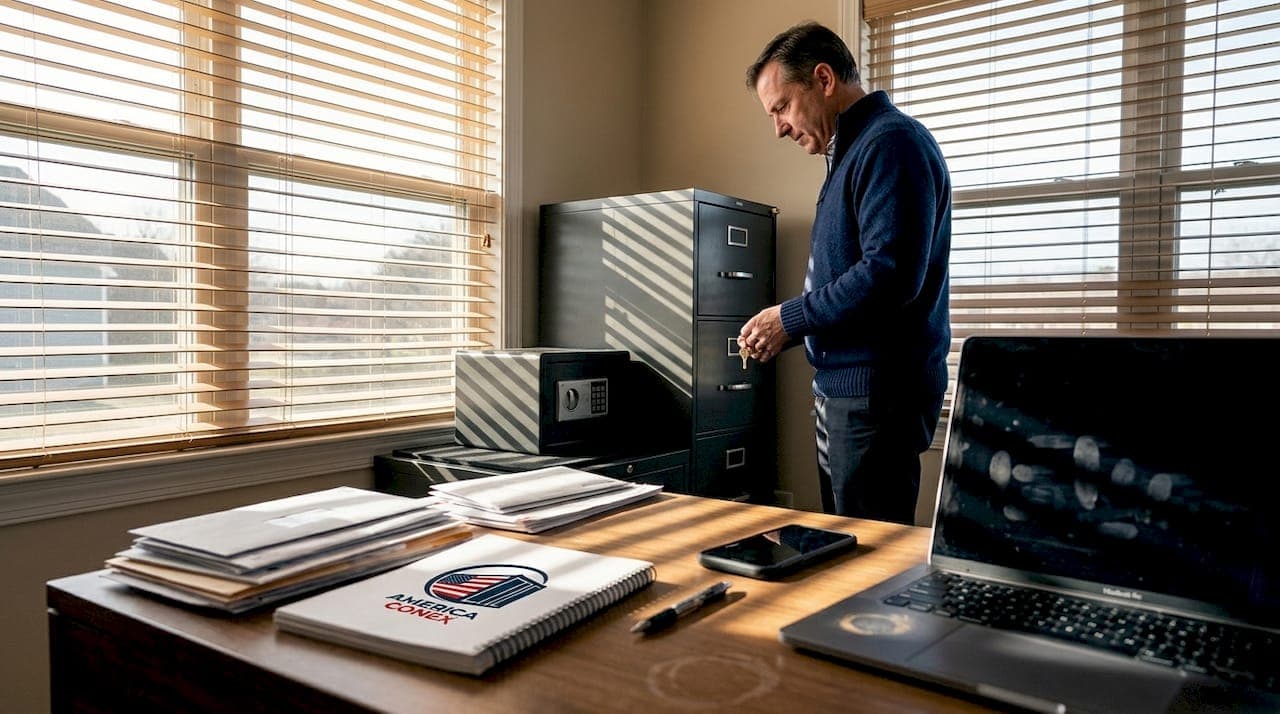
Choosing the wrong storage solution can cost you far more than the price of a better one. Most people pick a safe, container, or facility based on price alone, without thinking about the specific threats they face: theft, fire, water damage, or tampering. Losses from inadequate storage hit both homeowners and businesses every year, and the risks are growing. This article walks you through a clear framework for evaluating your options, then breaks down the best solutions for residential, commercial, jobsite, and international shipping needs so you can make a confident, informed decision.
Table of Contents
- How to evaluate secure storage solutions
- Best home safe solutions
- Secure jobsite and commercial storage
- Secure storage for international shipping and logistics
- How self-storage facilities rank for security
- Why security claims don't always match real-world results
- Get secure storage shipped quickly to your location
- Frequently asked questions
Key Takeaways
| Point | Details |
|---|---|
| Match storage to risk | Select storage based on threats like fire, theft, or tampering, not just convenience. |
| Certifications matter | Look for UL, ETL, ISO, and CSC standards to ensure tested resistance and safety. |
| Upgrade locks and alerts | Smart locks, biometric entry, and tamper seals boost protection where theft risk is high. |
| Independent reviews reveal gaps | Real-world tests and user feedback often show weaknesses manufacturers don’t advertise. |
How to evaluate secure storage solutions
Before you compare products, you need to know what you're protecting and from what. A homeowner storing financial documents has different needs than a contractor storing $80,000 worth of tools overnight.
Start by defining your assets. Are you protecting physical valuables, sensitive documents, digital equipment, or bulk inventory? The answer shapes every decision that follows. Then identify your threat profile. Theft, fire, flooding, and unauthorized access each require different defenses, and not every product addresses all four equally.
Here's a practical framework to guide your evaluation:
- Physical construction: Look at steel gauge thickness, reinforced door frames, and whether the unit resists prying or cutting. Thicker steel costs more but deters casual and motivated thieves alike.
- Fire and water ratings: Certifications from UL (Underwriters Laboratories) or ETL (Intertek) tell you how long a unit survives specific temperatures and water exposure. A "fire resistant" label without a certification number is marketing, not protection.
- Locking mechanisms: Standard key locks are the baseline. Biometric scanners, combination dials, and smart connected locks each add layers. Smart locks with geofencing or remote alerts are increasingly popular for commercial use.
- Industry certifications: For safes, look for UL or ETL fire and water ratings. For shipping containers, CSC (Container Safety Convention) and ISO 1496-1 structural certifications matter. For seals, ISO 17712 is the international benchmark.
- Backup access: Every high-tech lock needs a manual fallback. Biometric safes should include a physical key override. Smart locks should have a PIN or app backup.
Pro Tip: Always ask vendors about backup entry options before you buy. A biometric safe with no key backup can lock you out permanently if the battery dies or the scanner malfunctions.
"The question isn't just 'is this secure?' It's 'secure against what, for how long, and verified by whom?'"
Jobsite storage containers are particularly vulnerable and drive major annual losses across the construction industry. Reviewing secure container options alongside traditional safes gives you a fuller picture of what's available. For residential buyers, exploring home safe features from tested models is a smart starting point.
Best home safe solutions
With your criteria in mind, let's look at what the residential safe market actually delivers.
The best home safes combine thick steel bodies with independently certified fire and water resistance. Here's what separates a solid safe from a false sense of security:
- Steel thickness: Look for 12-gauge or heavier steel on the body and door. Thinner steel bends under pry attacks.
- Fire rating: A genuine fire-rated safe should carry an ETL or UL certification showing it survived at least 1,700°F for a minimum of one hour. Two-hour ratings offer more margin.
- Waterproofing: ETL-verified water resistance means the interior stayed dry during a standardized flood test. Not all "waterproof" claims are tested.
- Anti-pry latches: Multiple locking bolts on all four sides of the door resist crowbar attacks far better than single-point locking.
- Smart features: WiFi-enabled models send alerts to your phone when the safe is opened or tampered with. Biometric models can store up to 80 fingerprints, allowing access for multiple trusted users.
The SentrySafe SFW123GDC survived 1,700°F for nearly 2 hours and outperformed competitors in break-in resistance during independent testing. Vaultek's lineup adds Bluetooth connectivity and impact sensors. Both brands consistently lead expert rankings for home use.
One important limitation: smart features require reliable power. A dead battery or WiFi outage disables alerts and, in some models, the primary lock. Always confirm your model has a physical key override.
Pro Tip: Only ETL-verified models offer true, tested fire and water resilience. A safe labeled "fire resistant" without a certification number has not been independently validated.
For buyers who need more capacity than a traditional safe provides, additional safe storage solutions like personal shipping containers can bridge the gap between a home safe and a full storage unit. You can also review SentrySafe SFW123GDC details directly to compare specs before purchasing.
Secure jobsite and commercial storage
Homes aren't the only targets. Construction and commercial sites face unique and costly storage risks.
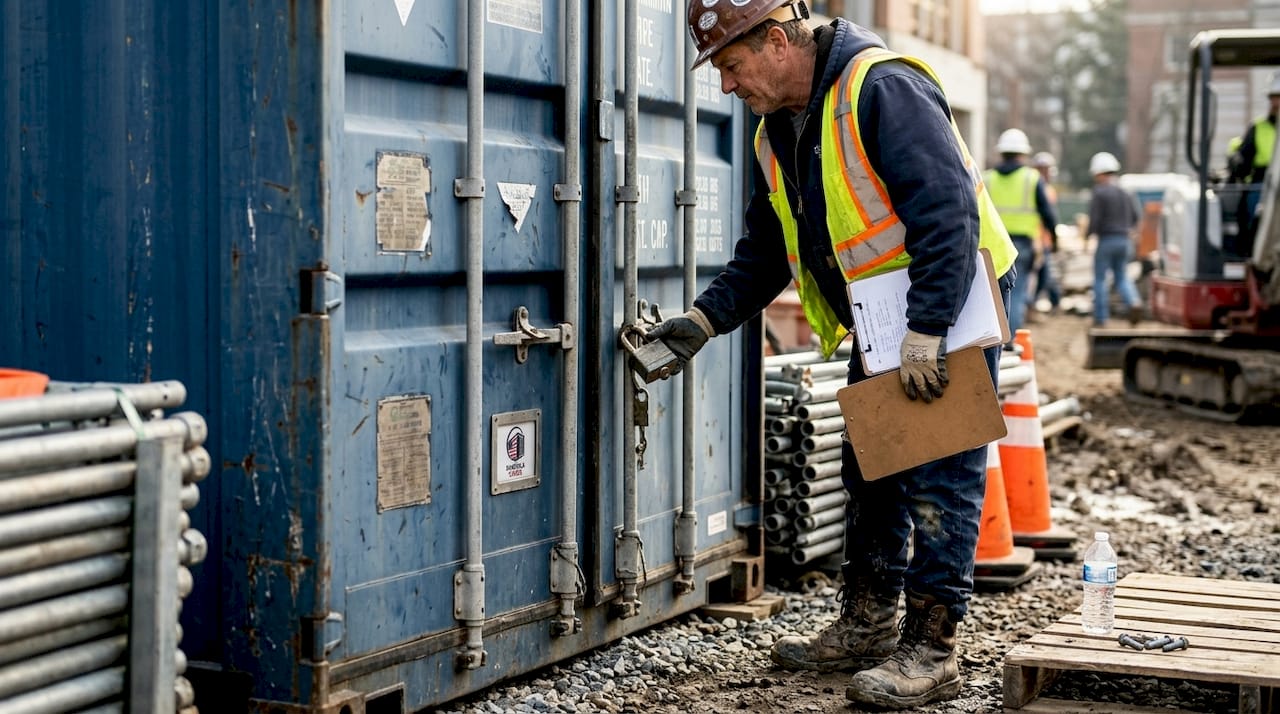
Contractors lose equipment at an alarming rate. US construction theft totals $300M to $1B per year with a recovery rate below 25%. That means most stolen tools and materials are gone for good. Portable jobsite containers are frequent targets because they're often left unattended overnight in accessible locations.
Key features to prioritize for jobsite and commercial storage:
- Rugged steel construction: Heavy-gauge steel resists cutting and prying under real-world conditions.
- Industrial lockboxes: Standard padlocks are easy targets. Industrial lockboxes shroud the shackle, making bolt cutters ineffective.
- Certified tamper seals: ISO 17712 high-security seals provide a verifiable record of whether a container has been accessed without authorization.
- Smart and geofencing locks: GPS-enabled locks that alert you when a container moves outside a defined zone cut theft risk significantly.
| Feature | Standard padlock | Industrial lockbox | Smart/geofencing lock |
|---|---|---|---|
| Bolt cutter resistance | Low | High | High |
| Tamper alert | None | None | Instant |
| Remote access control | No | No | Yes |
| Cost range | $10-$40 | $60-$150 | $150-$400 |
Pro Tip: Upgrade standard padlocks to industrial lockboxes with tamper-evident seals as a first step. It's a low-cost upgrade that removes the most common vulnerability on any jobsite.
For businesses that need a scalable, durable solution, secure jobsite containers offer steel construction and customizable locking options that outperform most portable storage alternatives.
Secure storage for international shipping and logistics
If your storage needs go beyond the U.S., international shipping containers bring added layers of protection.
International cargo faces a different threat landscape: organized theft rings, port-side tampering, customs inspections, and weather exposure across multiple climate zones. The standards that govern shipping containers exist specifically to address these risks.
International shipping containers are certified under CSC and ISO standards, using high-security ISO 17712 seals to verify container integrity from origin to destination. These seals come in three grades: indicative, security, and high-security, each rated for a different level of tamper resistance.
| Container grade | Certification | Seal type | Tamper resistance |
|---|---|---|---|
| Standard used | None required | Indicative | Low |
| Cargo worthy | ISO 1496-1 | Security | Medium |
| One-trip | CSC + ISO 1496-1 | High-security (ISO 17712) | High |
Here's a numbered checklist for enhanced shipping security:
- Verify the container's CSC safety approval plate before loading.
- Apply ISO 17712-certified high-security seals at the point of origin.
- Document seal numbers in your shipping paperwork.
- Inspect seals at every transfer point and note any discrepancies.
- Use cargo-worthy or one-trip containers for high-value shipments.
"Certified containers with high-security seals reduce tampering incidents dramatically compared to uncertified portable units."
US shipping container standards under federal code provide the legal framework for container safety in commerce. Buyers looking for CSC-certified containers for export or domestic logistics can find options that meet these standards without compromising on delivery speed.
How self-storage facilities rank for security
Beyond owned or rented containers, many rely on self-storage facilities. Here's how they actually perform.
Self-storage facilities market themselves on security features: electronic gate access, 24/7 video surveillance, on-site managers, and individually alarmed units. On paper, that sounds solid. In practice, results vary.
Key security features commonly offered:
- Electronic keypad gate access
- Individual unit alarms
- CCTV cameras at entry and exit points
- On-site staff during business hours
- Climate-controlled units for sensitive items
Self-storage facilities offer alarmed units and electronic gates, but customer reviews reveal maintenance gaps and reported break-ins at some locations. Alarms that aren't monitored in real time offer limited deterrence. Cameras that aren't reviewed regularly don't prevent theft, they document it after the fact.
"The alarm went off, but no one responded for over an hour. By then, everything was gone." This type of account appears repeatedly in self-storage customer reviews, pointing to a gap between advertised and actual response.
The most significant limitation is inside access. Staff and other tenants can observe your unit, your schedule, and your habits. That's a vulnerability no alarm system fully addresses.
For anyone storing high-value or sensitive items long-term, the case to upgrade to personal containers is strong. You control access, placement, and security upgrades entirely.
Why security claims don't always match real-world results
After reviewing all these options, one pattern stands out: the gap between what security products promise and what they actually deliver under real conditions.
Manufacturers often overstate the effectiveness of rugged steel and alarms while real-world break-ins expose limits that lab tests don't capture. A safe rated for 1,700°F assumes a specific fire duration and heat distribution. An alarm assumes someone responds. A certified seal assumes it's inspected at every transfer point.
The lesson isn't that these products fail. Most perform well under normal conditions. The lesson is that no single feature is enough. Backup access matters. Independent certifications matter more than marketing copy. Smart upgrades like geofencing reduce theft risk meaningfully, but they require reliable power and connectivity to work.
"The best safe is only as good as its weakest point, be it the lock, the wall, or the owner's oversight."
What savvy buyers do differently is layer their defenses and audit them regularly. They test backup entry methods before they need them. They verify certifications rather than trusting labels. They re-evaluate their storage setup when their assets or circumstances change. Exploring practical secure storage options that combine physical strength with verifiable certifications puts you ahead of most buyers.
Get secure storage shipped quickly to your location
If this breakdown has helped you clarify what you actually need, the next step is finding a solution that delivers on those requirements without a long wait or complicated process.
At America Conex, we supply new and used shipping containers for home storage, commercial use, jobsite security, and international logistics. With 30+ depot locations nationwide, we deliver fast and price competitively regardless of where you're located. Our affordable secure containers include WWT units, one-trip containers, and cargo-worthy options in 20ft and 40ft sizes, all available with high-security locking upgrades. Get in touch to find the right container for your needs.
Frequently asked questions
What is the most secure type of storage for valuables at home?
SentrySafe and Vaultek offer advanced steel construction and biometrics, making ETL-certified home safes the strongest option for protecting valuables against fire, water, and break-ins.
How can I protect tools and equipment at a jobsite?
Use industrial containers with high-security locks, tamper-evident seals, and smart technology. High-security seals and smart locks can cut theft risk by up to 40% compared to standard padlocks.
Are self-storage facilities safe for sensitive items?
Self-storage security varies widely. Self-storage facilities have alarmed units but mixed real-world results, and inside access remains a risk that alarms alone cannot eliminate.
What standards make shipping containers secure for international transit?
International containers use certified safety plates and ISO 17712 high-security seals, ensuring compliance with CSC and ISO standards that verify structural integrity and tamper resistance throughout the shipping chain.