

TL;DR:
- Choosing the correct shipping or storage container size is essential to avoid costly mistakes and operational inefficiencies.
- Accurately measuring your inventory, considering future growth, and evaluating site constraints ensure a fitting, cost-effective choice.
Getting the wrong container size is one of the most expensive mistakes you can make when planning storage or a shipping move. Whether you're relocating inventory, clearing out a property, or managing a job site, knowing how to choose container size upfront saves you from ordering twice, paying for space you'll never use, or cramming goods into a unit that barely closes. This guide walks you through every factor that matters: what you're storing, how to measure it accurately, which sizes fit which needs, site constraints, and how to make a smart financial call between new and used units.
Table of Contents
- Key takeaways
- How to choose container size: start by assessing what you need
- Understanding your container size options
- Site and delivery constraints that affect your choice
- Budget, condition, and the case for sizing up
- Finalizing your decision with practical checks
- My honest take on choosing container size
- Get the right container size with Americaconex
- FAQ
Key takeaways
| Point | Details |
|---|---|
| Measure before you order | Calculate your total cubic footage and add 15-20% buffer space for access and future needs. |
| Know the standard sizes | The 10ft, 20ft, and 40ft are the most common options, each suited to different volume and use-case needs. |
| Site constraints matter | Door clearance, delivery access, and local zoning can eliminate certain container sizes before budget even enters the picture. |
| Bigger is often better value | The price gap between a 20ft and 40ft unit is frequently smaller than renting two separate containers later. |
| New vs. used affects more than price | Container condition determines suitability for sensitive cargo, conversions, or long-term use. |
How to choose container size: start by assessing what you need
Before you look at a single spec sheet, spend time cataloging what you actually need to store or ship. This sounds obvious, but most people skip a structured inventory and end up guessing. Guessing leads to ordering the wrong size.
Start by listing every category of item going into the container. Note their general shape, fragility, and whether they stack. Flat furniture, machinery with irregular dimensions, and palletized goods all take up space very differently. A bedroom's worth of furniture might stack efficiently in the right configuration, while power tools spread across multiple shelves consume far more cubic footage than their individual size suggests.
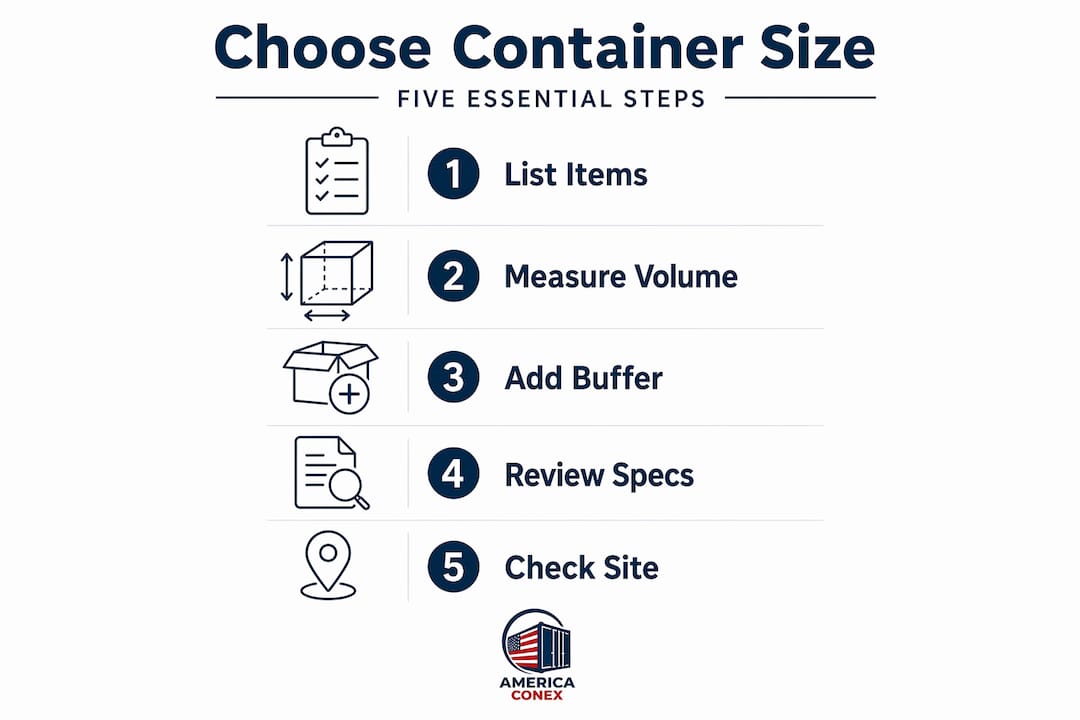
Once you have your list, calculate your estimated total volume. Measure each large item (length x width x height in feet) and add those figures together. For smaller items grouped in boxes, estimate the volume per box and multiply by the number of boxes. This gives you a working total in cubic feet.
Here's what most people forget:
- Fragile or irregularly shaped items need breathing room around them
- Packing materials (bubble wrap, foam, pallets) add volume to every shipment
- You need walkway space to actually retrieve items without unloading everything
- Items you'll access frequently should be near the door, which means thoughtful spacing from the start
The industry recommendation is to add 15-20% extra to your calculated volume before selecting a size. This buffer accounts for the way real-world packing never matches theoretical packing, and it leaves room to retrieve items without performing a full unload every time.
Pro Tip: If you're storing goods you plan to access regularly rather than a one-time move, add closer to 25% buffer space. The difference in container cost is minor compared to the time you'll lose digging through a tightly packed unit every week.
Think ahead, too. If your inventory grows over the next six months or you're planning a phased move, build that into your estimate now rather than ordering a second container later.
Understanding your container size options
Once you know your volume requirements, you can match them to actual container specs. The three most common sizes are the 10ft, 20ft, and 40ft, with the 20ft as the industry standard. A 40ft High Cube variant adds extra vertical clearance for taller cargo or better airflow in storage applications.
Here's a side-by-side look at how they compare:
| Size | External Dimensions | Interior Volume | Best For |
|---|---|---|---|
| 10ft | 10' L x 8' W x 8'6" H | ~560 cu ft | Small moves, single-room storage, job site tools |
| 20ft | 20' L x 8' W x 8'6" H | ~1,170 cu ft | 2-3 bedroom homes, ~10 pallets, small business inventory |
| 40ft | 40' L x 8' W x 8'6" H | ~2,390 cu ft | Large moves, ~20 pallets, commercial inventory |
| 40ft High Cube | 40' L x 8' W x 9'6" H | ~2,694 cu ft | Tall cargo, equipment, conversions, retail displays |
The 20ft is the go-to for most residential moves and small business needs. It holds the contents of a two to three bedroom apartment or around 10 pallets of goods. The 40ft doubles that capacity and suits larger inventories, commercial buildouts, or situations where future expansion is anticipated.
The High Cube version of the 40ft is worth considering if you're storing anything taller than six feet. Standard containers have an interior height of around 7'10", which sounds generous until you're trying to fit shelving units, tall machinery, or equipment with overhead clearance needs. The extra foot in a High Cube resolves that problem cleanly.
You can review standard container dimensions in detail before committing to a size to confirm the specs match your specific cargo or storage configuration.
Pro Tip: When selecting container size for international shipping, verify that the size you choose aligns with your freight forwarder's available vessel space and booking windows. The 20ft equivalent unit (TEU) is the global shipping standard, and matching it simplifies logistics considerably.
Door clearance deserves a direct mention here. Every container opens from the rear, and the doors swing outward to a full 270 degrees when latched back. That means you need clearance behind the container equal to at least the door width. Door clearance is critical in tight spaces and is frequently overlooked until delivery day.
Site and delivery constraints that affect your choice
Choosing the right container size is not just about volume. Your site has to physically accommodate the unit, and delivery logistics play a bigger role than most buyers expect.
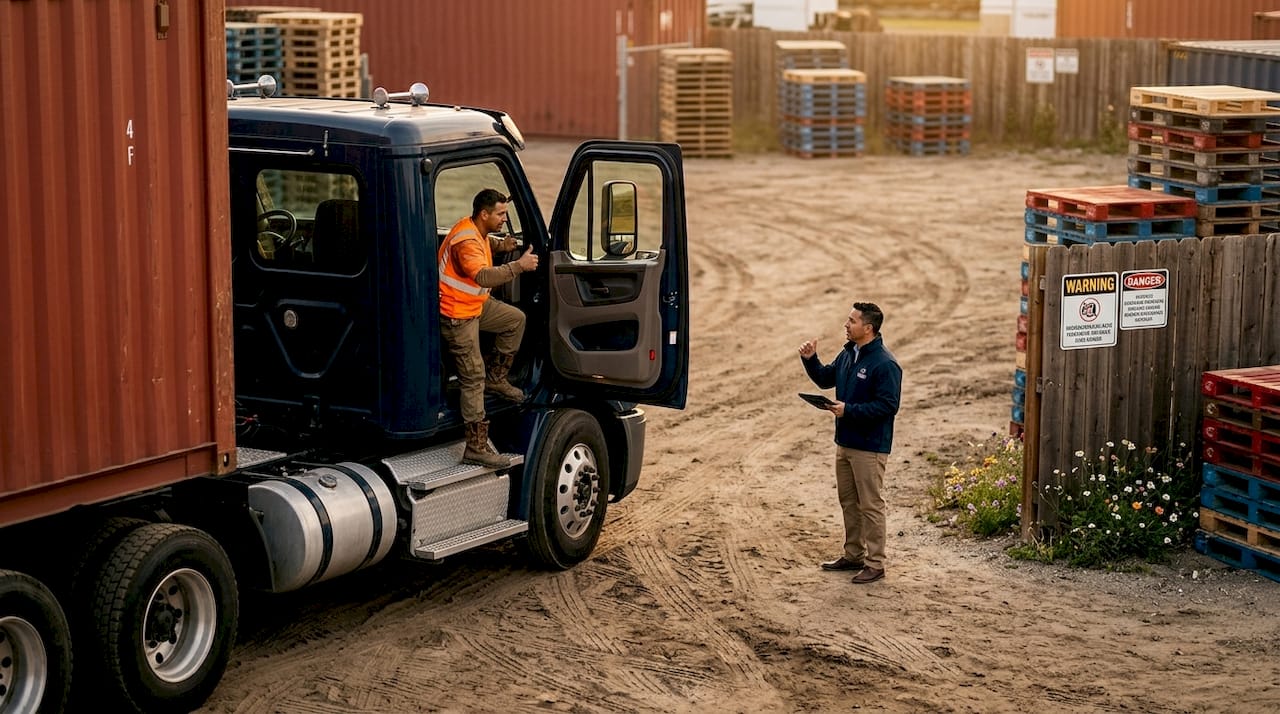
Start with your available footprint. Measure the area where you plan to place the container, including length, width, and overhead clearance if you're working near power lines or structures. A 40ft container requires a long, unobstructed pad. If your site cannot accommodate 45 feet of clear run (the container plus a small buffer), you're down to the 20ft by default.
Key site factors to evaluate before ordering:
- Ground surface: Containers need a level, firm surface. Soft or uneven ground causes door alignment issues and can make the unit structurally unsafe over time.
- Delivery access: Delivery and placement logistics including tilt-bed trucks and crane lifts influence which sizes work. Tilt-bed delivery requires a straight, clear approach of 60 to 80 feet. Crane placement is more flexible but costs more.
- Local zoning: Some municipalities require permits for containers above a certain size or length of stay. Check local zoning codes before ordering, especially for residential placements.
- Narrow access lanes: If your driveway or road is narrow, a standard delivery truck may not be able to reach your placement area. Discuss access restrictions with your supplier before finalizing your order.
- Door swing clearance: As noted above, plan for at least 3 to 4 feet of clearance behind the container doors. Failing to account for this is one of the most common and costly site planning errors buyers make.
Site constraints are not a soft consideration. They can eliminate a container size entirely before your budget or inventory volume even enters the conversation. Treat site evaluation as Step 1B, not an afterthought.
Budget, condition, and the case for sizing up
Pricing follows a predictable pattern: larger containers cost more upfront, but the cost per cubic foot drops as you go up in size. The difference in purchase price between a 20ft and a 40ft is often smaller than the cost of renting or buying a second 20ft unit down the line when you run out of space. Sizing up when possible is the smarter financial play if your site allows it.
The new versus used decision adds another layer to your budget calculation. Here's how to think through it:
- Used containers (WWT or cargo worthy): Lower upfront cost. Suitable for most general storage and domestic shipping needs. Require inspection for rust, door seal integrity, and structural soundness. A thorough inspection should cover rust, structural damage, door function, and seal condition.
- One-trip containers: Like-new condition. Higher cost but predictable quality. Ideal for sensitive cargo, food-grade storage, or conversion projects where appearance and interior cleanliness matter.
- Choosing based only on price carries real risk. Choosing storage based only on price can lead to greater downstream costs from damage, delays, or mishandling. Reliability matters more than the lowest sticker price.
Review Americaconex's container condition grades to understand what each classification means before purchasing. The difference between cargo worthy and wind-and-water-tight, for example, is significant if you're shipping internationally versus storing equipment on a job site.
Oversized shipment challenges in ecommerce logistics often trace back to poor container sizing decisions made at the purchase stage, which makes this financial planning step doubly important for businesses moving product regularly.
Finalizing your decision with practical checks
You've assessed your inventory, matched it to a container size, evaluated your site, and weighed the budget. Here's how to lock in your choice without second-guessing it:
- Recheck your measurements. Measure your storage area again, not just once. Include the buffer space you calculated.
- Confirm delivery access. Contact your supplier and describe your site in detail. They will tell you which delivery method works and what clearances are needed.
- Size up if it's close. If you're on the fence between a 20ft and a 40ft, go larger. The cost difference rarely outweighs the operational headaches of a container that's too small.
- Inspect before accepting delivery. For used units, check doors, floor integrity, seals, and interior walls before the delivery truck leaves your property.
- Plan your placement orientation. Know which end of the container faces out for door access before the driver arrives. Repositioning a delivered container is expensive and sometimes not possible without equipment.
- Account for growth. If your storage or shipping volume is likely to increase in the next 12 months, factor that into your size selection now.
Pro Tip: Ask your supplier whether the container you're ordering can be exchanged or upgraded after delivery if your needs change. Some suppliers offer flexibility that can save you a costly second order.
My honest take on choosing container size
I've watched people go through this process hundreds of times, and the most consistent mistake is underestimating how much space they actually need once you factor in access. On paper, the math looks clean. In practice, a container packed to 95% capacity becomes a frustrating daily problem if you need to retrieve items from the back. The space you "save" by going smaller costs you in time, labor, and damaged goods from constant moving and repacking.
What I've also found is that most buyers think of container selection as a one-time volume calculation. It's more than that. Container size affects operational reliability, risk management, and workflow efficiency in ways that don't show up in the initial decision but surface quickly once you're operating. The right size is the one that fits your workflow, not just your cubic footage estimate.
My advice: don't let the price difference between sizes be the deciding factor if you're anywhere near the edge of capacity. The price gap between a 20ft and 40ft is a one-time expense. The cost of making the wrong call shows up every week in operational friction. Buy for what you'll realistically need in 12 to 18 months, not just what you need today.
— Alex
Get the right container size with Americaconex
Americaconex stocks 20ft and 40ft units in both standard and High Cube configurations, available as one-trip or used in WWT and cargo worthy grades. With 30+ depots across the country, fast delivery is available regardless of your location. Not sure which size fits your situation? Their team walks you through the decision based on your inventory, site specs, and budget. You can review available container grades and full size dimensions directly on the site, or reach out for a personalized recommendation. Americaconex combines transparent pricing with real delivery expertise so you get the right unit without guesswork.
FAQ
What is the most common shipping container size?
The 20ft container is the global industry standard, holding approximately 10 pallets or the contents of a two to three bedroom home. It fits most residential and small business needs.
How do I calculate what size container I need?
Measure the total cubic footage of your goods, then add 15-20% for access and packing materials. Match that final number to the interior volume of available container sizes.
Is a 40ft container worth the extra cost?
In most cases, yes. The price per cubic foot is better on a 40ft unit, and the cost difference is almost always smaller than ordering a second container later when you run out of space.
Should I buy a new or used shipping container?
Used containers cost less and work well for general storage. New or one-trip containers are worth the premium for sensitive cargo, food storage, or conversion projects where interior condition matters. A thorough used container inspection covering doors, seals, and structural integrity is non-negotiable before purchase.
What site factors affect container size selection?
Available ground space, delivery truck access, local zoning rules, and door swing clearance all influence which size is feasible. Assess your site before finalizing any size decision.