
TL;DR:
- Proper planning and assessment are essential to avoid overspending on containers and logistics costs.
- Comparing suppliers and optimizing transportation can reduce total costs by up to 20 percent.
- Regular maintenance and long-term relationships are key to sustainable savings and avoiding hidden expenses.
Shipping container costs can quietly drain your margins before a project even gets started. A contractor ordering two extra 40-foot units "just in case" or a business owner paying premium delivery rates because of poor route planning can easily burn through thousands of dollars unnecessarily. Logistics companies can reduce container costs by up to 20% simply by tightening their workflows, yet most businesses never take the time to audit what they are actually spending. This guide walks you through every stage of the container sourcing and logistics process so you can make smarter decisions, negotiate better deals, and protect your bottom line.
Table of Contents
- Assessing container requirements and planning for savings
- Finding and comparing container suppliers
- Optimizing transportation and delivery costs
- Maximizing long-term value and avoiding hidden expenses
- A smarter approach to container cost savings
- Connect with proven container solutions
- Frequently asked questions
Key Takeaways
| Point | Details |
|---|---|
| Plan container needs | Review project scale and storage demands to avoid overbuying or underutilizing containers. |
| Compare suppliers | Evaluate pricing, quality, and service from multiple vendors to secure the best deal. |
| Optimize logistics | Streamline delivery, consolidate shipments, and choose efficient routes to reduce transportation costs. |
| Prevent hidden expenses | Budget for insurance, maintenance, and secure storage to avoid unexpected container costs. |
| Build supplier relationships | For sustainable savings, establish ongoing partnerships and dynamic planning with container providers. |
Assessing container requirements and planning for savings
The single biggest mistake business owners make is skipping the planning phase entirely. They estimate what they need, order based on gut feel, and end up either over-purchasing containers that sit idle or scrambling to source additional units at peak-season prices. Effective planning is the first step in reducing logistics costs, and it starts with a clear-eyed look at your actual requirements.
Start by mapping out your storage and shipping workflow before you place a single order. Ask yourself how many units you need at any given time, whether your needs are seasonal, and whether a 20-foot container might serve just as well as a 40-foot unit for certain tasks. A lot of contractors default to the larger size out of habit, but a 20-foot container is easier to place on tight job sites and costs less to deliver. Reviewing your container storage workflow efficiency can reveal surprising gaps in how you are currently using space.
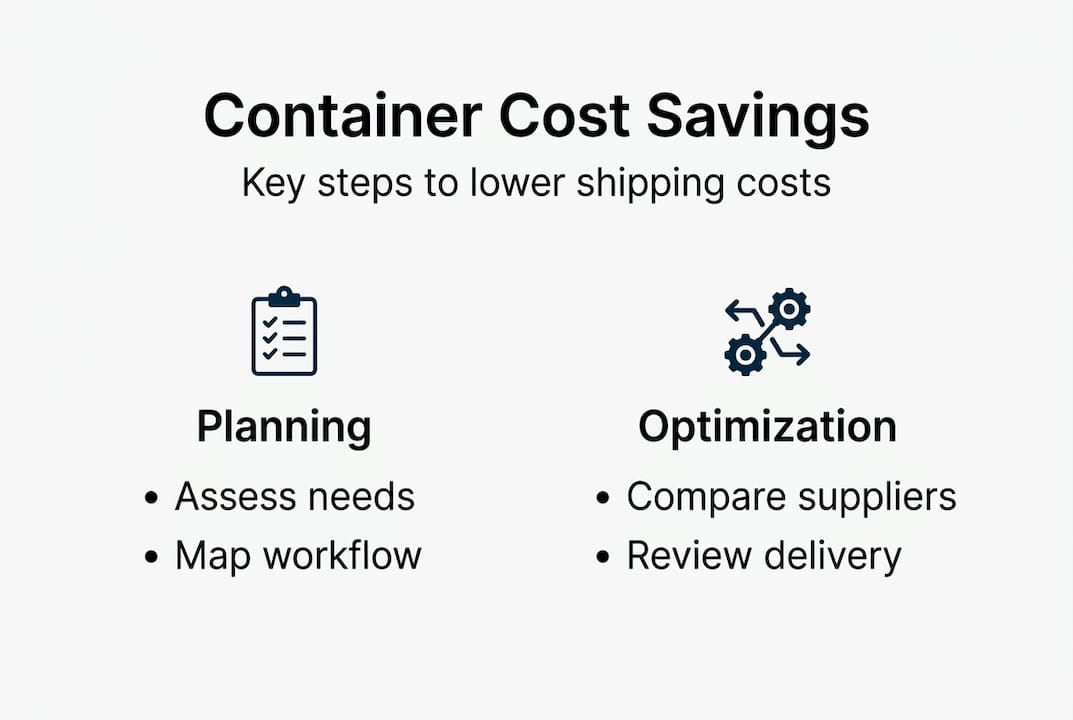
Here is a quick breakdown of common container planning mistakes and their financial impact:
| Planning mistake | Typical cost impact |
|---|---|
| Ordering oversized units | 15 to 25% higher purchase price |
| Ignoring seasonal demand | 10 to 30% premium on rush orders |
| No delivery route planning | Up to 20% higher freight costs |
| Skipping condition inspection | Unexpected repair costs post-purchase |
To keep your planning disciplined, focus on these core questions every time you assess container needs:
- How many containers do you need right now versus in 90 days?
- Are you using every container currently on site?
- What is the total cost including delivery, site prep, and any modifications?
- Is a used unit sufficient or do you need a one-trip container for this application?
Pro Tip: Build an annual container assessment checklist that you review each quarter. Include current inventory, upcoming project timelines, and any containers that could be returned or repositioned. This one habit alone can prevent thousands in unnecessary purchases.
Finding and comparing container suppliers
Once you know exactly what you need, the next step is securing containers at the best possible price. Not all suppliers are equal, and the difference between a well-vetted provider and a cut-rate operation can mean the difference between a smooth project and a costly headache. Businesses save significantly by comparing supplier offerings and negotiating favorable terms before committing to any purchase.
When evaluating affordable container suppliers, look beyond the sticker price. Delivery lead times, container condition grading, warranty terms, and depot proximity all affect your true cost. A supplier offering a slightly higher unit price but same-week delivery from a nearby depot may actually save you more than a cheaper option that takes three weeks and charges heavy freight fees.
Here is a comparison framework to use when evaluating suppliers:
| Metric | What to look for |
|---|---|
| Unit price | Competitive for condition grade (WWT, cargo worthy, one-trip) |
| Delivery time | Within your project timeline |
| Depot proximity | Closer depot means lower freight cost |
| Warranty or guarantee | At least a wind and water tight guarantee |
| Customer support | Responsive, transparent communication |
Use this numbered process when sourcing containers:
- Define your container grade requirement (WWT, cargo worthy, or one-trip).
- Request quotes from at least three suppliers in your region.
- Compare total landed cost, not just unit price.
- Ask about bulk pricing if you need more than two units.
- Review delivery terms and confirm depot locations.
- Check reviews and references before signing any agreement.
Familiarizing yourself with shipping container industry terms before you start negotiating puts you in a much stronger position. Knowing the difference between a wind and water tight unit and a cargo worthy container, for example, prevents you from paying one-trip prices for a job that only needs basic storage.
Pro Tip: Ask suppliers about off-peak delivery windows or end-of-month availability. Depots often have excess inventory they want to move, and you can negotiate meaningfully better pricing if your timeline is flexible.
Optimizing transportation and delivery costs
After securing containers, managing delivery costs becomes your next opportunity for savings. Freight is one of the most variable line items in container logistics, and it is also one of the most controllable if you plan ahead.

The transportation method you choose matters. Truck delivery is the most common for domestic container moves and works well for most job sites. Rail becomes cost-effective for longer distances and bulk moves. For international shipping, ocean freight is the standard, but the port you use and the carrier you select can swing costs dramatically. Consolidating shipments, meaning grouping multiple container moves into one delivery run, is one of the fastest ways to lower your per-unit freight cost. Streamlining container logistics through consolidation and smart routing can cut delivery expenses significantly.
Here are the key levers for reducing transportation costs:
- Consolidate orders: Move multiple containers in one trip whenever possible.
- Plan routes in advance: Last-minute routing almost always costs more.
- Use depot proximity: Choose a supplier with a depot close to your site.
- Avoid peak seasons: Freight rates spike around major shipping seasons.
- Negotiate return hauls: Some carriers offer discounts for repositioning empty containers.
Important: Always confirm that your delivery site meets local zoning and access requirements before scheduling delivery. A truck that cannot access your site due to low clearance or permit issues will cost you a redelivery fee and delay your project.
Optimized logistics workflows can reduce container delivery costs by up to 20%, which on a multi-container project can represent a meaningful budget recovery. Pair that with shipping optimization tips from freight specialists and you have a repeatable system for keeping delivery costs predictable.
Maximizing long-term value and avoiding hidden expenses
Even after optimizing upfront costs, ongoing management is crucial to sustaining savings. The purchase price is just the beginning. Hidden fees and deferred maintenance are where container budgets quietly collapse.
The most common hidden costs that catch business owners off guard include:
- Insurance: Many buyers forget to factor in container insurance, especially for high-value goods.
- Site preparation: Gravel pads, blocking, and leveling can add several hundred dollars per unit.
- Handling fees: Crane or forklift rental for placement is often not included in delivery quotes.
- Modification costs: Cutting doors, adding ventilation, or painting all carry labor and material costs.
- Permit fees: Some municipalities require permits for container placement, especially for long-term storage.
Selecting secure storage solutions is not just about preventing theft. It also prevents the kind of moisture damage, structural wear, and vandalism that leads to expensive repairs down the line. A container that is not properly blocked and leveled will rack over time, warping the doors and compromising the seal.
Routine maintenance does not need to be complicated. A basic inspection every quarter covers the most critical issues:
- Check door seals and hinges for rust or wear.
- Inspect the floor for soft spots or moisture intrusion.
- Look for surface rust and treat it before it becomes structural.
- Confirm that locks and security hardware are functioning correctly.
- Clear any debris from the roof to prevent water pooling.
For secure container storage, consider adding a lockbox over the padlock hasp. It is a low-cost upgrade that significantly raises the difficulty for anyone attempting forced entry.
Pro Tip: Build a maintenance budget of roughly 1 to 2% of the container purchase price per year. For a $3,000 used unit, that is $30 to $60 annually. It is a small number that prevents large, unexpected repair bills.
A smarter approach to container cost savings
Here is something most cost-cutting guides will not tell you: obsessing over the purchase price alone is a losing strategy. We have seen businesses negotiate hard for a $200 discount on a container unit, then lose $800 in freight because they did not plan delivery properly. The real savings are systemic, not transactional.
The businesses that consistently control container costs are the ones that treat it as an operational discipline, not a one-time negotiation. They build relationships with suppliers so they get early access to inventory. They track utilization rates so they never carry idle units. They understand industry container terminology well enough to have informed conversations with vendors rather than just accepting quoted prices.
Long-term strategies and supplier relationships are key differentiators for sustainable container cost savings. That means checking in with your supplier even when you are not actively buying, understanding their inventory cycles, and positioning yourself as a reliable repeat customer. Volume and loyalty carry real weight in this industry.
The uncomfortable truth is that most overspending on containers is a planning problem, not a pricing problem. Fix the planning, and the pricing takes care of itself.
Connect with proven container solutions
You now have a clear framework for cutting container costs at every stage, from initial planning through long-term maintenance. The next step is working with a supplier who can actually deliver on price, quality, and reliability.
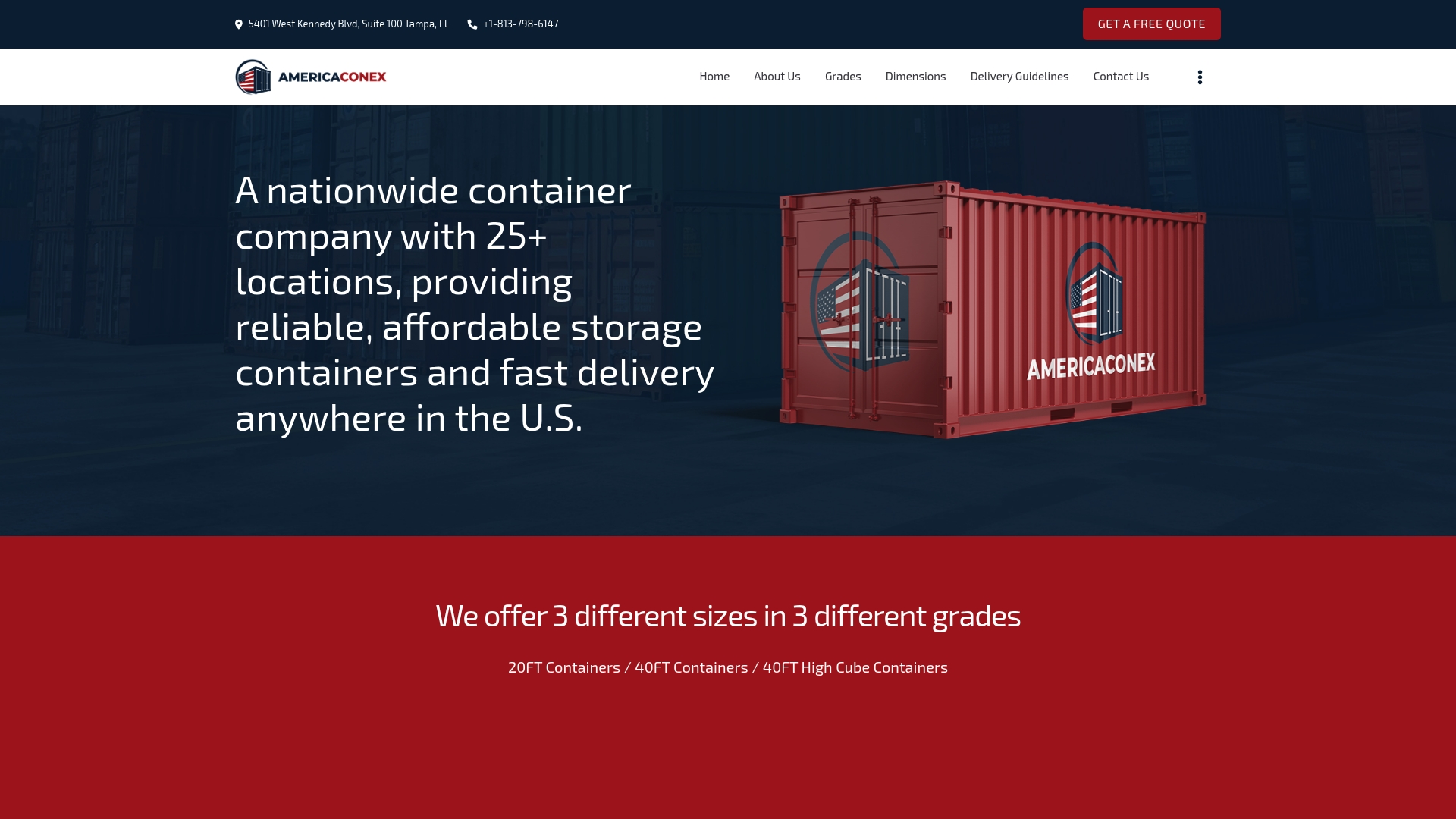
At America Conex, we supply new and used shipping containers nationwide, with access to 30+ depots across the country for fast, competitive delivery. Whether you need a wind and water tight unit for job site storage, a one-trip container in like-new condition, or a cargo worthy unit for active shipping, we have options across 20-foot and 40-foot standard and high cube sizes. Our team can help you match the right container to your project requirements and budget. Reach out today for transparent pricing and expert guidance tailored to your specific needs.
Frequently asked questions
What is the most cost-effective container size for commercial projects?
The 40-foot container typically offers the best price-per-cubic-foot value for large-scale storage and shipping needs, though a 20-foot unit may be more practical for tight job sites or smaller inventory volumes.
How can I reduce container delivery costs?
Consolidating shipments and optimizing route planning can lower delivery rates by as much as 20% on freight costs, especially when you choose a supplier with a depot close to your site.
Are used shipping containers a reliable choice for savings?
Yes, sourcing from reputable suppliers and conducting a thorough inspection before purchase gives you significant cost savings with minimal risk, particularly for storage applications.
What hidden costs should I watch for when buying shipping containers?
Insurance, site preparation, handling fees, and permit costs are the most common surprises; a detailed pre-purchase checklist that accounts for secure storage planning helps you budget accurately from the start.
How frequently should containers be inspected for maximum value?
A quarterly inspection schedule is recommended to catch early signs of rust, seal wear, or floor damage before they become costly container repairs that erode your savings.
Recommended
- Streamline your shipping container storage workflow
- Master industry terms for shipping containers: a guide
- America Conex | Shipping Containers For Sale | New & Used | Affordable Cheap With Fast Delivery
- Top Secure Storage Solutions for Home, Business & Shipping
- International Shipping Workflow: Cut Costs By 20% Efficiently | ParcelPlanet