
TL;DR:
- Choosing between renting and buying depends on project duration, site access, and modification needs.
- Buying offers long-term savings and resale value, but has higher upfront and hidden costs.
- Renting provides flexibility and lower initial costs, ideal for short-term or uncertain needs.
Most business owners assume buying a shipping container is always the smarter financial move. That assumption can cost you. The real answer depends on factors most decision guides skip entirely: project duration, site access, local permit requirements, and how much operational flexibility you actually need. Renting and buying each have a strong case, and picking the wrong one can mean thousands of dollars in unexpected costs or a container that doesn't fit your workflow. This guide breaks down the full picture so you can make a confident, well-informed decision for your operation.
Table of Contents
- Understanding your storage needs
- Cost comparison: Rent versus buy
- Weighing flexibility, customization, and resale
- Real-world scenarios: Which choice fits your business?
- Our perspective: What most decision guides miss
- Find the right container solution for your needs
- Frequently asked questions
Key Takeaways
| Point | Details |
|---|---|
| Short-term needs favor renting | Renting offers flexibility and fewer responsibilities for temporary or uncertain projects. |
| Ownership unlocks value | Buying pays off for long-term use, customization, and potential resale of shipping containers. |
| Hidden costs are critical | Buyers must plan for delivery, permits, and maintenance, which add to total cost. |
| Customization is limited with rental | You can make major modifications only when you own the container. |
| Resale recoups investment | Well-maintained containers typically retain 50-70% of their value when sold. |
Understanding your storage needs
Before you compare prices, you need to get honest about what your operation actually requires. The biggest mistake businesses make is jumping straight to cost comparisons without first mapping out their operational reality. Project length, site conditions, and the likelihood of needing modifications are the three factors that will drive your decision more than anything else.
Start by asking yourself a few pointed questions:
- How long do you need the container? Short-term projects under 12 months almost always favor renting.
- What's your site access like? Tight job sites, temporary lots, or leased land can complicate ownership.
- Will you need to modify the container? Adding shelving, extra doors, or electrical work changes the equation entirely.
- How certain is your timeline? If your project end date is fuzzy, locking into a purchase adds risk.
- What are your local zoning rules? Some municipalities require permits for containers placed on commercial or residential property.
For businesses managing container storage workflow across multiple sites or shifting locations, renting gives you the ability to scale up or down without being stuck with an asset you no longer need. On the other hand, if your operation is stable and you know exactly what you need the container to do for the next several years, ownership starts to look a lot more attractive.
Understanding the difference between container grades also matters. If you're unfamiliar with terms like "wind and water tight" or "cargo worthy," reviewing industry terms explained before you sign anything is worth your time. Knowing what you're getting prevents costly surprises.
For businesses tied into fulfillment logistics or seasonal inventory cycles, the flexibility of renting often outweighs the appeal of ownership. As a general rule, rent for uncertain needs or poor site access, and buy when you need modifications and long-term use.
Pro Tip: Before committing to either option, call your local zoning office and ask specifically about container placement permits. Requirements vary widely by county and can add weeks to your setup timeline if you don't plan ahead.
Cost comparison: Rent versus buy
Now that you know your needs, it's time to break down the actual costs and what numbers you should really be watching. The sticker price of a container is just the beginning.
| Cost factor | Renting | Buying |
|---|---|---|
| Upfront cost | Low (first month deposit) | $2,000 to $6,000+ |
| Monthly ongoing cost | $75 to $200/month | $0 after purchase |
| Delivery fee | Often included or reduced | Up to $3,000 |
| Maintenance | Handled by provider | Your responsibility |
| Permit costs | Varies | $15 to $500 |
| Insurance | Sometimes included | Buyer's responsibility |
| Resale value | None | 50 to 70% of purchase price |
The math shifts significantly depending on your timeline. Buying is more cost-effective for use over one to two years, with purchased containers retaining 50 to 70% of their value at resale. That's a meaningful return if you manage the asset well.
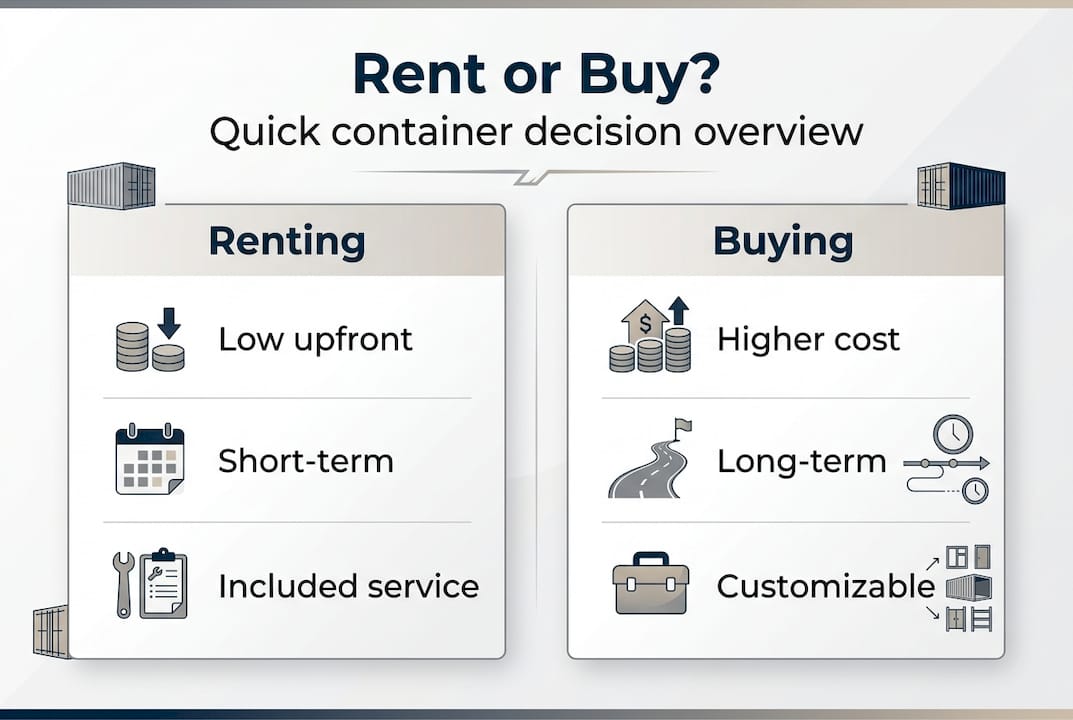
But here's where businesses get caught off guard. Hidden costs like delivery up to $3,000, permits ranging from $15 to $500, and full maintenance responsibility can dramatically change your total cost of ownership. Many buyers budget for the container price and forget everything else.
Rentals tend to absorb some of those costs. Providers often handle maintenance, and delivery fees are sometimes bundled into the monthly rate. That predictability is valuable when you're managing a tight project budget.
For a deeper look at ways to keep expenses down, saving on container costs covers practical strategies that apply whether you rent or buy. And if you're still weighing your options against other storage solution options, it helps to see the full landscape before committing.
For context on short vs long-term storage decisions, the break-even point for most container purchases falls somewhere between 18 and 24 months of equivalent rental costs.
Pro Tip: Get a written quote that itemizes delivery, permit assistance, and any setup fees before signing a rental agreement or purchase contract. Verbal estimates don't hold up when invoices arrive.
Weighing flexibility, customization, and resale
Cost alone isn't the only factor. Flexibility, adaptability, and the potential to recoup your investment also matter, especially when your business environment changes faster than expected.
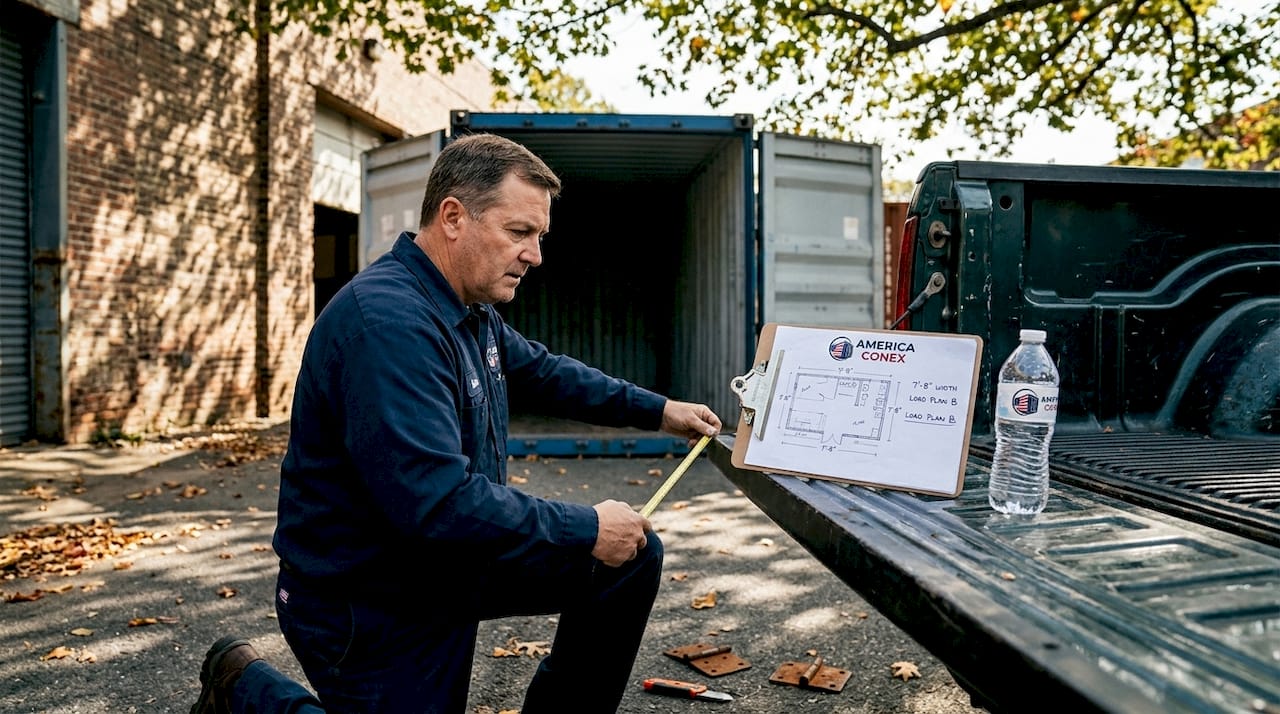
Renting gives you maximum operational flexibility. If your project wraps up early, you return the container. If your storage needs double, you add another unit. There's no asset to sell, no logistics to manage, and no depreciation to track. For businesses in construction, event production, or seasonal retail, that agility is genuinely valuable.
Ownership, however, opens up a different category of possibilities:
- Custom shelving and racking for organized inventory storage
- Additional door openings for better site access and workflow
- Electrical installations for lighting, climate control, or equipment
- Custom paint and branding to match your facility or job site
- Security upgrades like reinforced locks and alarm systems
Rental containers typically come with strict modification limits. You can't cut into the walls or add permanent fixtures without voiding your agreement. If your operation requires a specific layout, buying is superior because it allows full modification and significant resale value when you're done.
On the resale side, a well-maintained container holds its value better than most people expect. Resale can return 50 to 70% of your original purchase price, which meaningfully reduces your true lifetime cost. That's not a guarantee, but it's a realistic outcome if you buy a quality unit and keep it in good condition.
"Renting offers maximum response to changing needs while ownership allows modification and significant resale value." This trade-off is the core of the rent vs. buy decision, and most businesses underestimate how much their future flexibility needs will matter.
If your workflow efficiency depends on a specific container setup, renting a generic unit and working around its limitations will cost you more in lost productivity than ownership ever would. Think about your actual day-to-day operations, not just the upfront numbers.
For a broader look at storage service options and how containers fit into larger logistics strategies, comparing providers early saves time later.
Real-world scenarios: Which choice fits your business?
To bring it all together, let's see how this decision plays out for businesses just like yours. Abstract advice is useful, but concrete scenarios make the choice actionable.
| Business scenario | Recommended choice | Key reason |
|---|---|---|
| Short-term event storage (1 to 3 months) | Rent | Low commitment, quick removal |
| Construction site tool storage (6 to 18 months) | Rent or buy | Depends on site access and timeline |
| Ongoing supply chain inventory | Buy | Long-term use, modification potential |
| Disaster recovery or emergency staging | Rent | Speed and flexibility matter most |
| Permanent on-site warehouse expansion | Buy | Customization and resale value apply |
For edge cases, rent for uncertain or limited-access sites and buy for custom projects or long-term use. That framework covers the majority of business situations.
Here's a simple decision process you can run through before committing:
- Define your timeline. If it's under 18 months, lean toward renting.
- Assess site access. If delivery or removal will be difficult, renting gives you more provider support.
- List your modification needs. Any structural changes mean buying is your only real option.
- Check local permit requirements. Some areas restrict container placement regardless of ownership status.
- Run the 24-month cost comparison. Add up rental costs over two years and compare to purchase plus delivery plus maintenance.
- Factor in your expansion plans. If you expect to need more containers, buying a fleet may offer volume pricing.
Exploring container vendor choices early in the process gives you negotiating leverage and helps you understand what's available in your region. And revisiting save on container expenses during vendor comparison can surface discounts you'd otherwise miss.
Our perspective: What most decision guides miss
Most rent vs. buy guides treat this like a simple math problem. Run the numbers, pick the cheaper option, done. That approach misses the operational and compliance factors that actually make or break these decisions in the real world.
We've seen businesses buy containers without checking local ordinances, only to discover they need a permit that takes 60 days to process. We've seen project managers rent units for "short-term" projects that stretched 36 months, paying far more than a purchase would have cost. The math matters, but so does the planning.
The cost-benefit shipping guide frameworks are useful starting points, but they don't account for your specific site, your vendor's delivery radius, or how your business might grow in the next two years. Those variables are yours to assess.
Our honest take: if you're even slightly uncertain about your timeline or site conditions, start with a rental. You can always transition to ownership once your needs are clearer. Locking into a purchase before you understand your full operational picture is the most common and most avoidable mistake we see. Explore secure container solutions with that longer view in mind.
Find the right container solution for your needs
If you're ready to make a decision or need more details, here's where to find the best container options.
At America Conex, we work with business owners and project managers across the country who are navigating exactly this decision. Whether you need a short-term rental or a long-term purchase, we carry new and used units in standard and high cube configurations, including wind and water tight, one-trip, and cargo worthy grades.
With 30+ depot locations nationwide, we can match your project with the right container at a competitive price, delivered on your schedule. Visit America Conex containers to browse available inventory, request a quote, or connect with our team for a no-pressure consultation tailored to your specific storage needs.
Frequently asked questions
When is it better to rent a container instead of buying?
Renting is ideal for short-term projects, uncertain timelines, or sites with difficult access where quick removal may be needed. If your project wraps up in under 18 months, renting typically costs less overall.
What hidden costs come with buying a shipping container?
Buyers are responsible for delivery up to $3,000, permit fees ranging from $15 to $500, insurance, and all ongoing maintenance. These costs are easy to overlook when budgeting from the purchase price alone.
Can you customize rental containers as much as purchased ones?
No. Rental units have limited modification options, and structural changes typically void the rental agreement. Buying is the only practical choice if you need a custom build or permanent fixtures.
How much value do shipping containers retain after purchase?
Ownership offers 50 to 70% resale value when containers are well maintained, making the true lifetime cost of buying significantly lower than the sticker price suggests.
Recommended
- How to save on shipping container costs: a guide
- America Conex | Shipping Containers For Sale | New & Used | Affordable Cheap With Fast Delivery
- Streamline your shipping container storage workflow
- Master industry terms for shipping containers: a guide
- Short-Term vs. Long-Term Storage | Find the Right Storage Option for Your Move