
TL;DR:
- A shipping container's total lifespan ranges from 28 to 37 years, depending on maintenance and environment. Proper care, site preparation, and selecting higher-grade units can significantly extend service life beyond initial estimates. Regular inspections, roof reseals, and moisture control are essential to maximizing durability and value.
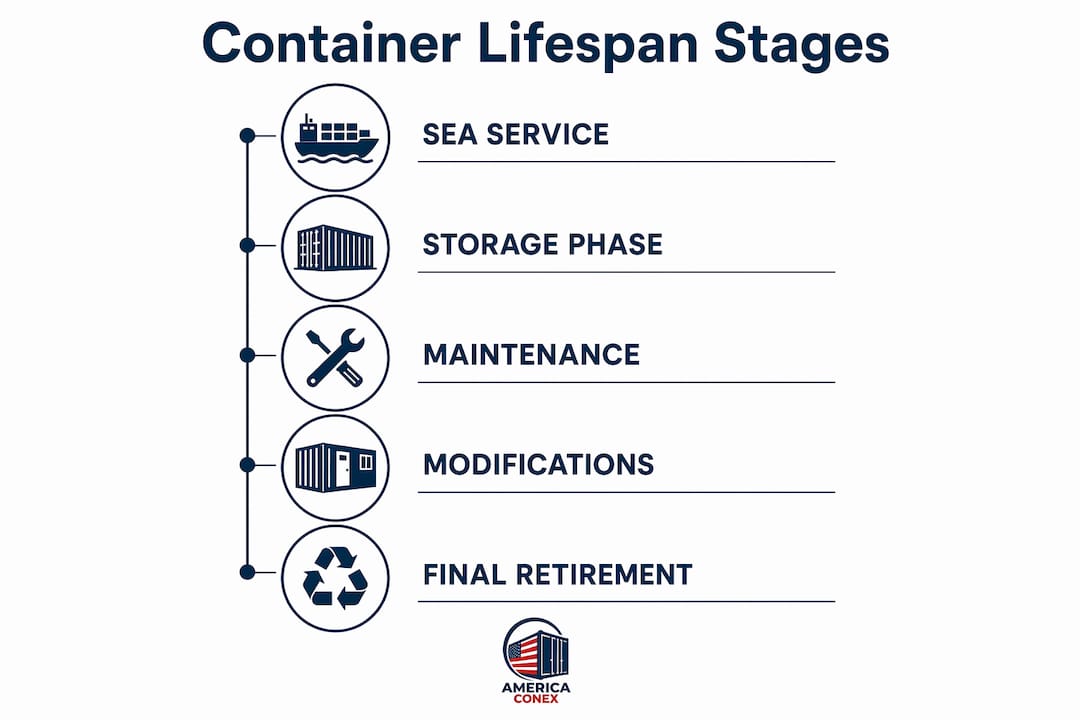
The lifespan of a shipping container is defined as the total period it remains structurally functional for its intended use, typically spanning 25 to 30 years with basic maintenance. That figure breaks into two distinct phases: roughly 10 to 12 years of active ocean service, followed by 18 to 25 years as stationary storage on land. Understanding what drives that number, and what shortens or extends it, is the difference between a smart purchase and an expensive mistake.
What is the lifespan of a container, and what does the data say?
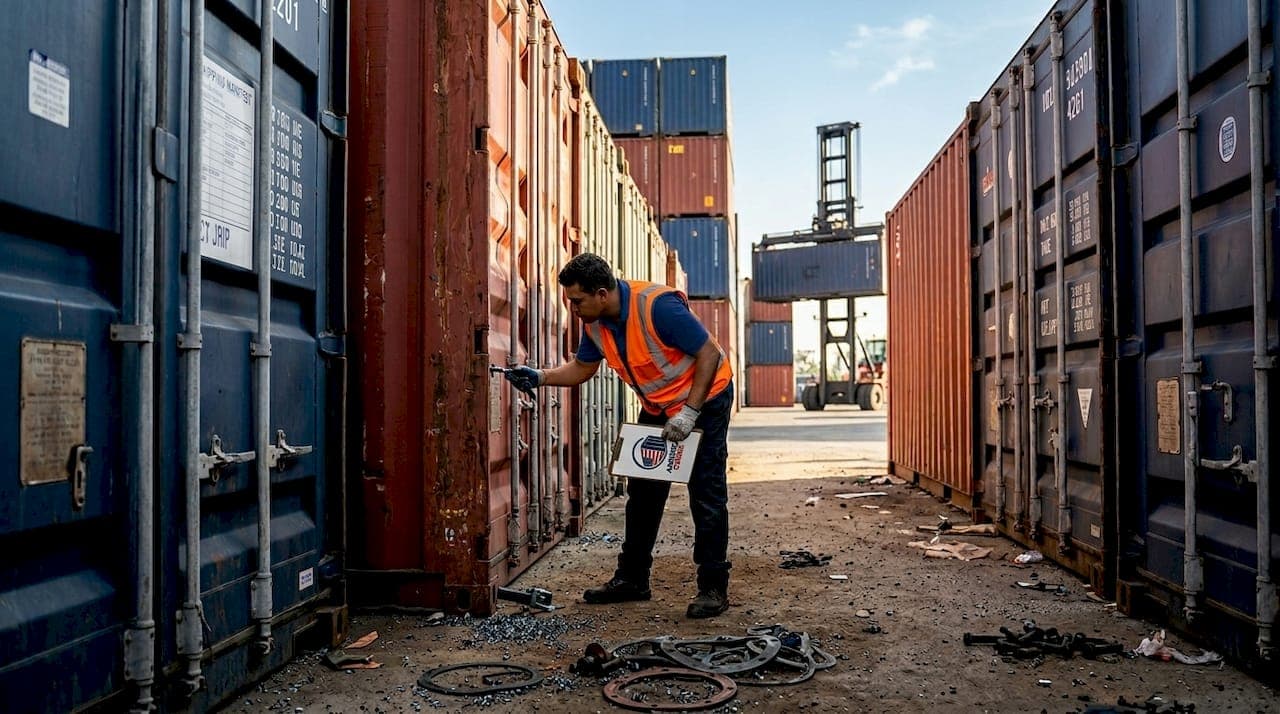
A steel shipping container lasts about 10 to 12 years at sea before shipping lines retire it from active rotation. That retirement does not mean the container is worn out. It means the unit no longer meets the strict structural tolerances required for stacking and ocean transit. Once it moves to land, the clock resets in practical terms.
Industry data from Ontario shows that stationary storage lifespan varies sharply with maintenance level. Containers with no upkeep last 15 to 20 years on land. Basic maintenance pushes that to 25 to 30 years. Diligent, scheduled care can extend service life to 40 to 50 years. That spread is enormous, and it means the container you buy today could still be serving your business in 2070 if you treat it right.
The total functional life across both phases sits between 28 and 37 years under normal conditions. This range is not theoretical. It reflects real-world inspection data and aligns with ISO standards used by container surveyors and shipping companies worldwide. For buyers planning storage builds, job site units, or long-term logistics assets, this range is the baseline for every financial and operational decision.
What factors primarily influence the lifespan of a container?
Container durability is not a fixed property. It is the result of several interacting variables, and some of them are entirely within your control.
Environmental exposure is the most aggressive factor. Saltwater environments accelerate corrosion on exterior panels and floor beams. Freeze-thaw cycles in northern climates cause roof steel to expand and contract repeatedly, opening micro-cracks that let moisture in. Humid inland locations create condensation cycles inside sealed units, which attack the interior from the floor up.
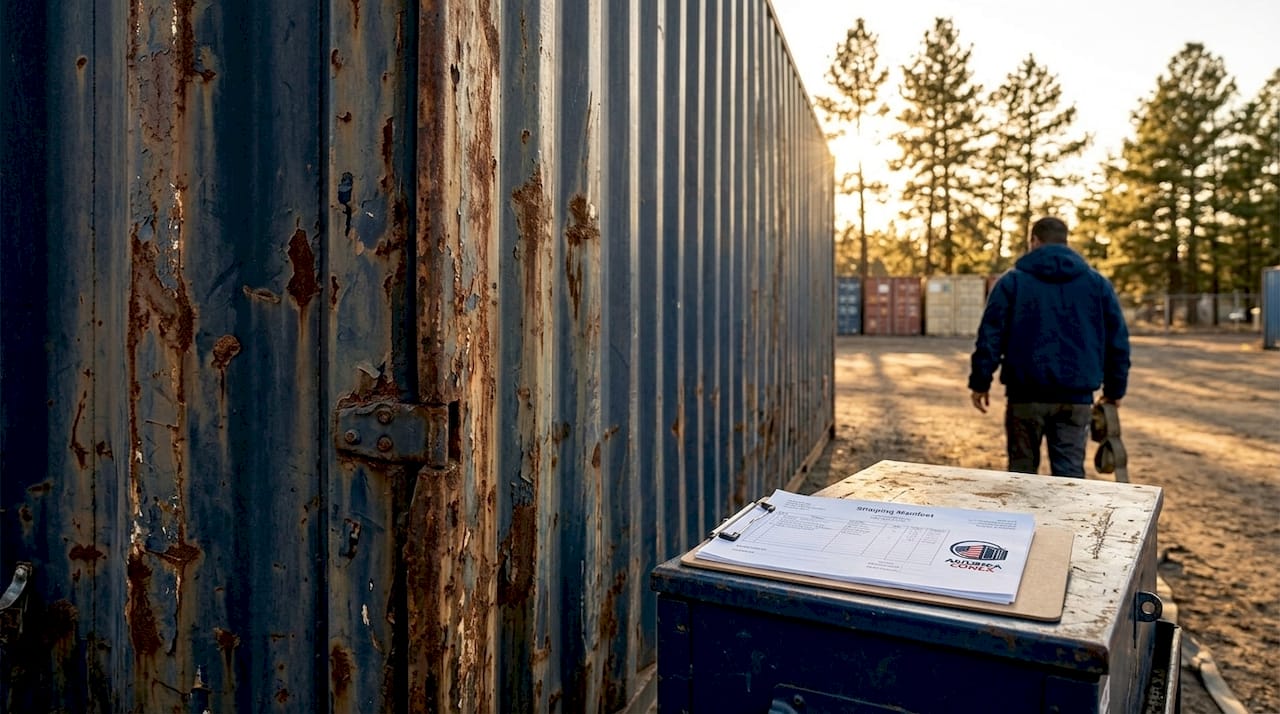
Roof condition is consistently the most critical single point of failure. Roof steel thickness is approximately 1.6 to 2 mm, and standing water can perforate it in 10 to 20 years without treatment. A container with a compromised roof loses its wind and watertight rating quickly, which cascades into floor damage, door seal failure, and interior corrosion.
The main container lifespan factors to monitor include:
- Roof drainage: Low spots that pool water are the leading cause of early structural failure
- Door gaskets: Cracked or compressed seals allow moisture ingress at the most trafficked point
- Undercarriage exposure: Containers placed directly on soil trap moisture against the floor beams
- Exterior coating: Paint that chips or oxidizes exposes bare steel to accelerated corrosion
- Interior ventilation: Poor airflow creates condensation cycles that rust from the inside out
Pro Tip: Place your container on a level gravel pad with at least 6 inches of clearance underneath. This single site preparation step prevents moisture from trapping against the floor beams and is one of the most cost-effective lifespan extensions available.
Coating quality plays a structural role that most buyers underestimate. ISO 12944 coating standards define durability by time to first major maintenance, not total lifespan. Low-durability coatings require attention in 2 to 5 years. High-durability coatings last 15 or more years before the first major intervention. Choosing a container with intact, high-quality exterior coating at purchase directly reduces your maintenance cost over the ownership period.
How do container grades affect expected lifespan?
Container grades are not marketing labels. They are standardized assessments of remaining service life, and they directly determine how many years of use you are buying.
Different container grades denote remaining service life from the purchase date, not the manufacturing date. A one-trip container made five years ago still carries a one-trip grade if it completed only a single ocean voyage. That distinction matters enormously for calculating cost per year of service.
| Grade | Remaining lifespan | Best use case |
|---|---|---|
| One-Trip | 25 to 30 years | Long-term storage, permanent builds, conversions |
| Cargo Worthy (CW) | 20 to 25 years | Active shipping, mid-term storage |
| Wind and Watertight (WWT) | 15 to 20 years | Stationary storage, short-term job sites |
| As-Is | Under 10 years | Budget storage, non-structural applications |
The cost-per-year calculation often surprises buyers. A one-trip container priced at $4,500 with 27 years of expected life costs roughly $167 per year. A WWT unit at $2,500 with 17 years of life costs $147 per year. The gap narrows significantly once you factor in maintenance costs on the older unit and the risk of early failure. For permanent builds or high-value storage, one-trip units almost always deliver better long-term economics.
Remaining service life depends more on placement environment and maintenance than on factory age. A well-maintained WWT container on a proper gravel pad in a dry climate will outlast a neglected one-trip unit sitting in standing water. Grade sets the ceiling. Your site preparation and upkeep determine whether you reach it.
What is the impact of modifications and conversions on container durability?
Converting a shipping container into a home, office, or workshop introduces structural changes that affect its long-term durability. The degree of impact depends directly on how much steel you cut and how well you treat the exposed edges.
Typical stationary storage containers last 25 to 50 years. Containers with moderate cuts for windows and doors last around 30 to 40 years. Fully converted homes and offices, with extensive interior modifications and mechanical loads, typically last 20 to 30 years. The reduction is real, but it is manageable with the right approach.
The core risks introduced by modification include:
- Cut edges: Every opening cut into the container exposes raw steel that rusts faster than the factory-coated surface. Edge protection with rust-inhibiting primer and metal flashing is non-negotiable.
- Interior moisture: Occupied spaces generate humidity through breathing, cooking, and bathing. Without a vapor barrier, that moisture condenses on the cold steel interior and corrodes from the inside.
- HVAC loads: Heating and cooling systems create pressure differentials and condensation cycles that standard storage containers never experience.
- Structural reinforcement: Cutting large openings removes load-bearing corrugation. Without steel header reinforcement, the container's stacking strength and rigidity degrade.
Spray foam insulation applied to interior walls is one of the most effective ways to close the lifespan gap between storage and conversion use. It acts simultaneously as insulation, vapor barrier, and corrosion inhibitor on interior surfaces. Builders who skip this step on conversion projects consistently report moisture problems within five to ten years. For more on how to approach these builds, the Americaconex guide on converting containers for storage covers the structural considerations in detail.
How can maintenance extend a container's service life?
Maintenance is the single most controllable variable in container life expectancy. The difference between a 20-year container and a 50-year container is almost entirely a function of how consistently it is maintained.
Regular maintenance actions such as roof reseals every 5 to 7 years, gasket replacements, and repainting with marine-grade primers can extend container life to 40 to 50 years. That is not an aspirational figure. It reflects documented outcomes from containers maintained on a scheduled basis. The Americaconex resource on planned container maintenance outlines how to build this schedule into your operations.
A practical maintenance program follows this sequence:
- Annual visual inspection: Check the roof for low spots, pooled debris, and surface rust. Inspect door gaskets for compression or cracking. Look at floor beams and undercarriage for corrosion hotspots.
- Roof reseal every 5 to 7 years: Apply a rubberized or elastomeric roof coating to seal micro-cracks and prevent water infiltration. This is the highest-return maintenance action available.
- Repaint exterior every 7 to 10 years: Use a marine-grade primer followed by a topcoat rated for exterior steel. Focus on any areas where the original coating has chipped or oxidized.
- Replace door gaskets as needed: Gaskets typically last 5 to 10 years depending on UV exposure and frequency of use. A failed gasket allows moisture into the interior at the most trafficked point.
- Clear drainage paths after storms: Remove debris from the roof and around the base. Trapped organic material holds moisture against steel and accelerates localized corrosion.
Many containers fail early due to localized corrosion from trapped moisture, not overall material fatigue. Roof low spots, door gasket leaks, and undercarriage moisture create hotspots that perforate steel long before the rest of the container shows wear. Addressing these specific points proactively is far cheaper than structural repair after the fact.
Pro Tip: Keep a simple maintenance log for each container you own. Record inspection dates, repairs made, and coating applications. This log becomes a valuation asset if you sell the unit and a diagnostic tool if problems develop.
Container lifespan should be planned around scheduled re-coating and maintenance rather than assuming a fixed wear-out point. The ISO 12944 framework treats steel structure longevity as a maintenance scheduling problem, not a countdown timer. That mindset shift is what separates owners who get 20 years from a container from those who get 50.
Key takeaways
A shipping container's service life is determined by maintenance discipline, site preparation, grade selection, and modification approach, not by age alone.
| Point | Details |
|---|---|
| Average lifespan range | Containers last 25 to 30 years with basic upkeep, up to 50 years with diligent maintenance. |
| Grade determines remaining life | One-trip units offer 25 to 30 years from purchase; WWT units offer 15 to 20 years. |
| Roof care is the top priority | Roof resealing every 5 to 7 years prevents the most common cause of early structural failure. |
| Modifications reduce lifespan | Full conversions last 20 to 30 years; spray foam insulation and edge protection narrow the gap. |
| Site preparation matters | A level gravel pad with ventilation underneath prevents moisture trapping and extends floor life. |
What I've learned about container lifespan that most buyers miss
Most people shopping for a container focus almost entirely on price and grade. Those matter, but they are not the variables that determine how long the container actually lasts in your hands. The real determinant is what happens in the first 90 days after delivery.
I have seen one-trip containers deteriorate faster than expected because they were dropped on bare soil in a low-lying area with no drainage. The grade was perfect. The placement was not. Conversely, I have seen WWT containers still performing well after 20 years of stationary use because the owner resealed the roof twice and kept the door gaskets fresh. The container was not special. The owner was disciplined.
The other misconception I encounter constantly is treating container age as a proxy for condition. A 15-year-old container that spent 10 years at sea and 5 years in a dry, maintained storage yard is often in better structural shape than a 5-year-old container that sat in a flood-prone lot with debris piled on the roof. Age tells you almost nothing without knowing the service history and current condition.
My honest recommendation: before you buy, ask for photos of the roof, floor, and door seals specifically. Those three areas reveal more about remaining service life than any grade label. And once you own the container, treat the first maintenance cycle as an investment, not an expense. The cost of a roof reseal is trivial compared to the cost of replacing a unit that failed a decade early.
— Alex
Find the right container grade for your needs at Americaconex
Americaconex supplies new and used shipping containers across the United States, with access to 30 or more depots for fast, reliable delivery. Whether you need a one-trip unit for a long-term build or a WWT container for job site storage, the container grades at Americaconex are clearly documented with condition details so you can match the right unit to your lifespan requirements. Americaconex also offers standard and high cube units in 20ft and 40ft configurations. Explore the full container inventory to find options that fit your budget, timeline, and durability goals.
FAQ
What is the average lifespan of a shipping container?
A shipping container lasts approximately 25 to 30 years with basic maintenance, combining 10 to 12 years of ocean service with 15 to 25 years of stationary use. Diligent upkeep can extend total service life to 40 to 50 years.
How long does a container last without any maintenance?
Without maintenance, a stationary container typically lasts 15 to 20 years before structural issues like roof perforation and floor corrosion compromise its integrity. Roof care and gasket replacement are the highest-impact actions for extending that baseline.
Does modifying a container shorten its lifespan?
Yes. Full conversions for homes or offices typically last 20 to 30 years compared to 25 to 50 years for unmodified storage containers. Spray foam insulation, vapor barriers, and edge protection on cut openings significantly reduce that gap.
Which container grade lasts the longest?
One-trip containers offer the longest remaining service life, typically 25 to 30 years from the purchase date. They have completed only a single ocean voyage and arrive in near-new condition with intact coatings and structural integrity.
What is the most important maintenance task for container longevity?
Roof resealing every 5 to 7 years is the single highest-return maintenance action. Roof steel is only 1.6 to 2 mm thick and can be perforated by standing water in 10 to 20 years without treatment, making it the primary structural failure point.