
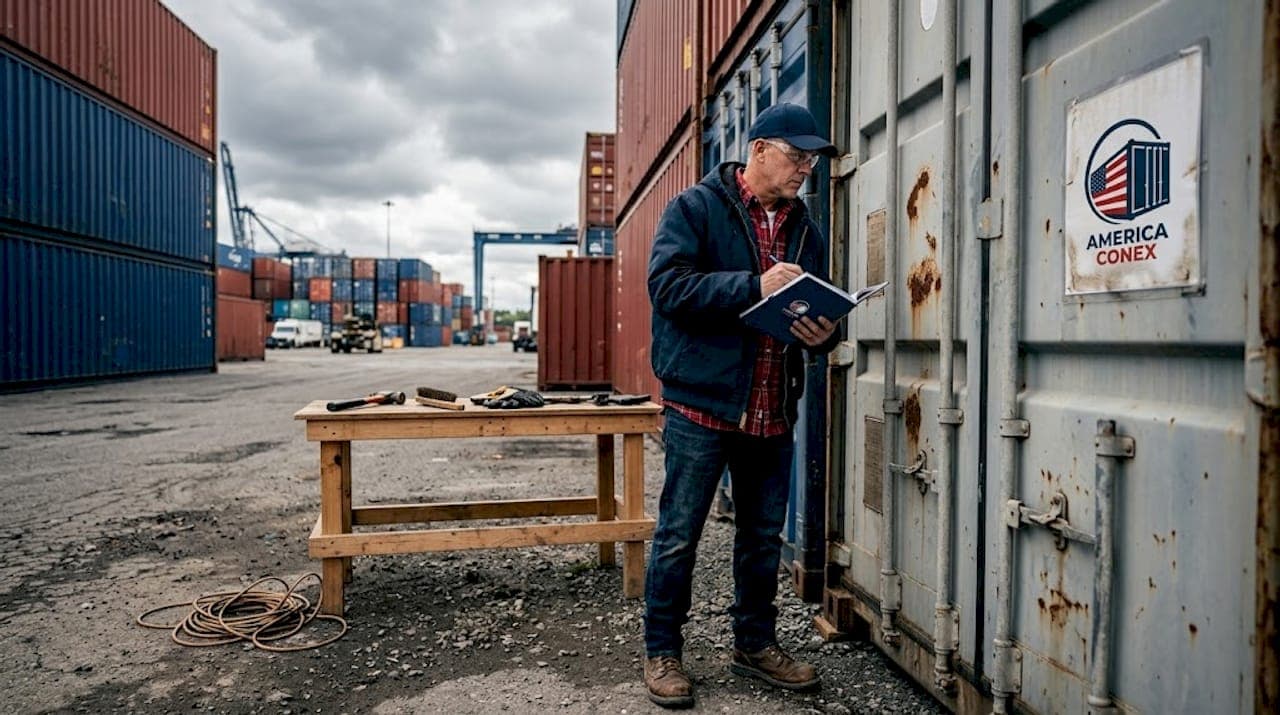
TL;DR:
- Container maintenance is often neglected, but it is essential for protecting assets, reducing downtime, and preventing costly damage from moisture and pests. Regular inspections of seals, hardware, and structural components help maintain weather-tightness and extend container lifespan, especially in logistics and construction settings. Properly scheduled upkeep is a proactive, revenue-protecting strategy that safeguards operational continuity and the value of your container fleet.
Most business owners and project managers treat container maintenance as a low-priority task, something to handle when there's extra time or budget. That mindset is expensive. The most overlooked maintenance items, specifically door gaskets, locking hardware, and seals, are also the most consequential. When those components fail, moisture and pests enter freely, and the downstream damage can cost far more than any routine upkeep ever would. This guide breaks down every layer of container maintenance so you can protect your assets, reduce downtime, and run tighter operations.
Table of Contents
- Defining container maintenance: what it really means
- Why container maintenance matters in logistics and construction
- Key container maintenance strategies for optimal performance
- Common mistakes with container maintenance (and how to fix them)
- A fresh perspective: rethinking container maintenance for modern logistics
- Ready to upgrade your container maintenance approach?
- Frequently asked questions
Key Takeaways
| Point | Details |
|---|---|
| Seal and hardware first | Keeping doors and gaskets maintained helps prevent bigger, more expensive problems. |
| Routine wins | Regular preventive checks are the best defense against costly logistics disruptions and asset loss. |
| Modify with care | Structural changes require adapted maintenance and expert input to avoid long-term risks. |
| Analytics pay off | Using operational data helps align maintenance with actual container risk and saves time and money. |
Defining container maintenance: what it really means
Container maintenance is not just hosing down the exterior or touching up paint chips. In commercial and logistics settings, it covers a structured set of checks and interventions designed to keep containers structurally sound, weather-tight, and operationally reliable over years of use.
There are two main categories worth understanding:
Preventive maintenance involves scheduled inspections and routine care before problems develop. Think of it as the equivalent of changing the oil in a fleet vehicle before the engine seizes. You address wear proactively, which keeps costs predictable and avoids emergency repairs.
Corrective maintenance is reactive. It happens after something breaks, leaks, or fails. While sometimes unavoidable, corrective maintenance almost always costs more than preventive care because damage compounds when left unaddressed.
A thorough maintenance program covers all of the following:
- Structural integrity: Checking for dents, warped panels, or compromised corner castings (the steel fittings at each corner used for stacking and securing containers)
- Doors and locking hardware: Inspecting hinges, cam locks, and door rods for rust, misalignment, or wear
- Gaskets and seals: Examining rubber door seals for cracking, compression loss, or gaps
- Flooring: Assessing wooden or steel floors for rot, delamination, or surface damage
- Exterior coatings: Identifying rust spots, paint failures, or corrosion on the corten steel body
Understanding these shipping container terms helps you communicate clearly with vendors, inspectors, and maintenance crews.
"Keeping doors, locking hardware, and gaskets maintained is often higher value than it looks, because seal integrity directly drives weather-tightness and prevents moisture and pest intrusion that can cause far more expensive downstream damage." — HCT Containers
Weather-tightness is the linchpin of operational cost control. A container that keeps water out protects its contents, maintains its structural value, and stays compliant with cargo-worthy standards. One that leaks, even slightly, creates conditions for mold, rust acceleration, and cargo loss.
Why container maintenance matters in logistics and construction
In logistics and construction, containers are not just storage boxes. They are operational assets. A failed container on a job site can delay material delivery, compromise secure storage, or force an unplanned equipment rental. At a container terminal, a unit that needs special handling due to poor condition creates scheduling bottlenecks that ripple across the entire operation.
Regular maintenance prevents those disruptions. Here is what well-maintained containers deliver versus neglected ones:
| Factor | Well-maintained containers | Neglected containers |
|---|---|---|
| Weather-tightness | Consistent, reliable | Compromised, unpredictable |
| Door operation | Smooth, secure | Stiff, misaligned, or jammed |
| Lifespan | 20+ years with care | Can degrade in under 10 years |
| Repair costs | Low and predictable | High and often sudden |
| Cargo/content protection | Strong | At risk from moisture and pests |
| Resale or lease value | Retained | Significantly reduced |
| Operational downtime | Minimal | Frequent and disruptive |
The financial case is straightforward. A container that costs $3,000 to $5,000 and lasts 20 years with proper care delivers far better return on investment than one that degrades in a decade due to neglect and requires $1,500 in emergency repairs along the way.
Modern logistics operations are also starting to leverage predictive operational analytics to schedule container upkeep more intelligently. These systems analyze handling frequency, dwell times, and exposure levels to predict which containers are most likely to need attention, allowing maintenance teams to prioritize resources before failures occur rather than scrambling after them.
For construction project managers, container quality and site storage are directly linked. A container that holds tools, materials, or equipment on a job site needs to be reliably secure and dry. Any compromise in seal integrity or door function creates real operational risk.
A few specific ways maintenance protects your logistics and construction operations:
- Prevents cargo loss due to water intrusion during transit or storage
- Keeps containers compliant with shipping line and customs requirements
- Reduces the likelihood of container rejection at port or delivery point
- Extends the window before capital replacement is needed
- Supports a consistent container storage workflow by keeping units ready to deploy at any time
Key container maintenance strategies for optimal performance
Knowing why maintenance matters is one thing. Knowing exactly what to do and when is what separates reactive operators from those who run tight, cost-efficient container fleets. Here is a step-by-step routine that covers the full scope of container care.
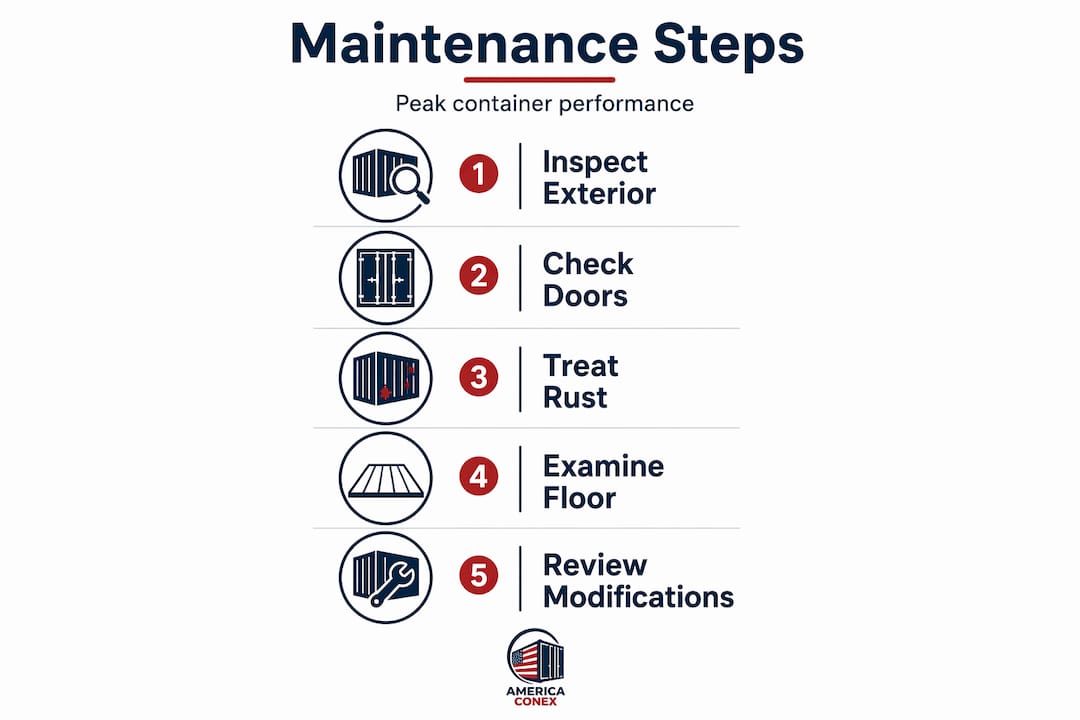
1. Conduct visual inspections on a set schedule
Walk the full perimeter of each container at least quarterly. Look for new dents, surface rust, paint bubbling, or panel distortion. Document what you find with photos. This creates a baseline that makes it easy to spot accelerating deterioration over time.
2. Inspect doors, locks, and gaskets every inspection cycle
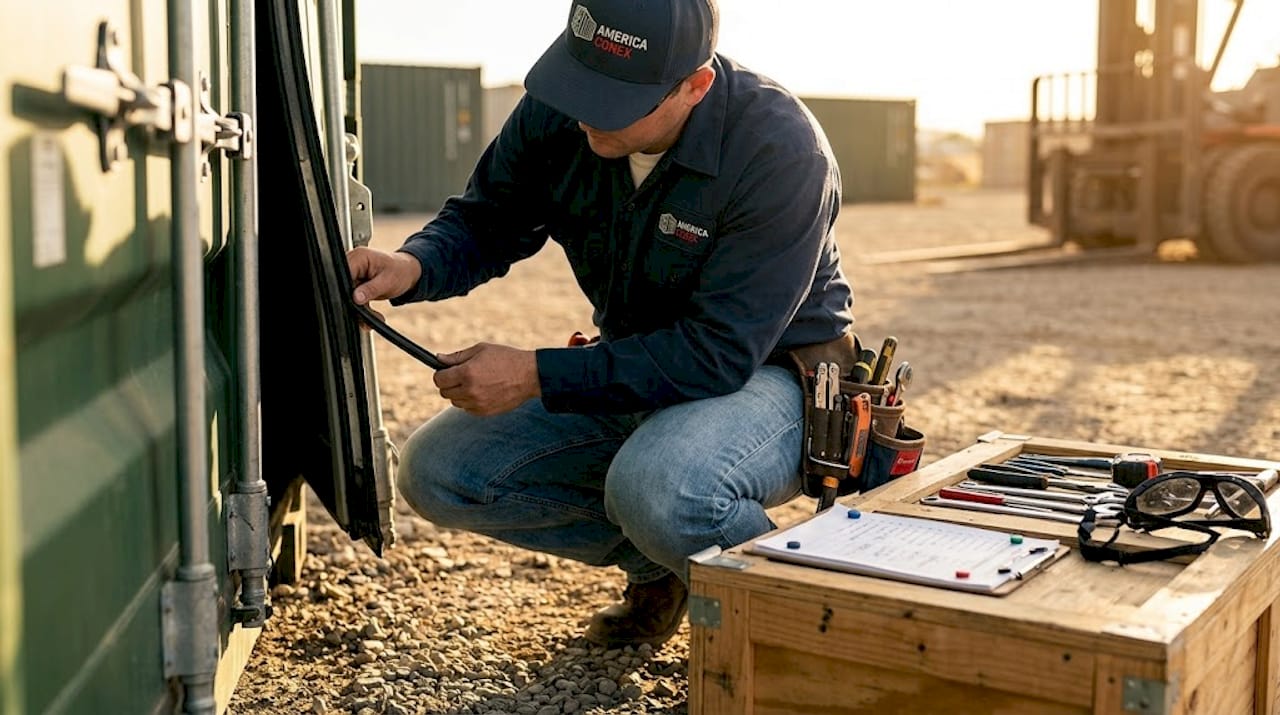
Open and close every door fully. Check that cam locks engage cleanly and that door rods align correctly. Run your hand along the rubber gasket around the door frame. If you feel cracks, hard spots, or gaps, that gasket needs replacement. This is the single highest-value maintenance task you can perform, because a compromised seal is a direct path to moisture damage.
3. Address rust immediately, not eventually
Surface rust on corten steel (the weathering steel used in most shipping containers) is normal and manageable. Left untreated, it penetrates the steel and creates structural weakness. Sand down rust spots as soon as you identify them, apply a rust-inhibiting primer, and finish with a quality exterior coating. Waiting even one season can turn a $50 repair into a $500 one.
4. Check flooring for damage and chemical contamination
Container floors, typically hardwood or bamboo composite, absorb moisture when seals fail. Check for soft spots, warping, or discoloration. If the container previously carried chemicals, the floor may need treatment or replacement before it is suitable for new cargo or on-site use.
5. Review all modifications after any structural change
This is where many operators make a costly mistake. Major structural modifications, such as cutting openings for doors or windows or combining multiple containers, change the load paths within the steel frame. These changes can increase long-term fatigue risk in ways that are not immediately visible. After any significant modification, a structural engineering review should be part of your maintenance plan, not an afterthought.
Pro Tip: Before scheduling repairs on a modified container, consult a structural engineer familiar with intermodal containers. A $300 consultation can prevent a $10,000 structural failure down the line.
The following table shows how maintenance frequency correlates with risk exposure across different use cases:
| Container use type | Recommended inspection frequency | Risk level without maintenance |
|---|---|---|
| Active job site storage | Monthly | High |
| Logistics and transit | Every trip or quarterly | High |
| Long-term stationary storage | Biannually | Medium |
| Modified office or workspace | Quarterly | Very high |
| Seasonal or occasional use | Before and after each season | Medium |
For operators looking at saving on container costs, a proactive maintenance schedule is one of the most effective tools available. It is far cheaper to maintain than to replace. And if you are working with cargo worthy containers for active shipping, keeping them in compliant condition protects your ability to use them in international trade.
Common mistakes with container maintenance (and how to fix them)
Even experienced operators fall into predictable maintenance traps. These are the most common ones, along with practical fixes.
Ignoring door hardware and seals until they fail
This is the most frequent and most damaging oversight. Door gaskets degrade gradually, so the failure is not always obvious until water is already inside. The fix is simple: include gasket inspection in every routine check and replace seals at the first sign of wear, not after they have clearly failed. Locking hardware should be lubricated with a heavy-duty grease at least twice a year, more often in coastal or high-humidity environments.
Delaying rust repair because it "looks minor"
Surface rust on corten steel can look manageable for months before it becomes a structural problem. The issue is that rust spreads laterally under paint coatings, meaning the visible spot is often smaller than the actual affected area. Fix it fast, fix it completely, and coat it properly. A small grinder, rust converter, and a can of industrial primer can handle most early-stage rust in under an hour.
Skipping post-modification engineering checks
When a container is cut, welded, or combined with another unit, its structural behavior changes. Many operators assume that because the container looks fine after modification, it is fine. That assumption is wrong. Seal integrity and structural integrity are both affected by modifications, and neither issue announces itself loudly until something goes wrong. Schedule an engineering check after any significant modification. It is not optional if you want long-term reliability.
Failing to adapt maintenance for flexible container storage configurations
Containers used in stacked or side-by-side configurations face different stress patterns than standalone units. Maintenance routines need to account for that. Check corner castings and twist locks in stacked configurations more frequently, and inspect the roof panels of lower containers for deformation under load.
Not accounting for transport wear in maintenance planning
Containers that move frequently accumulate wear faster than stationary ones. If your containers are regularly transported, factor that into your inspection schedule. Cost-saving transport options are great, but they should not come at the expense of post-transport inspections.
Pro Tip: Set calendar reminders for seasonal maintenance checks at the start of spring and fall. Weather transitions create the most stress on seals, coatings, and hardware, making those the highest-risk periods for container degradation.
A fresh perspective: rethinking container maintenance for modern logistics
Here is the uncomfortable truth most people in this industry will not say out loud: container maintenance is treated as a cost center when it is actually a revenue protection strategy.
Think about what a container actually does for your business. It secures inventory, enables logistics, protects equipment, and in many cases serves as a modified workspace or office. When a container fails, you are not just dealing with a repair bill. You are dealing with operational disruption, potential cargo loss, project delays, and in some cases liability. The financial exposure from a single neglected container can dwarf the cost of years of proper maintenance.
The conventional wisdom is that used containers are "tough enough" to handle neglect. And to a point, that is true. Corten steel is genuinely durable. But that durability creates a false sense of security. The steel holds up. The seals, hardware, and coatings do not. And those are the components that determine whether the container actually does its job.
Modified containers are an especially important case. As more businesses use containers for on-site offices, pop-up retail, or custom storage configurations, the gap between standard maintenance and what modified containers actually need is growing. A container with a window cut into the side, HVAC installed through the roof, and electrical running through the walls is not the same asset as a standard storage box. It needs maintenance that reflects its actual configuration, including regular checks on all penetrations, seals around modifications, and structural integrity at any cut points.
We have seen this play out repeatedly: a business invests in a well-designed container modification, uses it for two years without adapting their maintenance routine, and then discovers that water has been entering through a poorly sealed window frame for months. By that point, the floor is compromised, the walls show mold, and the repair cost exceeds what a proper maintenance program would have cost over the entire two years.
Understanding the right shipping container terminology also matters here. Knowing the difference between wind and water tight (WWT), cargo worthy, and one-trip condition helps you set the right maintenance baseline for each container in your fleet. A one-trip container needs different care than a 10-year-old WWT unit.
Container maintenance is not glamorous. It does not generate revenue directly. But it protects the revenue your containers enable. That reframe changes how you budget for it, how you schedule it, and how seriously you take it.
Ready to upgrade your container maintenance approach?
Effective container maintenance starts with having the right container for the job. If you are sourcing units for a logistics operation, job site, or long-term storage solution, the condition and quality of the container you start with directly affects your maintenance workload and costs going forward.
At America Conex, we supply new and used shipping containers across the United States, with access to 30+ depots for fast, reliable delivery. Whether you need a one-trip container in like-new condition, a used WWT unit for secure storage, or a cargo worthy container for active shipping, we offer transparent pricing and expert guidance to match the right unit to your operation. Visit America Conex to explore available inventory and get a quote tailored to your project.
Frequently asked questions
What is the most overlooked part of shipping container maintenance?
Door gaskets and locking hardware are consistently the most neglected components, yet their upkeep is critical to weather-tightness and protecting against moisture and pest damage that can be far more costly than routine seal replacement.
How does container maintenance impact logistics and construction projects?
Well-maintained containers prevent operational delays, asset failures, and unplanned expenses. Predictive analytics tools used in container terminals show that aligning maintenance schedules with handling frequency and operational exposure significantly reduces disruption risk.
Should maintenance routines change if a container is modified?
Yes, without exception. Structural modifications such as cutting openings or combining containers alter load paths and increase fatigue risk, so post-modification maintenance must include an engineering review to ensure long-term structural reliability.
What happens if container maintenance is delayed or skipped?
Skipping maintenance allows rust, seal failure, and hardware degradation to compound. Moisture and pest intrusion from failed seals can cause far more expensive damage than any routine maintenance program, often requiring full floor replacement or structural repair.