
TL;DR:
- Regular maintenance extends the lifespan of shipping and storage containers by preventing rust, leaks, and structural damage. Early detection of common issues through simple inspections saves money, ensures compliance, and maintains operational efficiency. Consistent care practices, proper placement, and tailored routines for different container types are essential for maximizing investment longevity.
Shipping and storage containers are built tough, but they are not bulletproof. A lot of business and property owners buy a container, drop it on-site, and assume it will hold up forever without a second thought. That assumption is expensive. Steel corrodes, door seals fail, floors rot from moisture, and what started as a minor surface rust patch can eat through a wall panel in a few years. The good news is that basic, consistent maintenance costs very little and can add a decade or more to your container's useful life. This article walks you through exactly what to do, how often to do it, and what to watch for.
Table of Contents
- Why container maintenance matters
- Common container problems and how to identify them
- Routine care to prolong container life
- Optimizing container placement and storage
- Adjusting maintenance for different container types and uses
- What most business owners miss about container care
- Get the most from your containers with America Conex
- Frequently asked questions
Key Takeaways
| Point | Details |
|---|---|
| Routine checks are crucial | Regular inspections catch problems early and avoid costly repairs. |
| Prevent rust and leaks | Prompt maintenance and proper placement minimize corrosion and water damage. |
| Adapt care to container use | Adjust maintenance routines depending on container type and how it’s used. |
| Small steps drive big ROI | Simple care habits yield the biggest savings over time. |
Why container maintenance matters
Containers are a serious capital investment. A quality 20ft unit can run anywhere from a few thousand dollars used to well over ten thousand for a one-trip container. Letting that investment deteriorate through neglect is simply bad business. Regular upkeep keeps rust, leaks, and structural damage from compounding into major repair bills or full replacements.
Beyond the dollar cost, a poorly maintained container creates real operational headaches. A door that sticks or a floor with soft spots can slow down your team, create safety hazards, and interrupt storage or shipping workflows. For businesses that rely on containers for on-site storage or active transport, downtime caused by a container failure is a direct hit to productivity.
"A container that gets basic attention every six months will almost always outlast one that gets none. The difference in total cost of ownership over ten years is substantial."
There is also a compliance angle that many owners overlook. Containers used for commercial transport must meet cargo worthy standards. A neglected container can fail inspections, triggering delays, fines, or rejected shipments. Staying on top of saving on container costs means building maintenance into your budget from the start, not scrambling to cover repair costs later.
Key reasons to prioritize regular container maintenance:
- Prevents rust and corrosion from spreading across panels and structural members
- Protects the contents inside from moisture, pests, and temperature swings
- Keeps door seals and locking mechanisms functioning reliably
- Maintains cargo worthy status for containers used in active transport
- Reduces the likelihood of costly emergency repairs or early replacement
Common container problems and how to identify them
The most important skill in container ownership is knowing what to look for before a small issue becomes a big one. Most container problems give you warning signs well before they become structural failures. The trick is catching them early.
The five most common issues are:
- Surface rust and corrosion on exterior panels, especially at seams, corners, and the roof
- Floor damage from moisture infiltration, heavy loads, or forklift impact
- Door faults including misaligned hinges, failing gaskets, and corroded locking rods
- Roof leaks caused by dents, cracked sealant, or pooled standing water
- Ventilation blockages that trap moisture inside and accelerate interior corrosion
Here is a quick comparison of early versus late-stage symptoms for the most common problems:
| Problem | Early signs | Late-stage signs |
|---|---|---|
| Rust and corrosion | Orange discoloration, surface bubbling | Holes, panel thinning, structural weakness |
| Floor damage | Soft spots, minor warping | Rot, collapse risk, forklift damage |
| Door faults | Stiff operation, minor seal gaps | Doors that won't close, full seal failure |
| Roof leaks | Small stains on interior ceiling | Active dripping, mold growth, cargo damage |
| Ventilation issues | Condensation on interior walls | Persistent moisture, rust bloom inside |
Inspection ensures containers are ready for transporting goods, and that same logic applies to storage use. A container that leaks or has a failing floor is not just a maintenance problem, it is a liability.
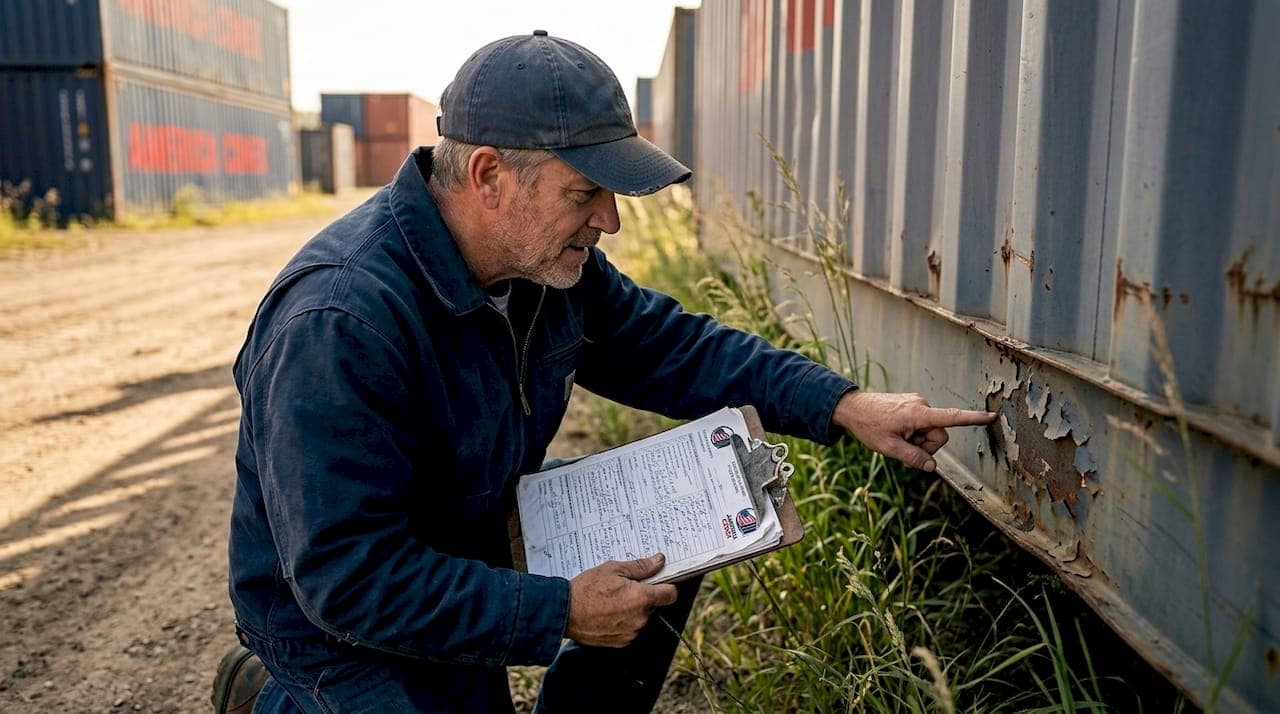
Pro Tip: Walk around your container at least once a month and run through a quick visual check. Look for discoloration, test both doors through their full range of motion, press lightly on floor boards near the entry, and look up at the ceiling interior for any water staining. This takes under ten minutes and catches most problems early.
For containers used in active job site environments, container quality for site storage is directly tied to how well the unit holds up under daily use. High-traffic containers need more frequent checks, not less.
Routine care to prolong container life
Once you know what to look for, the next step is building a simple care routine. None of these tasks require specialized skills or expensive equipment. They just require consistency.
Cleaning and moisture control
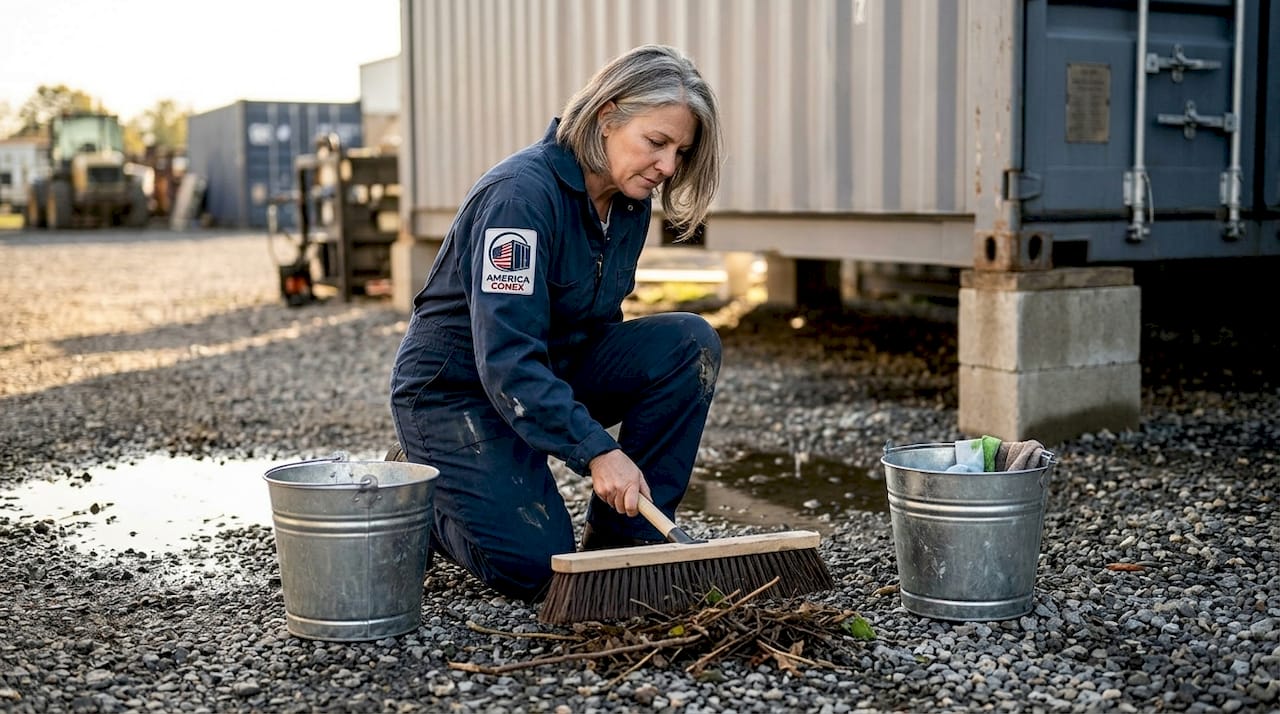
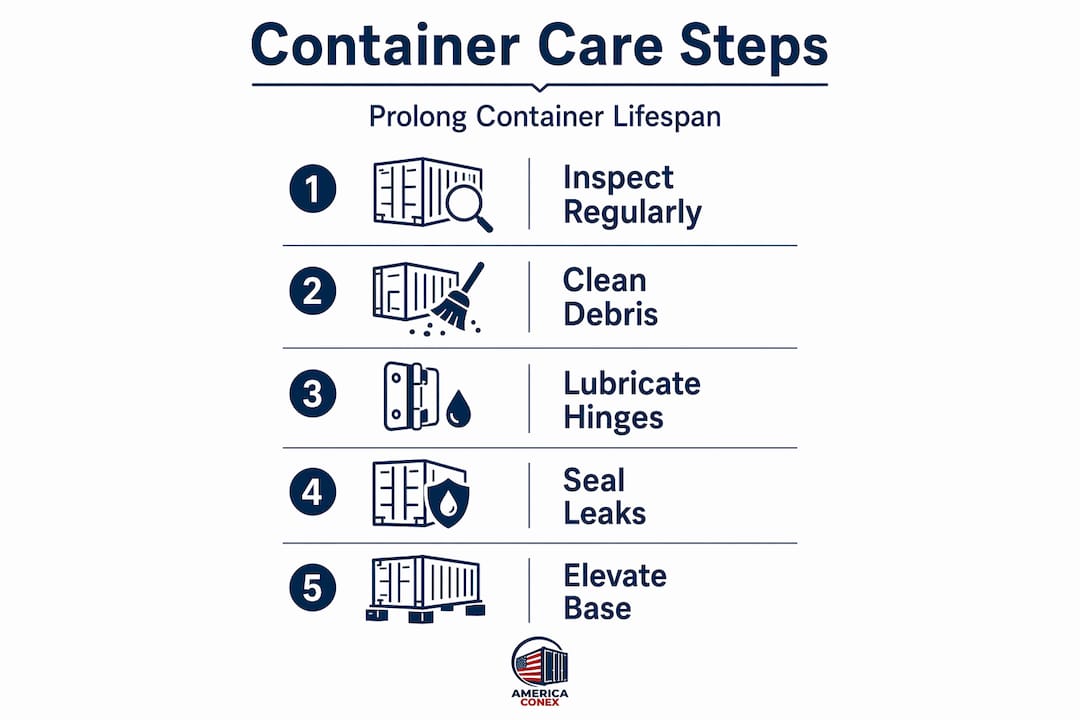
Remove debris from the roof and around the base regularly. Leaves, dirt, and standing water accelerate corrosion faster than almost anything else. Use a stiff brush or pressure washer on the exterior two to four times per year. Inside, sweep out dust and debris and check for any signs of moisture after rain events.
Lubricate hinges and locking hardware
Door hinges, locking rods, and cam locks should be lubricated every three to six months using a heavy-duty grease or marine-grade lubricant. Dry, corroded hinges are one of the most common reasons doors stop sealing properly, and a door that does not seal lets in moisture, pests, and temperature fluctuations.
Address rust immediately
Surface rust is not a cosmetic issue. It is a progression. The moment you see orange discoloration, clean the area with a wire brush, apply a rust converter product, and follow up with a rust-inhibiting primer and paint. A rust patch that costs you an hour and twenty dollars in materials today can cost thousands in panel replacement if left alone for two years.
Seal leaks as soon as you find them
Roof and seam leaks should be sealed with a quality elastomeric sealant or container-specific roof coating. These products flex with the steel as it expands and contracts with temperature changes, which is critical for a lasting repair.
Elevate the container
Keeping your container off direct ground contact is one of the highest-impact things you can do for long-term durability. Timber railroad ties, concrete blocks, or purpose-built container feet all work well. Elevation improves drainage and reduces the moisture exposure that causes floor rot and undercarriage corrosion.
Pro Tip: For containers used in container storage workflow efficiency, build maintenance tasks into your existing operational calendar. Tie lubrication and inspection to monthly inventory checks so it never gets skipped.
A useful benchmark from shipping container logistics data shows that containers receiving routine preventive care last an average of 25 or more years, while neglected units often show significant structural compromise within 10 to 12 years. That is a massive difference in return on your original investment.
For businesses using containers for container storage for equipment, the stakes are even higher. Heavy equipment creates floor stress and vibration that accelerates wear, making routine checks non-negotiable.
Recommended maintenance schedule:
- Monthly: Visual walk-around, debris removal, door operation test
- Every 3 months: Hinge and lock lubrication, roof inspection
- Every 6 months: Full interior and exterior inspection, rust treatment, sealant check
- Annually: Professional inspection if container is used for active transport
Optimizing container placement and storage
Where you place a container matters almost as much as how you maintain it. Poor placement creates problems that no amount of cleaning or lubrication can fix.
| Placement factor | Best practice | Why it matters |
|---|---|---|
| Ground contact | Elevate on blocks or ties | Prevents moisture wicking into floor and undercarriage |
| Surface type | Level, compacted gravel or concrete | Prevents settling and frame racking |
| Drainage | Slope away from container base | Stops pooled water from sitting against the steel |
| Spacing | At least 18 inches between units | Allows airflow and maintenance access |
| Sun and wind exposure | Orient doors away from prevailing wind | Reduces seal wear and heat buildup |
Direct soil contact is the single biggest placement mistake we see. Soil holds moisture against the steel constantly, and that moisture accelerates corrosion from the bottom up. A container sitting on bare dirt will show undercarriage rust within two to three years in most climates.
Best practices for on-site container placement:
- Use secure storage for containers principles even for temporary placements
- Avoid low-lying areas where rainwater collects
- Keep containers away from overhanging trees that drop debris on the roof
- In coastal or high-humidity environments, apply a protective coating to the undercarriage annually
- Review your residential container storage guide if you are placing a container on personal property for the first time
Ventilation is also worth mentioning here. Containers are designed to be airtight, which is great for keeping weather out but can trap interior moisture. If you are storing moisture-sensitive goods, add vent plugs or desiccant bags inside. Some owners install small passive vents in the wall panels for long-term storage applications.
Adjusting maintenance for different container types and uses
Not every container needs the same care routine. The type of container you have and how you use it should shape your maintenance approach.
Standard dry containers (20ft and 40ft)
These are the most common units and respond well to the basic routine outlined above. Focus on rust prevention, door seals, and floor integrity. If used for storage only, a six-month inspection cycle is usually sufficient.
High cube containers
The extra height creates more roof surface area, which means more potential for pooled water and sealant wear. Pay extra attention to the roof during inspections and apply roof coating more frequently in rainy climates.
Refrigerated containers (reefers)
Reefer units need everything a standard container needs, plus additional attention to the cooling unit, insulation panels, and door gaskets. The cooling system should be serviced by a qualified technician at least once a year. Insulation damage is often invisible from the outside, so interior checks are critical.
Modified or converted containers
Containers that have been cut, welded, or fitted with windows and doors have additional seam points that need regular sealant inspection. Any modification creates potential weak points where moisture can enter.
Active transport containers
Containers moving between locations face more structural stress than stationary storage units. These need pre-trip and post-trip inspections, with particular attention to corner castings, lashing rings, and the undercarriage. Getting familiar with industry terms for containers helps you communicate clearly with inspectors and logistics partners about what you are seeing.
The frequency of care should also scale with use. A container that is opened and closed dozens of times a week needs hinge lubrication every month, not every six months. Match your maintenance schedule to how hard the container is actually working.
What most business owners miss about container care
Here is the honest truth that most maintenance guides skip over: the biggest container problems are not caused by catastrophic events. They are caused by small, repeated inaction.
A skipped hinge lubrication in spring leads to a stiff door by summer. That stiff door gets forced open repeatedly, bending the hinge plate. By fall, the door no longer seals, moisture gets in, and by the following year you have interior corrosion on goods worth far more than the container itself. The entire chain of events started with a five-minute task that got pushed off.
We have seen this pattern play out with businesses of all sizes. The owners who get the best return from their containers are not the ones with the most expensive units. They are the ones who built a simple, repeatable routine and stuck to it. Tracking container market trends in 2026 shows that container values hold significantly better when units are well-documented and visibly maintained, which matters if you ever want to resell or trade up.
The other thing most owners miss is documentation. Keep a simple log of every inspection, every repair, and every product used. This log becomes a selling point if you ever resell the container, and it helps you spot patterns, like a door that needs attention every spring, before they become failures.
Proactive container care is not complicated. It is just consistent.
Get the most from your containers with America Conex
Maintaining your containers well starts with owning the right container for your needs. A unit that was already in poor condition when you bought it will demand far more maintenance effort and cost than one that started in solid shape.
At America Conex, we supply new and used shipping containers across the United States, with over 30 depot locations for fast, reliable delivery. Whether you need a used wind and water tight unit for on-site storage, a one-trip container in like-new condition, or a cargo worthy unit ready for active transport, we have options at competitive prices. Our team helps you choose the right container from the start so your maintenance routine stays simple and your investment stays protected. Reach out today to get a quote and talk through what works best for your operation.
Frequently asked questions
How often should shipping containers be inspected?
Containers should be inspected every six months at a minimum, or more frequently for high-traffic operations where doors and floors see heavy daily use.
Can basic maintenance prevent container rust?
Yes, regular cleaning, prompt rust patching, and proper elevated placement significantly reduce rust risk and can prevent surface corrosion from ever reaching structural steel.
What is the best way to store containers on-site?
Elevate containers on level, compacted ground with good drainage, and avoid direct soil contact to prevent moisture from wicking into the floor and undercarriage.
Is there a difference in maintenance for refrigerated containers?
Refrigerated containers need additional checks on the cooling unit, insulation panels, and door gaskets beyond the standard maintenance steps required for dry containers.