
TL;DR:
- A site-ready container is a modified shipping container equipped with features like HVAC, electrical wiring, and doors, making it fully operational upon delivery. These containers arrive pre-configured, enabling immediate use within hours, which significantly reduces on-site construction time and enhances project efficiency. They are durable, stackable, and ideal for various applications such as offices, storage, and crew facilities, transforming how job site logistics are managed.
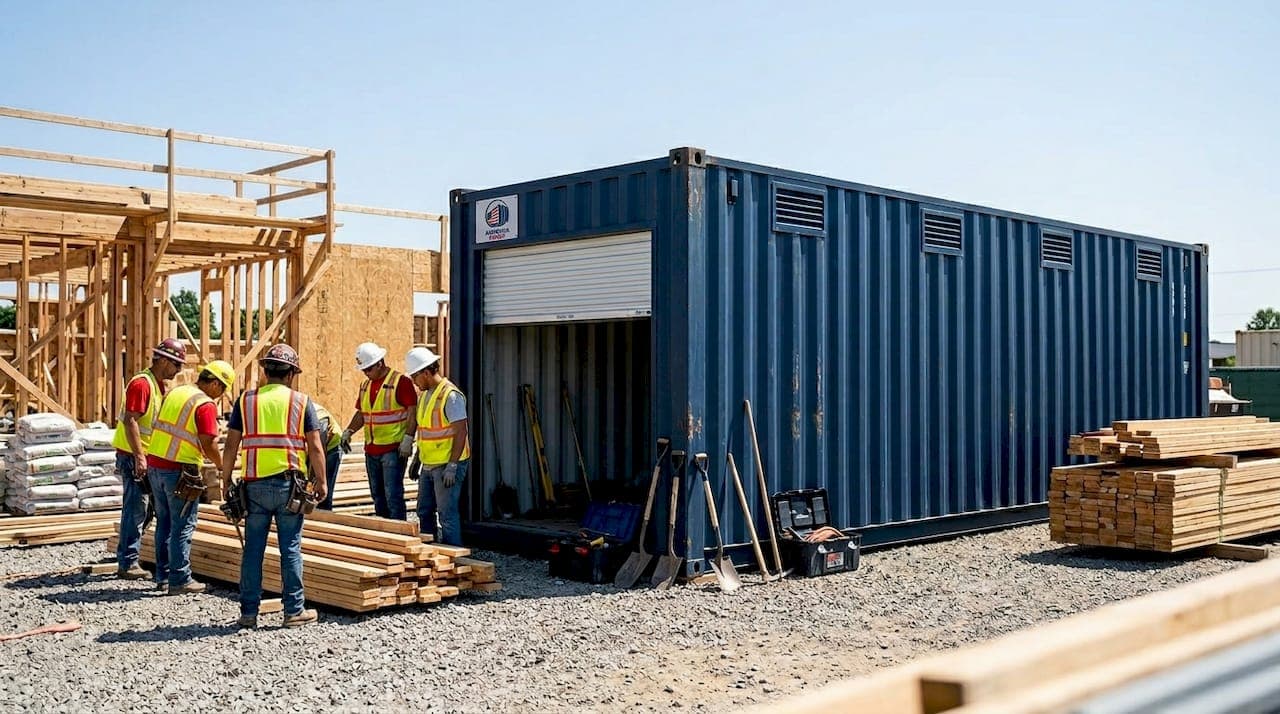
A site-ready container is a standard shipping container that has been modified off-site with functional upgrades, making it fully operational within hours of delivery. Unlike a bare steel box, a site-ready unit arrives pre-configured with features like roll-up doors, electrical wiring, HVAC systems, or insulation, depending on the intended use. Construction managers, contractors, and business owners use these units as on-site offices, secure storage, workshops, and crew break rooms. The core advantage is simple: zero on-site construction time. The container arrives ready to use, built from the same heavy-duty Corten steel that makes standard shipping containers among the most durable portable structures available.
What is a site-ready container and how does it differ from a standard unit?
A site-ready container starts life as a standard ISO shipping container, typically a 20ft or 40ft steel box originally designed for ocean freight. The transformation happens at a modification facility before delivery, not on your job site. This distinction matters because prefabrication off-site eliminates the risk of on-site delays caused by weather or labor shortages.
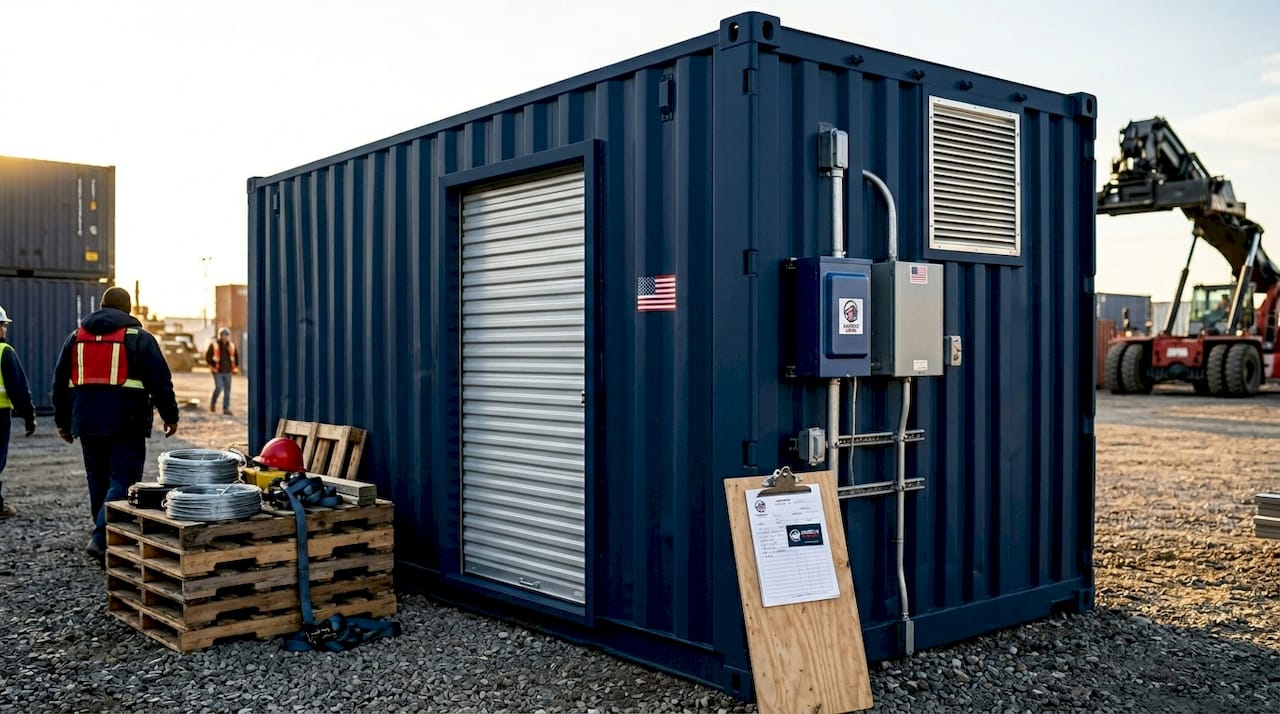
The industry does not use a single universal term for these units. You will hear "modified containers," "converted containers," or "job site containers" used interchangeably. The phrase "site-ready" is a practical descriptor that signals the container has been prepared for immediate deployment. Whatever the label, the defining characteristic is the same: the unit is functional the moment it lands on your site.
Standard containers from suppliers like Americaconex come in grades ranging from used wind and water tight (WWT) to one-trip, like-new condition. A site-ready build typically starts with a one-trip or cargo-worthy unit, then receives the modifications that match the buyer's specific use case. Understanding container grades before ordering helps you choose the right base unit for your project.
What modifications make a container "site ready"?
The modifications applied to a container determine what it can do on arrival. Most buyers select from a core set of upgrades that cover the majority of job site needs.
Common modifications include:
- Roll-up doors: Replace or supplement standard cargo doors for easier forklift access and faster loading of tools and equipment.
- Electrical wiring: Interior lighting, outlets, and breaker panels allow the container to function as a powered workspace or office.
- HVAC systems: Heating and cooling units make the container usable year-round, which is critical for crew break rooms or offices in extreme climates.
- Insulation: Spray foam or rigid board insulation reduces heat transfer, protecting temperature-sensitive inventory and improving comfort for occupants.
- Lockboxes and security upgrades: Reinforced lock systems protect high-value tools and equipment stored overnight on active job sites.
- Windows and man doors: Personnel doors and windows convert a cargo box into a livable workspace without requiring a building permit in most jurisdictions.
Each modification adds a specific capability. A contractor storing power tools needs a lockbox and roll-up door. A project manager running a field office needs electrical, HVAC, and a man door. A detailed overview of customization options can help you map modifications to your actual workflow before you order.
Pro Tip: Match your modification list to the container's primary function before ordering. Paying for HVAC on a unit used only for dry tool storage adds cost without benefit. Identify the single most critical function first, then layer in secondary upgrades.
What are the key benefits of using site-ready containers?
The most direct benefit is speed. Site-ready containers become operational within hours of delivery, cutting setup time that would otherwise consume days of on-site labor. For a construction project running on a tight schedule, that difference directly affects the project timeline.
Durability is the second major advantage. Corten steel, the alloy used in shipping container construction, is designed to withstand extreme weather and harsh conditions. This makes site-ready containers far more resilient than fabric tents, timber site sheds, or prefab plastic storage units. A Corten steel container does not rust through in a single season, and it resists impact from site machinery.
"Modified shipping containers serve as offices, break rooms, crew facilities, and workshops on construction sites, offering flexible space solutions that accelerate project workflows." — Construction Review Online
Scalability is a benefit that often surprises first-time buyers. Containers can be stacked vertically, creating multi-level job site infrastructure that maximizes a limited urban footprint. A single site can house ground-level storage, a second-level office, and a third-level crew room, all within the same square footage.
| Feature | Site-ready container | Traditional temporary building |
|---|---|---|
| Setup time | Hours after delivery | Days to weeks of on-site construction |
| Durability | Heavy-duty Corten steel | Timber or light steel framing |
| Portability | Crane or truck relocatable | Typically fixed once assembled |
| Stacking ability | Yes, engineered for vertical load | No |
| Security | Reinforced steel with lockbox options | Varies, often lower |
| Cost for equivalent footprint | Lower, often under $10,000 for covered units | Significantly higher |
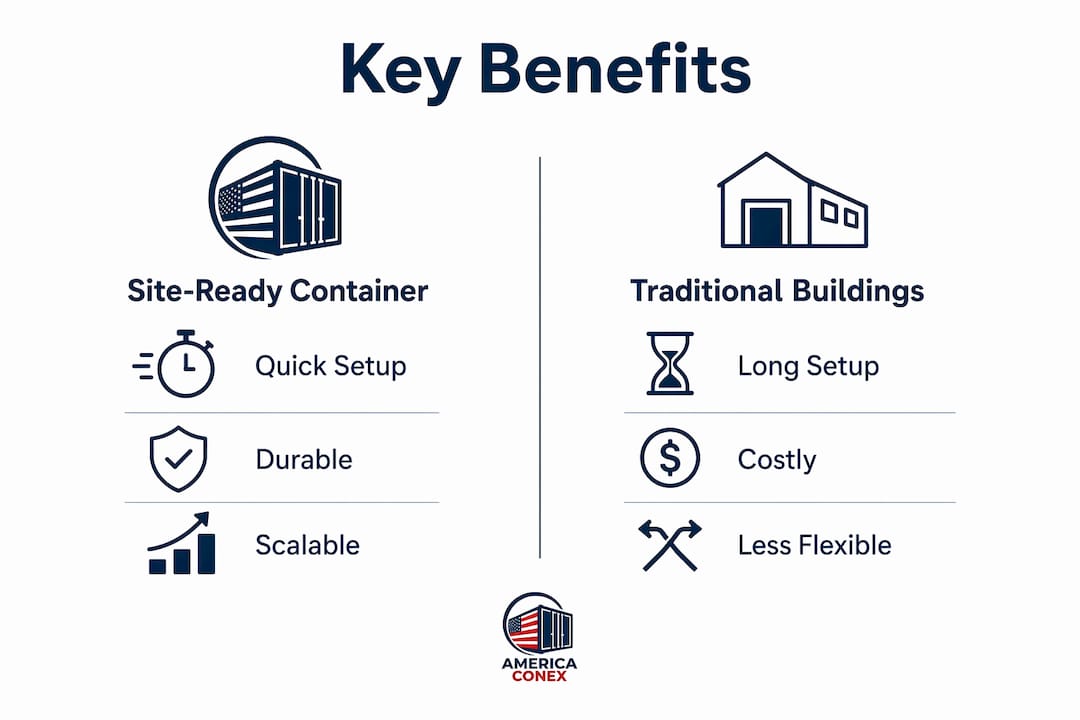
The cost comparison is particularly striking for covered storage. Engineered cover systems mounted on containers cost under $10,000, far less than a traditional steel building covering the same footprint. That gap in capital expenditure matters for businesses managing multiple project sites simultaneously.
How are site-ready containers used in storage and construction?
The range of practical applications is broader than most buyers initially expect. Here are the most common uses across residential, commercial, and industrial projects:
- On-site tool and equipment storage. Contractors store power tools, hand tools, and consumables in lockbox-equipped containers overnight. The steel construction eliminates theft risk that plagues open-site storage.
- Mobile field offices. A 20ft container fitted with electrical, HVAC, a man door, and windows becomes a functional project management office. Site supervisors use these for plan reviews, client meetings, and daily briefings without leaving the job site.
- Crew break rooms. On large commercial builds, a climate-controlled container gives workers a compliant rest area that meets OSHA break room requirements without constructing a permanent structure.
- Workshops and tool rooms. Electricians, plumbers, and fabricators use modified containers as on-site workshops, keeping specialty tools organized and protected from weather.
- Inventory staging for commercial developments. Retail buildouts and warehouse projects use containers to stage fixtures, hardware, and materials close to the installation point, reducing handling time.
- Modular multi-story job site infrastructure. On dense urban sites, stacking containers allows offices, storage, and crew facilities to coexist efficiently within a compact footprint. A standard 20ft container supports over 24,000 kg, making multi-story configurations structurally sound.
For residential projects, site-ready containers serve as secure storage during renovations, protecting appliances, cabinetry, and finish materials from theft and weather damage. You can find more detail on secure site storage to understand how these units protect materials across different project types.
What site preparation and foundation considerations are needed?
Placing a site-ready container correctly requires planning before the delivery truck arrives. The weight and dimensions of the unit determine what your site needs to support it safely.
Key site preparation factors include:
- Foundation type: Concrete piers, concrete slabs, compacted gravel pads, and railroad ties are the four most common foundation options. Each suits different soil conditions and budget levels. A full breakdown of foundation types and costs helps you match the foundation to your site conditions.
- Ground stability: Proper foundations prevent sinking or structural stress caused by container weight. A 20ft standard container weighs approximately 5,000 pounds empty. A 40ft high-cube weighs around 8,500 pounds empty. Soft or uneven ground will cause the container to rack, which warps doors and compromises the seal.
- Site access: Delivery trucks require a clear path at least 14 feet wide and 14 feet high. Tight urban sites may require a crane for placement, which adds to delivery planning. Review ground preparation guidance before scheduling your delivery date.
- Level placement: Containers must sit level within a tolerance of roughly one inch across the length. An unlevel container causes door alignment problems and water pooling on the roof.
| Container size | Empty weight | Recommended foundation |
|---|---|---|
| 20ft standard | ~5,000 lbs | Concrete piers or compacted gravel |
| 40ft standard | ~8,000 lbs | Concrete slab or reinforced piers |
| 40ft high-cube | ~8,500 lbs | Concrete slab or reinforced piers |
Pro Tip: Schedule your foundation work at least one week before the container delivery date. Concrete piers need curing time, and gravel pads need compaction. Rushing the foundation is the single most common cause of post-delivery door and seal problems.
Key takeaways
A site-ready container is the fastest and most cost-effective way to deploy functional workspace or secure storage on any job site, because it arrives pre-configured and requires no on-site construction.
| Point | Details |
|---|---|
| Site-ready definition | A shipping container modified off-site with upgrades like HVAC, electrical, and roll-up doors for immediate use. |
| Speed advantage | Units become operational within hours of delivery, eliminating on-site construction time. |
| Durability | Corten steel construction withstands extreme weather and supports stacking over 24,000 kg per unit. |
| Common uses | Field offices, tool storage, crew break rooms, workshops, and modular multi-story job site infrastructure. |
| Foundation requirement | A 20ft unit weighs ~5,000 lbs empty; stable, level foundations are required to prevent structural stress. |
Why site-ready containers are changing how I think about job site logistics
I have watched construction managers spend weeks building temporary site offices out of lumber, only to tear them down at project close. The labor cost alone often exceeds what a pre-configured container would have cost delivered. That calculation has shifted significantly in the last few years, and the shift is not just about price.
The real change is in how project teams think about site infrastructure. Traditionally, the site office and storage shed were afterthoughts, built from whatever materials were on hand. Now, construction managers increasingly treat site-ready containers as modular support units, planned into the project budget from day one. Urban sites with tight footprints are driving this hardest. When you cannot spread out horizontally, stacking containers vertically becomes a genuine solution rather than a novelty.
What I find most underappreciated is the relocation value. A timber site shed has zero residual value when the project ends. A Corten steel container, even after two years on a job site, retains significant resale or redeployment value. That changes the total cost calculation entirely. The container is not an expense. It is an asset that moves with your business.
The one mistake I see repeatedly is under-specifying modifications at the point of order. Buyers choose the cheapest base configuration, then spend more money retrofitting on-site. Deciding exactly what you need before you order, and ordering it pre-built, is always cheaper and faster than adding it later.
— Alex
Get site-ready containers from Americaconex
Americaconex supplies new and used shipping containers across the United States, with access to 30+ depots for fast, reliable delivery to your project site. Whether you need a 20ft unit for tool storage or a 40ft high-cube configured as a field office, Americaconex offers container grades suited to every level of site-ready application. Review available sizes and dimensions to match the right unit to your site footprint. If you are based in the Pacific Northwest, Americaconex serves the Seattle, WA area with competitive pricing and local delivery. Contact Americaconex directly to discuss modifications, delivery timelines, and pricing for your specific project.
FAQ
What is a site-ready container?
A site-ready container is a standard shipping container modified off-site with upgrades such as roll-up doors, electrical wiring, HVAC, and insulation, making it fully functional immediately upon delivery. The term is a practical descriptor rather than a formal industry classification.
How long does it take to set up a site-ready container?
Site-ready containers become operational within hours of delivery because all modifications are completed before the unit leaves the supplier's facility. This eliminates the on-site construction time required by traditional temporary buildings.
What foundation does a site-ready container need?
A 20ft container weighs approximately 5,000 pounds empty and requires a stable, level foundation such as concrete piers, a concrete slab, or a compacted gravel pad to prevent sinking or structural stress. The foundation must be prepared and cured before the delivery date.
Can site-ready containers be stacked?
Yes. Corten steel containers are engineered for stacking, with a standard 20ft unit supporting over 24,000 kg including cargo load. This makes multi-story job site configurations structurally sound and practical for urban sites with limited ground space.
What sizes are available for site-ready containers?
The two most common sizes are 20ft and 40ft, available in standard and high-cube heights. A 40ft high-cube provides the most interior volume and is preferred for field offices and crew facilities requiring standing room and equipment clearance.