
TL;DR:
- High-quality containers protect materials, ensure site security, and improve workflow efficiency.
- Regular inspections of seals, structural condition, and lock hardware are essential before deployment.
- Investing in durable, certified containers reduces long-term costs and operational risks.
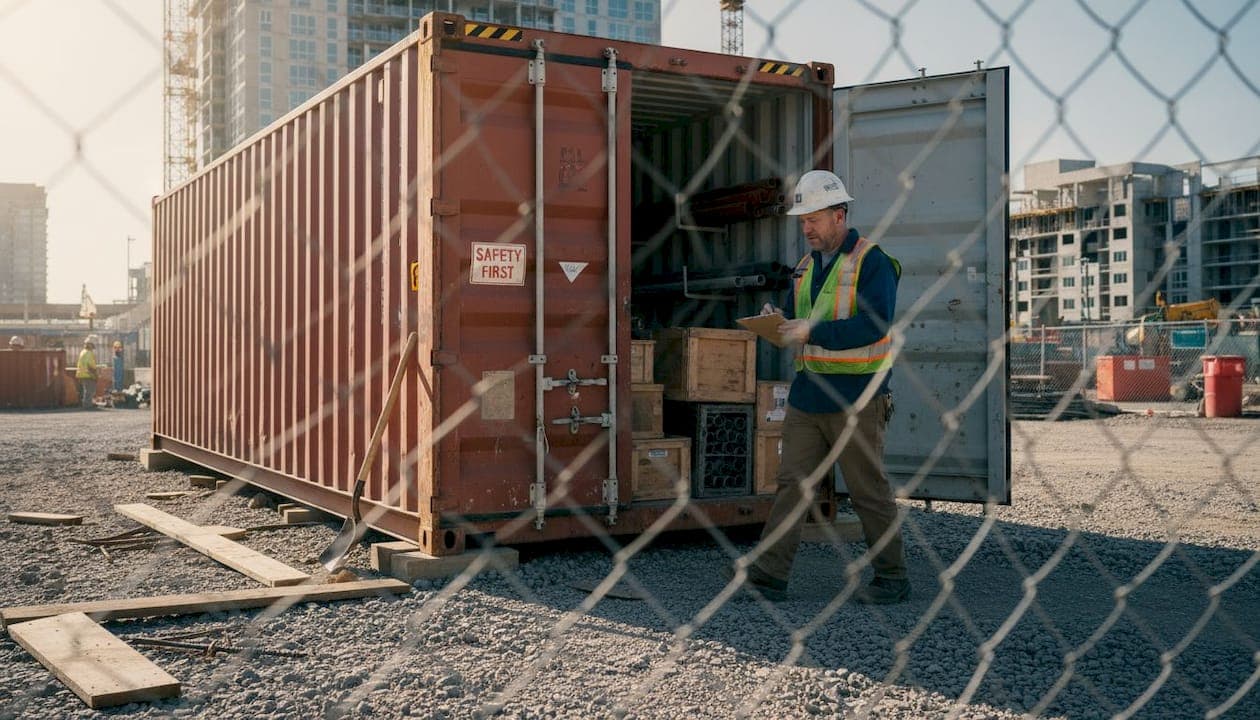
Not every shipping container is built equal, and on a busy construction site, that difference shows up fast. Many construction managers assume any steel box will do the job, but a container that leaks, warps, or fails at the lock can cost far more than the money saved at purchase. Container quality directly affects how secure your materials stay, how smoothly your crew operates day to day, and what you actually spend over the life of a project. This guide breaks down what quality really means in job site storage, what to inspect before signing anything, and how to avoid the hidden costs that catch too many site supervisors off guard.
Table of Contents
- Why container quality matters for job site storage
- Key container quality factors: What to check before choosing
- How container quality impacts site security and workflow
- Cost implications: The real price of quality in site storage
- Our perspective: Why container quality is a smart investment, not an expense
- Looking for reliable, high-quality containers?
- Frequently asked questions
Key Takeaways
| Point | Details |
|---|---|
| Quality affects security | Higher-quality containers offer better protection against theft, weather, and pests on job sites. |
| Standards reduce risk | Choosing containers meeting recognized grades helps prevent costly failures and insurance issues. |
| Long-term savings | Investing in well-maintained containers reduces maintenance, downtime, and unexpected project costs. |
| Inspection is critical | Always inspect before delivery and regularly during use to ensure lasting site storage performance. |
Why container quality matters for job site storage
When you're managing a construction site, your storage container is doing more than holding tools. It's protecting thousands of dollars in materials, deterring theft, keeping your schedule on track, and sometimes serving as the first line of defense against liability. A container that fails on any of those fronts creates a ripple effect across your entire project.
Low-quality containers introduce risks that aren't always obvious at first glance. A compromised door seal invites moisture, which can ruin lumber, electrical components, and safety equipment overnight. Structural rust weakens the floor and walls, making the unit unsafe for heavy storage. Worn or missing lock boxes leave padlocks exposed and easy to cut. And pest infiltration through gaps in the frame can contaminate supplies in ways that are expensive and time-consuming to address.
Here's what's at stake when quality is ignored:
- Theft and break-ins from weak or missing lock box protection
- Water damage to materials from failed seals or roof rust
- Pest infiltration through structural gaps
- Regulatory issues if the unit doesn't meet site safety standards
- Workflow delays from containers that are difficult to open or access
Compromised containers can lead to inventory damage and workflow delays that push project timelines back by days or even weeks. That's not a small inconvenience. On a job site running on a tight schedule, it's a serious operational problem.
"The cheapest container on the lot is rarely the cheapest container on the job site." This is something experienced site supervisors learn the hard way, usually after one bad experience with a unit that looked fine in the yard but failed within the first month of use.
The main components worth inspecting before any container touches your site include door seals, structural integrity, flooring condition, ventilation, and lock hardware. Each one plays a specific role in daily performance. Skipping this inspection to save time upfront is a tradeoff that rarely pays off.
Pro Tip: Run your hand along the interior ceiling and walls after closing the doors. Any light coming through or moisture on the surface is a red flag that the unit will fail in rain or high humidity.
Key container quality factors: What to check before choosing
Once you understand the risks, the next step is building a reliable inspection process. Container quality isn't a single rating. It's a combination of physical condition, prior use history, and grade classification. Knowing what each grade means and what to physically check gives you a real advantage when comparing options.
Here's a numbered checklist to use before committing to any unit:
- Door functionality: Open and close both doors fully. They should swing freely, seal flush, and latch without force.
- Seal condition: Inspect rubber gaskets around all door edges. Cracked or compressed seals let in water and air.
- Flooring: Check for soft spots, rot, or chemical staining. Bamboo or hardwood floors should feel solid underfoot.
- Ventilation: Confirm vents are present, unobstructed, and screened to prevent pest entry.
- Prior use: Ask what the container previously carried. Certain chemicals or agricultural products leave residues that can damage new cargo.
- Lock box presence: A welded lock box protects the padlock from bolt cutters and is a non-negotiable feature for job site security.
Understanding container quality terms like cargo-worthy, wind and water tight (WWT), and as-is will help you match the right grade to your actual needs. Industry standards such as cargo-worthy set the minimum for safe and secure storage, covering structural strength, door function, and weather resistance.
Here's a quick comparison to guide your decision:
| Grade | Condition | Best for job sites? |
|---|---|---|
| One-trip (like-new) | Near perfect, minimal wear | Yes, ideal for sensitive materials |
| Cargo-worthy | Structurally sound, weathertight | Yes, strong all-around choice |
| Wind and water tight (WWT) | Keeps out weather, minor cosmetic wear | Yes, solid for general storage |
| As-is | Unknown condition, no guarantees | Risky, not recommended |
For standard container specs on 20ft and 40ft units, dimensions and load ratings matter just as much as condition grade, especially if you're storing heavy equipment or stacking units.
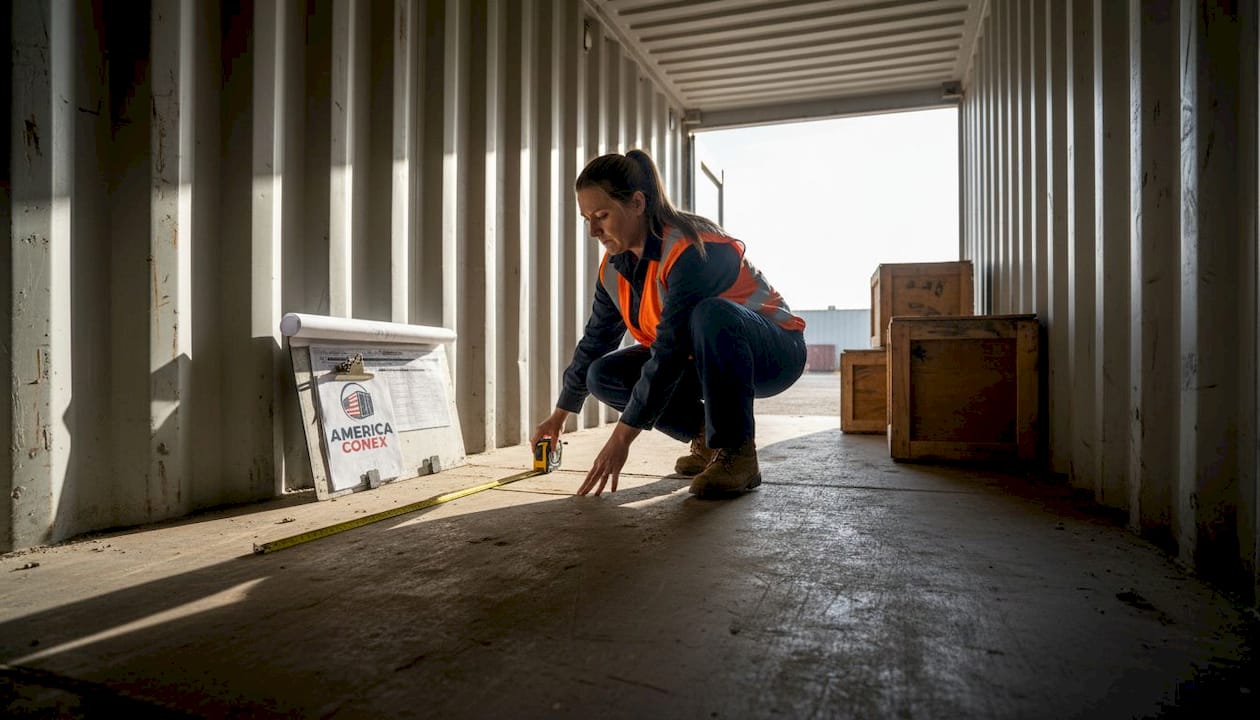
Pro Tip: The most overlooked inspection spots are the corner castings and the undercarriage. Rust concentrated in those areas signals deeper structural fatigue that won't show up on a quick visual scan of the walls.
How container quality impacts site security and workflow
Quality features don't just protect your materials in theory. They produce measurable differences in how your site runs every single day. Security and workflow are the two areas where this shows up most clearly.
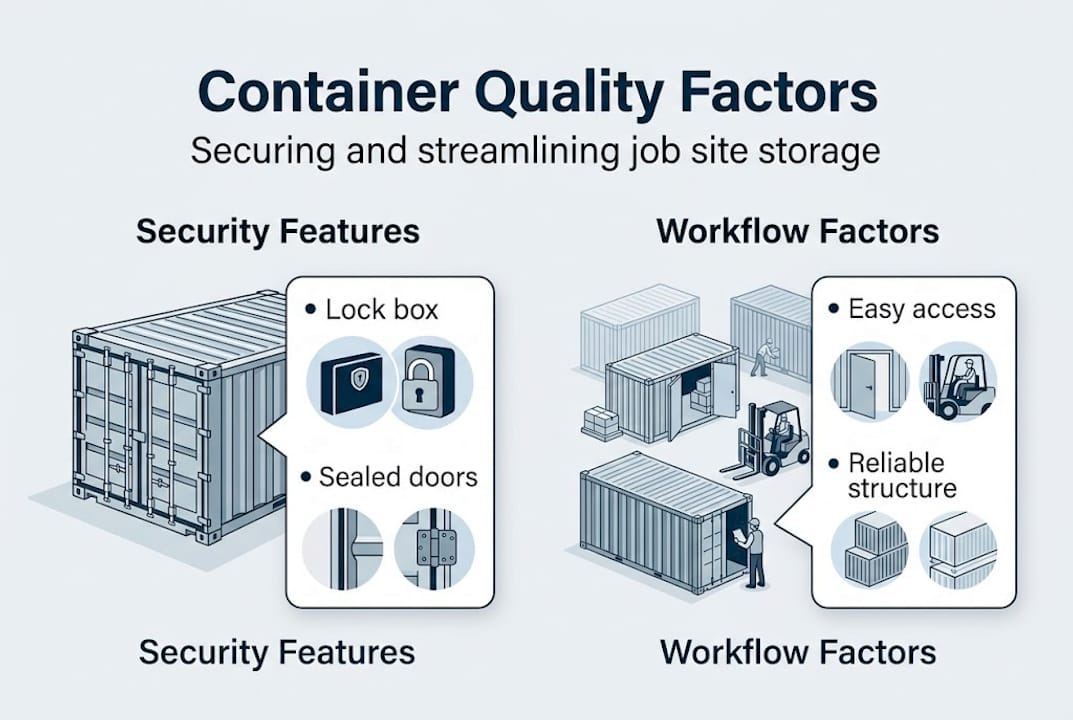
From a security standpoint, a high-quality container with a welded lock box, solid door hinges, and a tight seal creates a meaningful deterrent. Opportunistic theft, which accounts for a large share of job site losses, targets the path of least resistance. A container that looks solid and well-maintained is far less likely to be targeted than one with visible damage or a loose door.
Insurance is another angle worth considering. Some policies require that stored materials meet minimum containment standards. If your container doesn't qualify as cargo-worthy, a theft or damage claim could be denied, leaving you covering the full loss out of pocket.
On the operational side, well-maintained containers support better workflow and reduce access problems that slow crews down. Consider this scenario: a crew of five needs to retrieve materials three times a day. If the doors stick, swell in humidity, or require two people to force open, that's lost time multiplied across the entire project duration.
Here's how quality grades tend to compare on real-world performance metrics:
| Quality grade | Avg. access issues per month | Damage incidents per project | Insurance risk |
|---|---|---|---|
| One-trip | Rare | Very low | Minimal |
| Cargo-worthy | Occasional | Low | Low |
| WWT | Moderate | Moderate | Moderate |
| As-is | Frequent | High | High |
A real-world example: a site supervisor in the Midwest rented an as-is container to cut costs on a 6-month commercial build. Within 10 weeks, a rusted floor panel gave way under a loaded pallet, damaging $4,200 in electrical conduit. The repair, replacement materials, and schedule delay cost nearly triple the savings from choosing the cheaper unit.
- Faster crew access from doors that work reliably every time
- Fewer insurance complications from containers that meet recognized standards
- Reduced theft exposure from visible, quality-built security features
- Less maintenance downtime from units that don't require constant attention
Cost implications: The real price of quality in site storage
Price is always part of the conversation, and it should be. But the sticker price of a container is rarely the full story. The real cost includes what you spend during the project, not just at the start.
Direct costs are easy to compare: purchase price, rental rate, and delivery fees. Indirect costs are where the surprises hide. Maintenance and repairs on lower-quality containers add hidden costs over time, from patching leaks to replacing damaged flooring to addressing security failures after a break-in.
Here's how to approach the cost decision strategically:
- Calculate total project duration and multiply the rental rate or depreciation cost over that period.
- Estimate risk exposure by assigning a dollar value to the materials you'll store.
- Factor in crew time lost to access issues, maintenance, or incident response.
- Compare grade options side by side using those full cost inputs, not just the daily rate.
- Request documentation of container condition from the supplier before finalizing any agreement.
Common cost traps when cutting corners on container quality:
- Paying for repairs or replacements mid-project when a cheaper unit fails
- Losing stored materials to water damage or theft without insurance coverage
- Facing project delays because a container needs to be swapped out
- Absorbing liability costs if a damaged container injures a crew member
Understanding renting vs. buying is also part of the cost equation. For short projects, renting a high-quality unit often beats buying a lower-grade one outright. For longer projects, buying a certified unit and reselling it afterward can actually reduce your net cost below what a cheap rental would run.
Pro Tip: Ask your supplier for a written condition certificate or inspection report before delivery. This protects you if a quality dispute arises later and strengthens any insurance claim you might need to file.
Our perspective: Why container quality is a smart investment, not an expense
Here's something worth saying plainly: the sites that run the smoothest are almost never the ones that spent the least on storage. They're the ones that made a deliberate decision about what quality level they needed and then held to it.
The temptation to go cheap on a container is understandable. Budgets are tight, timelines are aggressive, and a steel box can feel like a low-priority line item. But the job sites that treat container quality as an afterthought tend to pay for it in ways that don't show up on the original budget, including emergency replacements, crew productivity losses, and insurance headaches.
What the best-run projects get right is thinking about secure storage insights as part of the overall risk management strategy, not a separate purchasing decision. A quality container isn't just a box. It's a controlled environment for your most critical assets. When you frame it that way, the math on investing in a certified, well-maintained unit becomes obvious. Peace of mind and fewer interruptions are worth more than the price difference between a WWT and an as-is unit.
Looking for reliable, high-quality containers?
If this breakdown has made one thing clear, it's that the right container for your job site is one you can count on from day one. At America Conex, we supply vetted, job-ready containers across the country, with options ranging from used WWT and cargo-worthy units to one-trip containers in like-new condition.
With 30+ depot locations nationwide, we deliver fast and competitively priced no matter where your project is located. Whether you need a 20ft unit for a tight urban site or a 40ft high cube for a large commercial build, we can match you with the right grade and get it on-site quickly. Explore our full range of shipping containers for sale and get a quote tailored to your project's specific needs.
Frequently asked questions
What does 'cargo-worthy' mean for containers on a job site?
Cargo-worthy means the container meets strict industry standards for strength, security, and weather-tightness, making it safe for both active shipping and on-site storage of valuable materials.
How often should site storage containers be inspected for quality?
Containers should be inspected before delivery and at least quarterly during use. Regular inspections catch early signs of wear or damage before they become costly problems.
Is it better to buy or rent a higher-quality container for a short-term project?
Renting is usually the smarter move for short-term projects. Project duration is the key factor in determining whether renting or buying delivers better overall value.
Can poor container quality void site storage insurance claims?
Yes. Containers that don't meet recognized quality standards may result in denied claims for theft or damage losses, leaving you responsible for the full cost.