
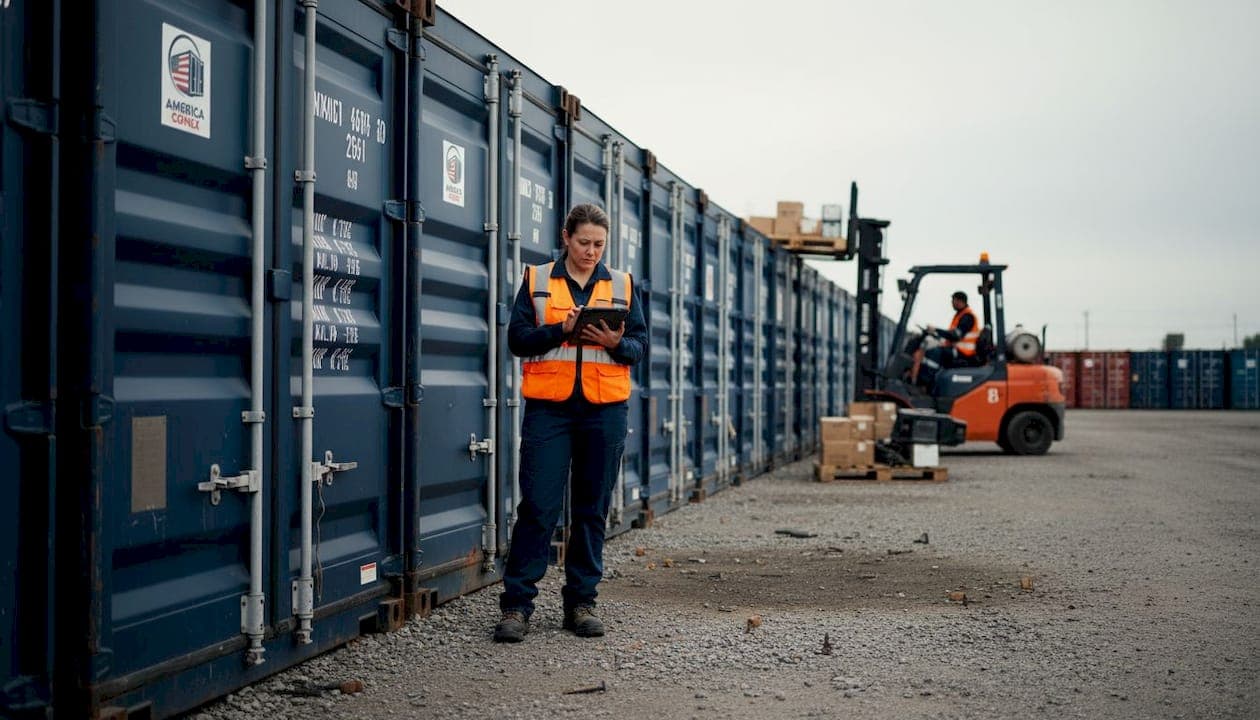
TL;DR:
- Modern site storage containers are durable, weatherproof steel enclosures designed for secure, on-site use.
- Choosing the correct size and features ensures safety, efficiency, and long-term cost savings.
- High-quality containers offer advanced security and corrosion resistance, suitable for construction, farming, and residential needs.
Most people picture a rusty metal box when they hear "site storage container." That mental image misses the mark by a wide margin. Today's purpose-built site storage containers are engineered with thick-gauge Corten steel, reinforced locking systems, and weatherproof seals that can outlast nearly any jobsite condition you throw at them. Contractors secure hundreds of thousands of dollars in tools inside them. Farmers protect entire harvests. Homeowners use them through months-long renovations. This article breaks down exactly what site storage containers are, how they perform across real-world applications, which size fits your needs, and what to watch for when you buy.
Table of Contents
- What is a site storage container?
- Types and sizes: choosing the right container for your needs
- Site storage container durability and security features
- Practical applications: who uses site storage containers and how
- Our take: what most people get wrong about site storage containers
- Get started with site storage containers today
- Frequently asked questions
Key Takeaways
| Point | Details |
|---|---|
| Robust and versatile | Site storage containers offer secure, weatherproof storage for jobsites, farms, and homes. |
| Size matters | 20ft and 40ft containers fit most needs, but it’s essential to match size to your specific storage demands. |
| Built for security | These containers resist theft and harsh weather, keeping tools and valuables protected. |
| Choose quality | Invest in containers built for durability to avoid costly failures and ensure long-term usage. |
What is a site storage container?
A site storage container is a purpose-built, portable steel enclosure designed to store equipment, tools, materials, and inventory securely at or near your work location. Unlike a garden shed or a rented storage unit across town, a site storage container sits right where you need it, ready to access in seconds and built to survive outdoor conditions without complaint.
The core appeal is straightforward. You keep your assets close, protected, and organized. No driving across town at 6 a.m. to pick up tools before the crew arrives. No worrying about rain-soaked equipment or overnight theft from an unsecured job trailer. A quality site storage container solves all three of those problems at once.
These containers are manufactured from standard containers explained as a foundation, meaning they share the same internationally standardized dimensions and structural DNA as ocean freight containers. That heritage matters because it explains why they perform so well in harsh conditions. They were literally designed to survive trans-Pacific ocean crossings before being repurposed for ground-level storage.
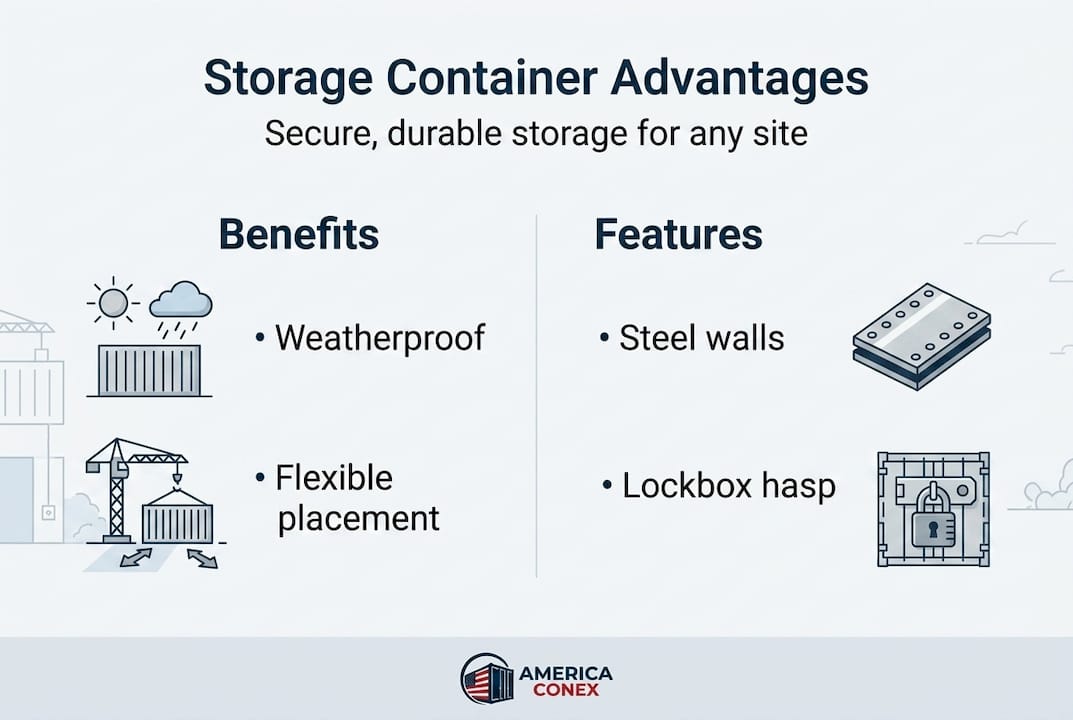
Core features you'll find on most site storage containers include:
- Weatherproof steel walls fabricated from corrugated Corten steel, which forms a natural protective patina over time
- Heavy-duty swing doors with multi-point locking rods and padlock hasps
- Hardwood or steel floors rated to hold heavy forklifts and pallet jacks
- Standard ISO corner castings for forklift pickup and crane lifting
- Optional ventilation ports to reduce condensation inside the unit
Common use scenarios span three main sectors: construction sites need them for tools and materials, farms use them for feed, equipment, and seasonal gear, and homeowners rely on them during renovations when the garage is full and weather threatens stored furniture.
"A 20ft container holds approximately the contents of a one-bedroom apartment or the tools for a small crew, while a 40ft unit handles bulky materials or larger operations. Premium units achieve 6,400 lbs roof capacity and show zero rust after a 60-day salt spray test, which is a serious standard."
These aren't toy boxes. That roof capacity figure means a loaded forklift can cross the top without flexing the structure. That salt spray benchmark means a container left outdoors in a coastal or humid environment holds up without corroding through. Those numbers represent real engineering standards, not marketing language.
One misconception worth clearing up: "used" doesn't mean "unreliable." A cargo-worthy used container has already proven it can hold freight across oceans. That structural track record is actually a selling point, not a drawback, provided the container has been properly inspected and graded before delivery.
Types and sizes: choosing the right container for your needs
Choosing the wrong size container is one of the most common and most avoidable mistakes buyers make. Too small, and you're stacking things in ways that create safety hazards and damage your gear. Too large, and you're paying for dead space and taking up more room on a tight jobsite than necessary.
Here's a practical size breakdown to guide your decision:
| Container size | Interior space | Best use case |
|---|---|---|
| 10ft | ~480 cubic ft | Small residential, minimal tools |
| 20ft | ~1,170 cubic ft | Small crews, one-bedroom contents |
| 40ft standard | ~2,385 cubic ft | Large crews, heavy equipment |
| 40ft high cube | ~2,694 cubic ft | Tall equipment, palletized goods |
The differences between container sizes come down to more than just floor space. High cube units add an extra foot of interior height, bringing the ceiling from roughly 7'10" to 8'10". That additional foot matters enormously when you're storing tall shelving units, stacked lumber, or equipment that can't be tipped on its side.
When to choose each size:
- 10ft containers work well for homeowners who need overflow storage during a kitchen remodel or a property cleanup. They fit in most driveways and don't require permits in many jurisdictions.
- 20ft containers are the sweet spot for most contractors and small farm operations. As confirmed by capacity benchmarks, a 20ft unit holds roughly the gear for a small crew or the contents of a one-bedroom space.
- 40ft standard containers serve large construction crews, commercial operations, and farms storing heavy seasonal equipment like tractors and irrigation gear.
- 40ft high cube containers are ideal when ceiling clearance matters, such as for enclosed vehicles, tall shelving, or materials that ship on pallets and can't be broken down.
Beyond size, there are configuration features that significantly affect daily usability. Double-wide doors on the cargo end make loading wide equipment far easier. Side access doors add flexibility when the main doors face a wall or fence. Ventilation kits prevent moisture buildup, which matters most if you're storing electronics, paper records, or any item sensitive to humidity. Custom shelving, lighting, and electrical ports can also be added after purchase.
Pro Tip: Before ordering, physically measure the largest item you plan to store and confirm it fits through the door opening, not just inside the container. The standard cargo door opening is approximately 7'6" wide by 7'5" tall, which surprises buyers used to thinking only about floor space.
For homeowners specifically, the residential storage container guide walks through placement, permit considerations, and how to prep your site before delivery.
Site storage container durability and security features
Security and durability are the two factors that separate a good container from a great one. Let's talk about both in concrete terms.
Durability: what the numbers actually mean
| Feature | Standard unit | Premium unit |
|---|---|---|
| Roof load capacity | ~3,000 lbs | 6,400 lbs |
| Salt spray resistance | 30 days | 60+ days |
| Wall steel thickness | 14 gauge | 12 gauge or thicker |
| Floor load rating | 20,000 lbs | 33,000+ lbs |
These specs have real consequences on the ground. A 6,400 lb roof capacity means a crew member can work on top of the container without structural risk. A 60-day salt spray result with zero rust means a container parked near a coastal worksite or exposed to humid summer conditions won't corrode through in a season or two.
Corten steel, the material used in most quality containers, is specifically alloyed to resist oxidation. When it weathers, it forms a stable rust-like surface layer that actually prevents deeper corrosion from taking hold. This is fundamentally different from regular steel, which continues rusting through the metal over time.
Security: keeping your assets protected
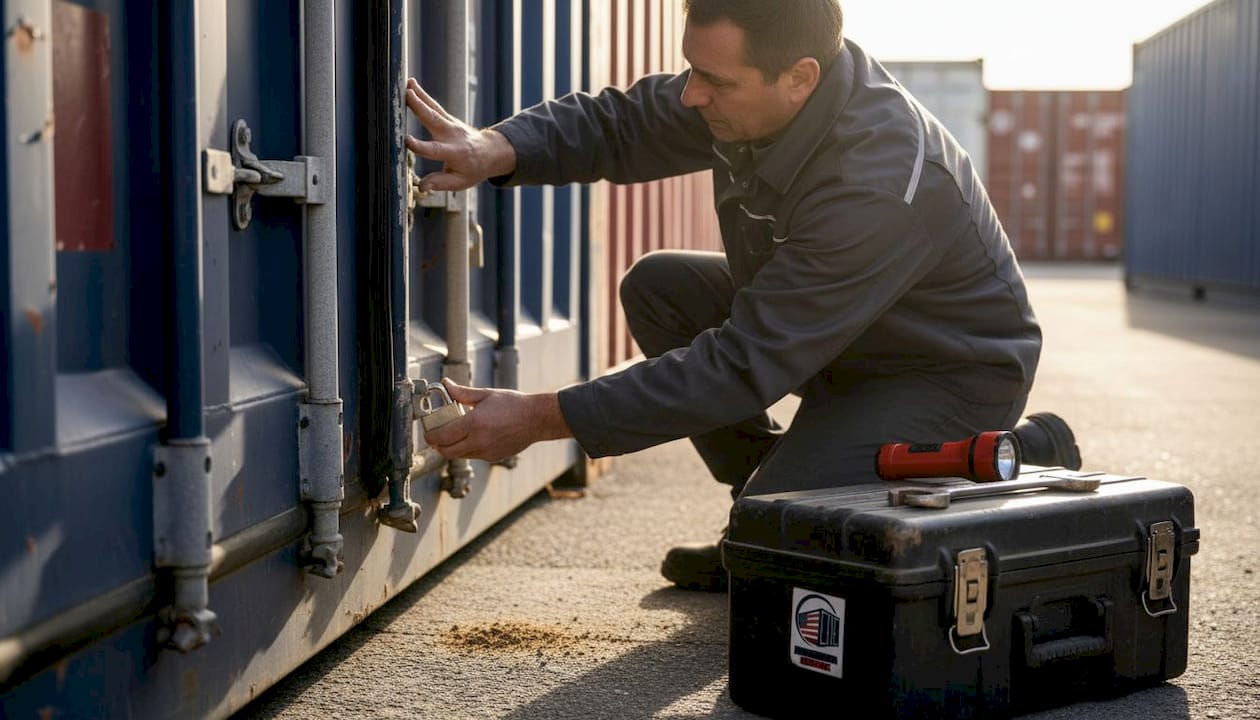
A well-built site storage container is significantly harder to breach than most people realize. Standard features on cargo-worthy security grade units include:
- Lockbox hasps welded over the padlock point, which prevent bolt cutters from reaching the lock shackle
- Locking rods that run vertically from the door handle to the frame at top and bottom
- Hardened steel locking bars on premium units, which require serious tools to defeat
- Welded corner posts that make prying attacks far less viable than with standard storage sheds
For high-value construction sites, adding a ground anchor and a high-security padlock rated Grade 4 or above is an extra layer worth the small cost. Learn more about container quality and security to understand what separates a well-graded unit from one that cuts corners.
Pro Tip: When you inspect a used container before delivery, check the door seal gasket carefully. A worn or cracked seal lets in moisture and insects, which undermines the otherwise strong weatherproofing of the steel body. Replacing a gasket is inexpensive, but you want to know upfront.
The combination of structural strength, corrosion-resistant materials, and purpose-built locking systems makes a quality site storage container dramatically more secure than a storage shed, a job trailer, or a chain-link fenced laydown yard. For anyone storing tools, electronics, or materials worth thousands of dollars, that security margin is hard to put a price on.
Practical applications: who uses site storage containers and how
Understanding the specs is one thing. Seeing how real operators use these containers in practice is where the value truly clicks.
Construction contractors
A construction site is the most natural home for a site storage container. Tools go missing on open sites. Materials exposed to weather warp, rust, or become unusable. A container solves both problems immediately. Contractors store power tools, pneumatic equipment, surveying gear, and sensitive electrical components inside a locked container on site. At the end of each day, everything goes back in, the doors lock, and the crew leaves without worrying about what they'll find in the morning.
For workflow, the storage for equipment approach pays off even further. Containers organized by task or trade keep the site moving efficiently. Plumbing supplies in one section, framing hardware in another. No one wastes time hunting through a disorganized pile.
Farmers and agricultural operations
Farms run on seasonal rhythms, and that creates real storage pressure at certain times of year. A 40ft container parks near the barn or equipment shed and handles bulky materials for large crews or stores harvest outputs before transport. During off-season months, the same container holds tractor attachments, irrigation equipment, and seed stock that would otherwise sit exposed to frost and rain.
Homeowners and residential users
Renovation projects displace a surprising amount of household contents. A kitchen remodel can leave you with nowhere to put appliances, cabinetry, and furniture. A site storage container in the driveway handles it all for the duration. Many homeowners also use containers for long-term garage overflow, hobby equipment, or emergency preparedness supplies.
Here are the most common residential applications:
- Temporary storage during home renovation or remodel
- Long-term overflow for seasonal gear like boats, ATVs, and holiday decor
- Secure storage for collectibles, tools, or firearms
- Disaster preparedness supply caching in rural areas
Businesses and commercial operators
Beyond construction and farming, retail businesses, event companies, and landscaping firms all use site storage containers as satellite storage for regional operations. A landscaping crew might park a 20ft container at a large commercial account to store mowers, irrigation parts, and chemicals, removing the need to haul everything back to the main yard each day.
That kind of operational decision feeds directly into container storage in workflow efficiency gains. Less time driving, less fuel cost, less wear on trucks, and faster response when a job site needs something in a hurry.
Pro Tip: If you're using a container for commercial storage at a client site, confirm zoning and temporary use rules with the local municipality before delivery. Most areas have no issue with a container on private property for 30 to 90 days, but some require a permit for anything longer.
Our take: what most people get wrong about site storage containers
Here's the hard truth: most buyers focus almost entirely on price and almost not at all on condition, grade, and end-use suitability. That instinct makes sense when you're watching a budget, but it often costs more in the long run.
A cheaper, lower-grade container might have worn door seals, thinning floor boards, or corroded locking hardware. Six months later, you're dealing with moisture-damaged tools or a door that won't close cleanly. The container "saved" you a few hundred dollars upfront and cost you far more in damaged assets or replacement headaches.
The second thing buyers routinely overlook is ventilation. Steel containers create condensation on the interior walls when the outside temperature drops and the interior is warmer. Without ventilation ports, that moisture accumulates. Over time, it affects anything inside that's even slightly absorbent, including cardboard packaging, fabric, and wood. Adding basic vents at purchase is trivial in cost. Retrofitting them or dealing with the damage later is not.
Finally, think about resale before you buy. Containers hold value well if you buy the right grade. A one-trip or cargo-worthy unit from a reputable supplier retains a meaningful percentage of its value for years. Understanding saving on container costs isn't just about finding the cheapest unit today. It's about recognizing that buying quality upfront often means lower total cost over the life of ownership. Buy for the application, not just the sticker price.
Get started with site storage containers today
You now understand what makes a site storage container worth investing in, how to match the right size to your application, and what security and durability standards actually mean in practice. The next step is finding the right unit at the right price.
At America Conex, we supply new and used shipping containers across the United States, with access to more than 30 depot locations for fast, reliable delivery wherever you're located. Whether you need a buy shipping containers option for a one-trip unit in like-new condition, a solid used wind and water tight container for a jobsite, or a cargo-worthy 40ft high cube for a commercial operation, we have the inventory and the service to back it up. Get transparent pricing and a smooth buying experience from the first call to the day it arrives on your site.
Frequently asked questions
How much can a typical site storage container hold?
A standard 20ft container holds roughly one-bedroom contents or the tools for a small crew, while a 40ft unit handles bulky equipment or large material quantities for bigger operations.
Are site storage containers weather-resistant?
Yes. Premium units show zero rust after a 60-day salt spray test, meaning they are built to handle prolonged outdoor exposure in demanding environments without structural degradation.
What security features do site storage containers offer?
Quality containers include welded lockbox hasps that shield the padlock from bolt cutters, multi-point locking rods on the doors, and thick Corten steel walls that make forced entry far more difficult than a standard shed.
How do I pick the right size container for my job?
Match the size to your largest items and your total volume: a 20ft container suits small jobs and residential needs, while a 40ft unit fits large crews, heavy machinery, or bulk materials that a smaller container simply can't accommodate.