

TL;DR:
- Proper site preparation and detailed location information are crucial to ensure timely, cost-effective container deliveries. Unclear instructions, permits, access issues, or site conditions can cause significant delays and unexpected costs. Partnering with experienced providers like America Conex helps anticipate and mitigate location-specific challenges for seamless delivery.
Imagine booking a container delivery, confirming the date, and then watching a flatbed truck sit idle for two hours because the driver can't navigate a narrow gate, the site isn't graded, and nobody on-site has the authority to direct placement. That scenario plays out more often than most people expect, and it costs real money every single time. Location isn't just an address you type into a form. It's a collection of details, access conditions, permit requirements, and site realities that determine whether your container arrives on time and on budget, or becomes an expensive headache that sets your project back by days.
Table of Contents
- How delivery location impacts logistics and timing
- Location-based compliance: permits, zoning, and legal risks
- The true cost of failed or inefficient delivery
- How to prepare your location for successful delivery
- The overlooked details that separate smooth deliveries from delays
- How America Conex supports seamless, location-smart container delivery
- Frequently asked questions
Key Takeaways
| Point | Details |
|---|---|
| Location drives logistics | Every detail of your address and site changes route planning, timing, and delivery success. |
| Compliance starts with location | Permitting and legal requirements are set by delivery area, so mistakes can add delays and costs. |
| Failed deliveries cost more | Extra trips, fuel, labor, and penalties stack up the moment site readiness or info is off. |
| Preparation pays off | Proactive site checks and instructions make delivery efficient and cost-effective. |
How delivery location impacts logistics and timing
After understanding why location is a crucial detail to get right, it's worth breaking down exactly how it shapes delivery timelines and logistics from the ground up.
Every container delivery starts with a routing decision. Carriers and planners use location as an input to routing optimization and delivery scheduling, meaning that changing the number or geometry of delivery locations directly changes what routes are even feasible given constraints like time windows and vehicle capacities. In plain terms, your address, your site layout, and your access conditions all feed into whether a driver can realistically reach you within the scheduled window.
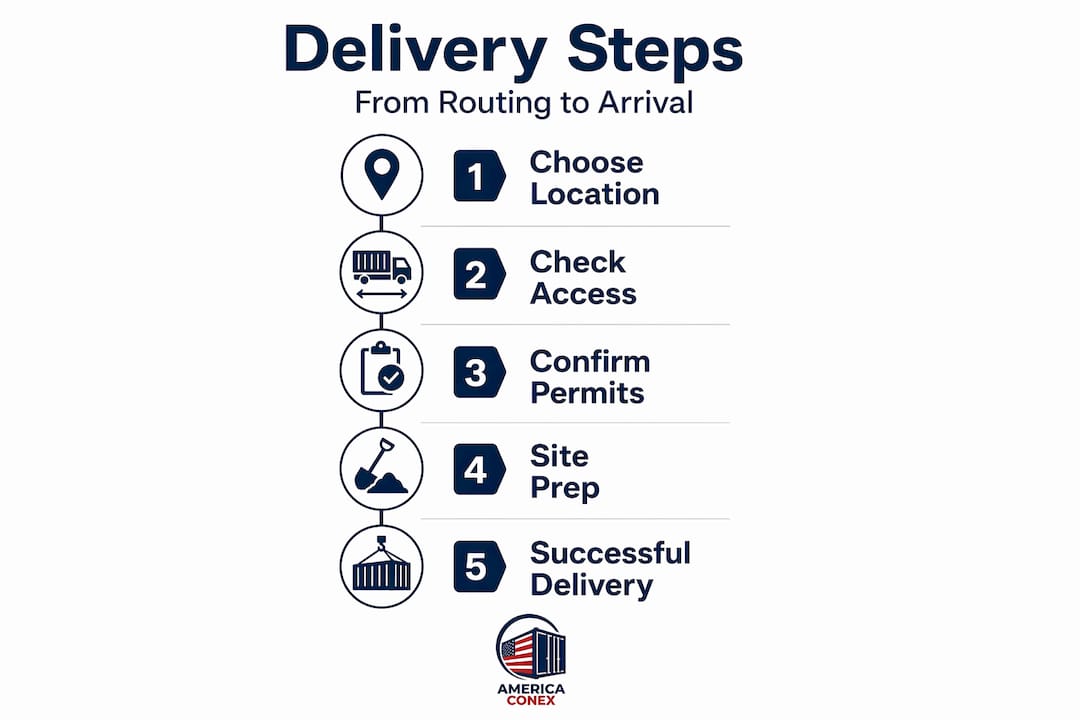
The type of area you're in matters enormously. Urban deliveries face congestion, restricted truck routes, and limited maneuvering room. Suburban sites are generally more flexible but can still present challenges like low-hanging utility lines or soft ground. Remote and rural locations may require longer travel times, potentially adding fuel surcharges or extended lead times to your quote.
| Delivery scenario | Typical lead time | Key cost factors |
|---|---|---|
| Urban (city center) | 2 to 5 business days | Permit fees, restricted hours, complex routing |
| Suburban | 1 to 3 business days | Site access, ground conditions, HOA rules |
| Remote or rural | 3 to 7 business days | Distance surcharges, road conditions, limited depot proximity |
Understanding logistics and distribution best practices shows that the most preventable delays in freight delivery come from incomplete location data, not from carrier error. When a dispatcher doesn't know about a low bridge on the access road or a weight-restricted street nearby, the driver finds out the hard way.
Here's what location data actually influences before the truck ever leaves the depot:
- Route feasibility: Can a standard flatbed or tilt-bed truck physically reach your site?
- Delivery window: What time of day can the truck legally operate in your area?
- Equipment needs: Does your site require a crane, a side loader, or a specialized trailer?
- Driver instructions: Are there gates, codes, or contacts the driver needs in advance?
Thinking about transporting containers efficiently means treating location as a variable you actively manage, not a static field you fill in once and forget. Pairing that with solid container storage workflow tips ensures the container lands exactly where it needs to be, positioned correctly from day one.
Pro Tip: Share a satellite image or a hand-drawn site map with your carrier before delivery day. Dispatchers can use it to brief drivers on access points, turning radius needs, and placement zones before anyone gets on the road.
Location-based compliance: permits, zoning, and legal risks
Once you see how logistics are impacted by location, it makes sense to cover compliance, where legal and permit details can create serious setbacks that no amount of good planning can overcome after the fact.
Zoning laws and permit requirements don't follow a national standard. They vary by state, county, city, and sometimes even by neighborhood. Location drives permitting and zoning and other compliance constraints, including municipal permits, HOA rules, and the need for oversize or overweight permissions or crane-related approvals, all of which can add cost and delay risk if you don't account for them early.
A container being placed in a residential neighborhood in one county might require a simple zoning variance. The same container placed three miles away in a different jurisdiction might need a building permit, an HOA approval, and a temporary street closure permit for the delivery truck. These aren't edge cases. They're common realities for anyone placing containers in developed areas.
| Delivery environment | Common permits or approvals needed |
|---|---|
| City or urban | Street closure permit, oversize load permit, municipal zoning approval |
| Suburban residential | HOA approval, zoning variance, possibly a building permit |
| Rural or agricultural | Minimal permits, but may need county road use agreement |
| Commercial or industrial | Site plan review, fire marshal clearance, occupancy considerations |
The compliance process, done in the right order, looks like this:
- Verify zoning for your specific parcel before ordering a container.
- Identify permit requirements at the city and county level.
- Apply for permits early, since processing times vary from 24 hours to several weeks.
- Coordinate any road closures with local authorities well in advance.
- Notify your HOA or municipality if required, and get written confirmation.
- Confirm crane or equipment permits if your site requires overhead placement.
Skipping any of these steps doesn't just create paperwork problems. It can result in the driver arriving, the container sitting on the truck, and you paying for a re-delivery because the permit wasn't ready. Understanding container quality and site needs is part of the same picture: the right container for your site and the right compliance steps for your location go hand in hand.
Pro Tip: Always check for crane permits or temporary street closure rules before booking delivery. A quick call to your local public works department can save you days of delay and hundreds of dollars in re-delivery fees.
The true cost of failed or inefficient delivery
With compliance risks explored, let's spotlight the real, day-to-day costs and pain points when location isn't handled correctly, because the financial damage compounds fast.
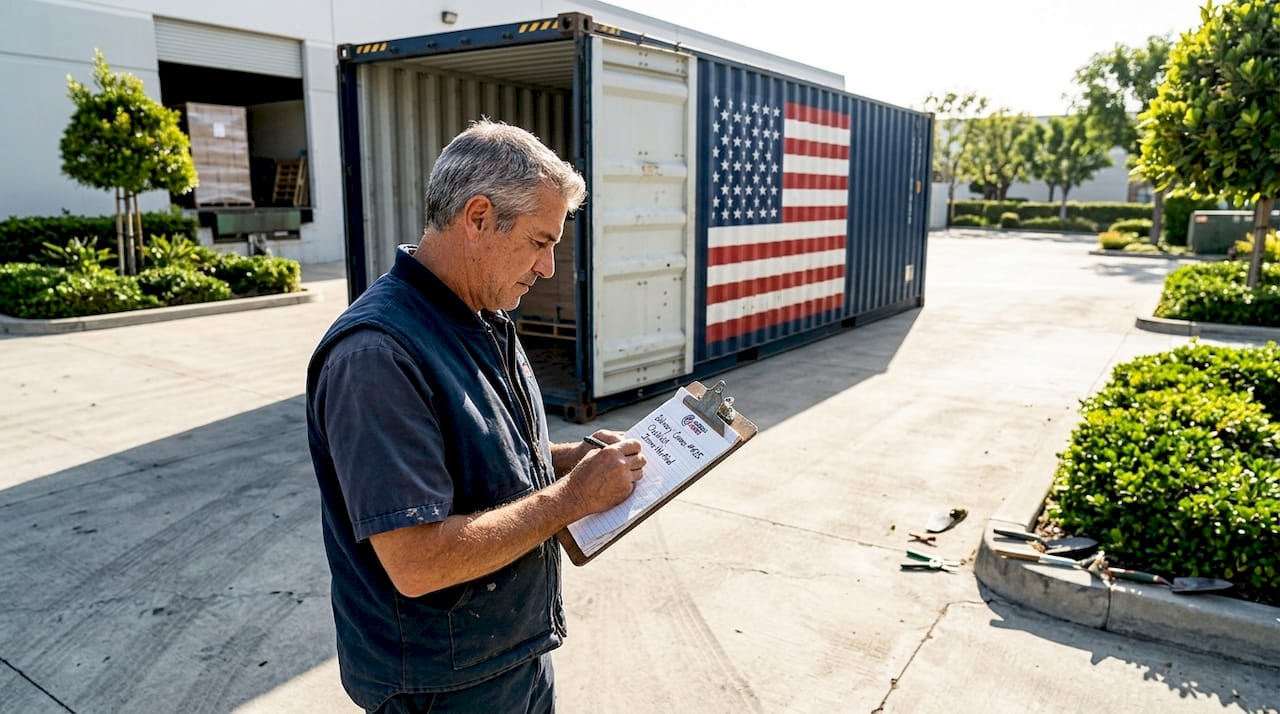
A single failed delivery attempt isn't just an inconvenience. It triggers a chain reaction of costs that most people don't anticipate until they're already paying them. Bad or uncertain destination details tied to location, including wrong addresses, unclear delivery instructions, receiver unavailability, or a site that isn't ready, increase failed delivery attempts, which drives higher total logistics costs through extra trips, labor, fuel, and potentially return or storage fees.
Here's what that domino effect actually looks like in practice:
- Fuel costs for the return trip and second delivery attempt
- Driver labor hours billed at commercial rates for time spent waiting or turning around
- Re-delivery fees charged by the carrier, sometimes equal to the original delivery cost
- Storage fees if the container needs to be held at a depot while the site issue is resolved
- Project delays that push back construction timelines, lease start dates, or operational schedules
- Customer dissatisfaction if the container was ordered for a client or tenant
"Failed deliveries represent one of the most avoidable cost centers in logistics. The root cause is almost always information gaps at the destination, not carrier error or traffic." This insight reflects what experienced logistics managers see repeatedly: the problem starts before the truck ever leaves.
Knowing how to cut shipping container costs means understanding that failed deliveries are one of the biggest hidden expenses in the process. And understanding secure storage and shipping details helps you plan for contingencies if a delivery does need to be held temporarily.
Pro Tip: Always confirm not just the address but also site readiness and receiver availability the day before delivery. A two-minute phone call can prevent a four-figure re-delivery bill.
How to prepare your location for successful delivery
Now that you understand the risks of poor planning, let's focus on what you can control: preparation for a flawless delivery that goes right the first time.
Site preparation is the single most effective thing you can do to guarantee a smooth container delivery. The carrier handles routing and equipment. You handle the destination. And that means getting granular about every detail of your site before the truck shows up.
Failed delivery attempts consistently trace back to destination-side problems, including unclear instructions, unavailable receivers, and sites that aren't physically ready for placement. Every one of those problems is preventable with the right prep work.
Follow these steps before every container delivery:
- Confirm the exact delivery address, including any suite numbers, lot identifiers, or GPS coordinates if the location is hard to find.
- Provide written delivery instructions that describe the entrance, any gate codes, and where on the property the container should be placed.
- Inspect ground conditions at the placement site. Soft soil, steep slopes, or standing water can prevent safe placement and may require gravel, railroad ties, or concrete pads.
- Measure overhead clearance along the access route and at the placement area. Low-hanging wires and tree branches are a common obstacle for tilt-bed delivery trucks.
- Notify any required authorities if your delivery involves a road closure or crane use.
- Ensure someone with authority is on-site during the delivery window to direct placement and sign off on delivery.
- Communicate a backup contact in case the primary receiver is unreachable.
Reviewing a solid residential site storage guide gives you a clear picture of what site conditions actually look like when they're done right, including drainage, placement surface, and clearance requirements.
Pro Tip: Take photos of your delivery site from the entrance, along the access path, and at the placement area. Share them with your carrier or dispatcher before delivery day. This single step eliminates most surprise obstacles and gives the driver a clear mental map before arriving.
Good preparation doesn't just protect you from extra costs. It speeds up the delivery itself, reduces the time the truck spends on your property, and gives you confidence that the container will land exactly where you need it.
The overlooked details that separate smooth deliveries from delays
Here's a perspective you won't find in most logistics guides: the delivery address is almost never the real problem. Most clients spend their energy making sure the address is correct, and then they're blindsided by something that was never about the address at all.
After years of working through container deliveries across dozens of states, the pattern is consistent. The biggest cause of delay isn't the driver getting lost. It's unclear on-site instructions, last-minute access issues, or a site that looked fine on paper but had a slope, a locked gate, or a soft patch of ground that nobody mentioned. These are the details that stop a delivery cold.
Think about it this way: a GPS can get a driver to your street. It cannot tell the driver which gate to use, where the ground is stable enough to support a loaded container, or that the property manager doesn't arrive until 9 a.m. Those details live in a phone call, a photo, or a written note, and most people never send them.
"The address is a starting point, not a delivery plan. The real work is everything that happens between the curb and the placement spot."
Sometimes a five-minute conversation explaining the gate code, the preferred entrance, or the hours of site access can save hundreds of dollars in wasted labor and re-delivery charges. That's not an exaggeration. It's math: driver time, fuel, and re-delivery fees add up fast when a truck has to leave without completing the job.
The smartest approach to site preparation best practices treats the delivery as a collaboration between you and the carrier. You know your site. They know the truck. When both sides share information upfront, the delivery almost always goes smoothly. When one side assumes the other will figure it out, that's when things go wrong.
Getting granular about on-site details isn't overthinking it. It's the difference between a delivery that takes 30 minutes and one that costs you two extra days and a re-delivery fee.
How America Conex supports seamless, location-smart container delivery
Knowing the risks and the prep work is one thing. Having a partner who builds those safeguards into the process from the start is another.
At America Conex, we work with clients across the country to make sure location details don't become delivery problems. With over 30 depot locations nationwide, we're positioned to source and deliver containers efficiently regardless of where your project is located. Our team helps you think through site readiness, local compliance requirements, and delivery logistics before the truck ever leaves the depot. Whether you need a container delivery solution for a job site, a residential property, or a commercial facility, we bring the experience to anticipate the location-specific challenges that catch most buyers off guard. Transparent pricing, expert guidance, and a smooth process from order to placement: that's what we deliver alongside every container.
Frequently asked questions
What happens if my delivery location isn't ready when the container arrives?
You'll typically pay extra for repeated trips, additional labor and fuel costs, or return and storage fees resulting from the failed delivery attempt. These costs can easily equal or exceed the original delivery charge.
Do I need a permit for every container delivery?
Permit requirements depend entirely on your local city, county, or HOA rules. Some areas require multiple permits and approvals, especially when cranes or road closures are involved, while rural locations may have minimal requirements.
How can I avoid failed container deliveries?
Double-check the address, provide clear written instructions, confirm site access conditions, and make sure someone is physically present to receive the container. Unclear destination details are the leading cause of failed delivery attempts.
Why do urban deliveries cost more than rural ones?
Urban deliveries involve permit fees, restricted truck routes, limited operating hours, and complex routing optimization constraints that all add time and cost compared to more accessible suburban or rural sites.