
TL;DR:
- Shipping containers offer superior security, durability, and flexibility compared to traditional sheds.
- Costs vary but renting is affordable, and containers can be moved or resold easily.
- Proper security features and local permitting are essential for safe and compliant container storage.
Most homeowners assume a shed or garage is the obvious answer for extra storage. But sheds rot, warp, and get broken into far more easily than people expect. Garages fill up fast and rarely offer the kind of security your valuables actually need. Shipping containers are quietly changing that equation. Built from heavy-gauge steel and designed to survive ocean crossings, they bring a level of durability and security that traditional storage structures simply can't match. This guide walks you through everything you need to know about residential container storage, from how it works to what it costs and how to keep your property safe.
Table of Contents
- What is residential container storage?
- Key benefits of using shipping containers for storage
- Essential security features and best practices
- Costs, buying options, and logistics
- Why shipping container storage deserves more attention
- Ready to explore container storage solutions?
- Frequently asked questions
Key Takeaways
| Point | Details |
|---|---|
| Superior security | Shipping containers provide unmatched theft deterrence compared to standard sheds. |
| Cost-effective option | Long-term storage is often cheaper with containers than alternative structures. |
| Customizable and portable | Containers can be moved and upgraded with advanced security features to meet your needs. |
| Easy setup and delivery | Minimal site prep and quick delivery make storage containers hassle-free. |
What is residential container storage?
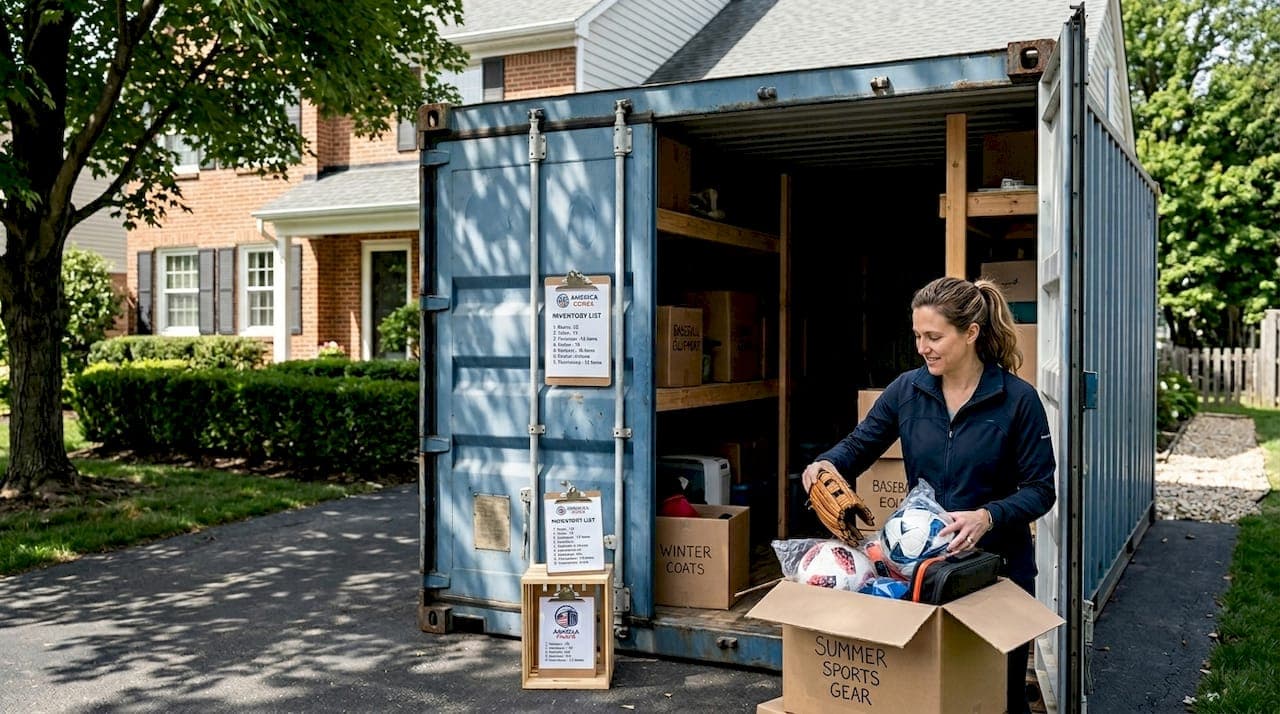
Residential container storage means placing a repurposed steel shipping container on your property to store household goods, equipment, or business inventory. These containers were originally built to carry cargo across oceans, which is exactly why they hold up so well as long-term storage units. They're not flimsy backyard sheds. They're engineered for extreme conditions.
The concept is straightforward. A container is delivered to your property, placed on a flat surface, and ready to use almost immediately. No construction crew. No weeks of waiting. You can be storing your belongings the same day it arrives.
Homeowners use containers for a wide range of purposes:
- Storing seasonal furniture, tools, and outdoor equipment
- Protecting vehicles, ATVs, or boats from weather
- Running a small home-based business with dedicated inventory space
- Managing renovation overflow when remodeling a home
- Creating a dedicated workshop or hobby space
Small business owners have found containers equally useful. Landscapers, contractors, and e-commerce sellers use them to store equipment, supplies, and stock without paying for expensive commercial warehouse space.
The trend is growing fast. More people are discovering that secure storage solutions don't require a permanent building permit or a large construction budget. Containers offer a practical middle ground between a flimsy shed and a full-scale structure.
"Residential container storage uses heavy steel containers for secure, weatherproof storage" — and that's exactly what makes them stand out from the alternatives.
If you're unfamiliar with the different types available, it helps to understand what standard containers are before choosing the right unit for your needs. The most common options are 20-foot and 40-foot units, with standard and high cube heights available depending on how much vertical space you need.
Key features that make containers work so well for residential storage include their weatherproof steel walls, lockable cargo doors, portability, and near-instant setup. Unlike a shed, a container can be relocated if you move. Unlike a garage, it doesn't require you to sacrifice parking space or renovate an existing structure.
Key benefits of using shipping containers for storage
Once you understand what residential container storage is, the advantages start to stack up quickly. Let's look at why containers are winning over homeowners and small business owners across the country.
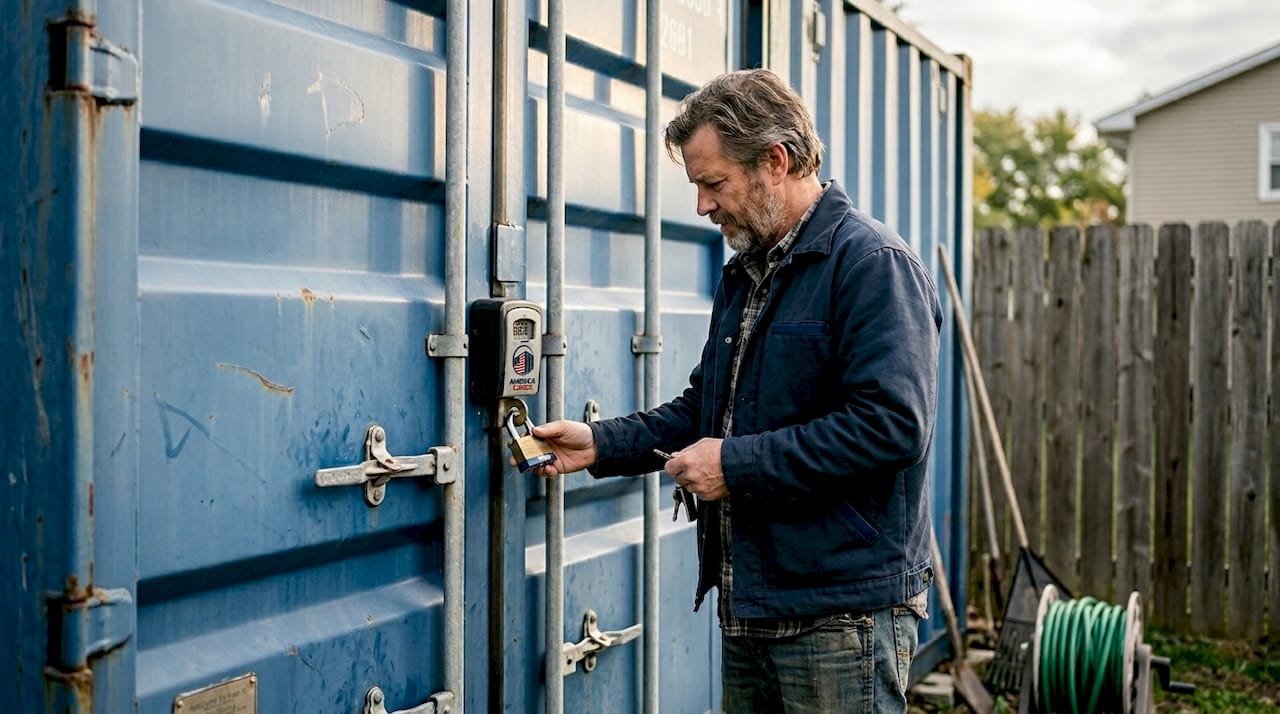
Security is the most immediate benefit. Shipping containers deter theft better than sheds due to their steel construction and the advanced security features you can add. A wooden shed can be broken into with a crowbar in seconds. A steel container with a lockbox and hidden shackle padlock is a completely different challenge for a would-be thief.
Cost is another major factor. Buying a used container often costs less than building a comparable wooden shed, especially when you factor in labor and materials. And unlike a shed, a container holds its value over time.
Flexibility sets containers apart from permanent structures. You can scale up by adding a second unit, move the container to a new property, or sell it when you no longer need it. That's not something you can do with a concrete block building.
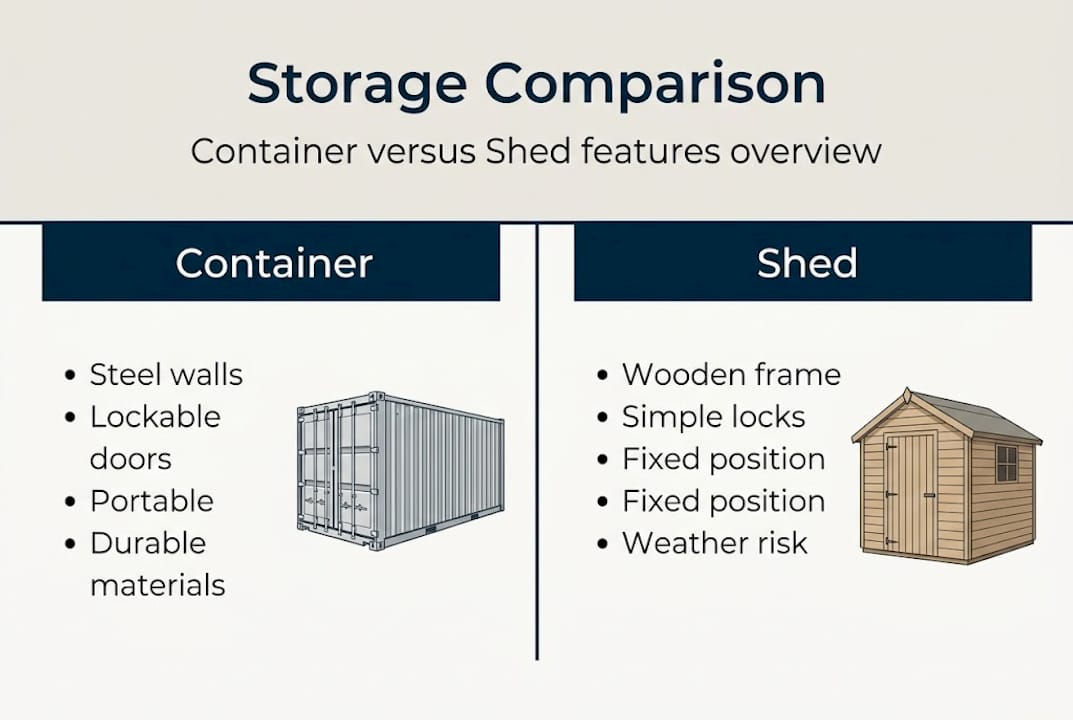
Durability is built in. Containers are designed to withstand saltwater, high winds, and heavy loads. A quality used container will outlast most sheds by decades.
Here's a quick comparison to put things in perspective:
| Feature | Shipping container | Traditional shed |
|---|---|---|
| Security | High (steel, lockable) | Low to moderate |
| Lifespan | 20 to 30+ years | 10 to 15 years |
| Portability | Yes | No |
| Setup time | Same day | Days to weeks |
| Resale value | Moderate to high | Very low |
| Weather resistance | Excellent | Moderate |
For homeowners weighing their options, it's also worth reading about best secure storage methods to see how containers compare in real-world scenarios. And if you're unsure whether to buy or lease, exploring renting or buying containers can help you make the right financial call.
Pro Tip: Buy a slightly larger container than you think you need. Most people fill a 20-foot unit faster than expected, and upgrading to a 40-foot unit upfront is almost always cheaper than renting a second container later.
Essential security features and best practices
Security is the number-one concern for most people considering container storage, and for good reason. You're keeping valuable property on your land, sometimes out of direct sight. Here's how to make sure it stays protected.
Security can be enhanced with lockboxes, hidden shackle padlocks, crossbars, hinge guards, CCTV, motion-sensitive lighting, and ground anchoring. Each of these adds a layer of deterrence that makes your container significantly harder to compromise.
Here's a step-by-step approach to securing your container:
- Install a lockbox over the padlock area to prevent bolt cutters from reaching the shackle
- Use a hidden shackle padlock so the lock mechanism is not exposed to cutting tools
- Add crossbars across the doors for an additional physical barrier
- Fit hinge guards to prevent the door hinges from being removed
- Mount a CCTV camera facing the container entrance, visible enough to deter thieves
- Set up motion-sensitive lighting around the container perimeter
- Ground anchor the container to prevent it from being moved or tipped
One common mistake people make is relying on a single padlock and calling it done. That's like locking your front door but leaving a window open. Layered security is always more effective than a single point of defense.
Another mistake is placing the container in a spot that's hidden from view of the street or neighbors. Counterintuitively, some visibility acts as a deterrent. Thieves prefer to work unobserved.
For a deeper look at how container security features are implemented at a professional level, it's worth seeing how depot-grade security translates to residential setups. You can also brush up on container security terminology so you know exactly what vendors are offering when they quote security upgrades.
Pro Tip: Invest in your security setup before you start storing valuables. Retrofitting security after the fact is more expensive and less effective than building it in from day one.
Costs, buying options, and logistics
Before committing to container storage, you need a clear picture of the financial and logistical side. The good news is that shipping containers provide affordability and speed of deployment that most traditional storage options can't match.
Here's a general breakdown of what to expect in 2026:
| Option | 20-foot unit | 40-foot unit |
|---|---|---|
| Buy (used WWT) | $2,500 to $4,000 | $3,500 to $5,500 |
| Buy (one-trip) | $4,500 to $6,500 | $6,000 to $9,000 |
| Rent (monthly) | $100 to $175 | $150 to $250 |
| Delivery fee | $200 to $600 | $300 to $800 |
Prices vary based on your location, the container's condition, and how far it needs to be delivered. One-trip containers are essentially like-new units that have made a single overseas journey. Used WWT (wind and water tight) containers are older but still fully functional for storage.
Factors that influence your final cost include:
- Distance from the nearest depot to your property
- Ground conditions and accessibility for the delivery truck
- Any modifications you request (vents, shelving, extra doors)
- Local permit fees if your municipality requires them
Speaking of permits, this is one area where people get caught off guard. Some cities and counties require a permit for placing a container on residential property, especially if it will stay for more than 30 days. Always check with your local zoning office before scheduling delivery.
For practical advice on saving on container costs, there are several strategies worth reviewing before you buy. And once your container arrives, setup and workflow tips can help you organize the interior for maximum efficiency.
Before calling a vendor, ask these questions:
- What condition grade is the container (WWT, cargo worthy, one-trip)?
- What is included in the delivery fee?
- Is site preparation my responsibility?
- What is the return or resale policy?
- Are modifications available before delivery?
Why shipping container storage deserves more attention
After years in this industry, we've noticed a pattern. Homeowners often dismiss containers based on aesthetics before they ever look at the numbers. The assumption is that a steel box in the backyard will look industrial or out of place. But the reality is that a well-placed container, painted to match your home's color scheme or screened with simple landscaping, blends in better than most people expect.
The bigger issue is that people underestimate the long-term value. A container bought today for $3,500 can be resold five years from now for close to the same price if it's been maintained. A wooden shed built for the same cost is worth almost nothing after five years.
We've also seen homeowners over-focus on the upfront cost and ignore the total cost of ownership. Sheds need repairs. They leak. They attract pests. Containers don't have those problems.
The flexibility in storage that containers offer is genuinely underrated. You're not locked into a fixed structure. Your storage solution can move with your life. That's a kind of freedom most people don't realize they're giving up when they pour a concrete foundation for a shed.
Ready to explore container storage solutions?
If the advantages covered in this article have you thinking seriously about upgrading your storage setup, we're ready to help you take the next step. At America Conex, we supply new and used shipping containers nationwide, with over 30 depot locations to ensure fast, reliable delivery wherever you are.
Whether you're a homeowner looking for a secure backyard storage unit or a small business owner needing reliable on-site inventory space, we offer affordable container storage in 20-foot and 40-foot sizes, including WWT, cargo worthy, and one-trip options. Get a quote today and find out how quickly we can get a container to your property.
Frequently asked questions
How secure is shipping container storage for homes?
Shipping containers are built from heavy steel and can be upgraded with lockboxes, hidden shackle padlocks, hinge guards, and alarm systems, making them significantly more secure than traditional wooden sheds.
What does it cost to buy or rent a shipping container for storage?
Buying a used container typically runs between $2,500 and $5,500 depending on size, while renting starts around $100 per month. Buying often saves money over the long term for homeowners who need storage for more than a year.
Do I need a permit for residential container storage?
Permit requirements vary by city and county, so check with your local zoning office before your container is delivered to avoid fines or removal orders.
Can I move the container if I relocate?
Yes. Containers are fully portable and can be picked up and redelivered to a new location using standard flatbed or tilt-bed trucks, which is one of their biggest advantages over permanent structures.
What can I store in a residential shipping container?
You can store furniture, tools, seasonal gear, vehicles, business inventory, or use the space as a workshop. Just confirm that local regulations don't restrict specific uses in your area.