

TL;DR:
- Container costs in 2026 are driven by energy prices, trade routes, and supply chain shifts.
- Effective cost management involves understanding pricing models, evaluating key variables, and proactive negotiation.
- Regular review and strategic planning are essential to optimize long-term container investments and avoid hidden fees.
Container costs have a habit of sneaking up on you. One quarter your budget looks solid, the next you're fielding unexpected depot fees, fluctuating spot rates, and delivery surcharges that nobody mentioned in the original quote. For business owners and project managers in construction and logistics, that kind of unpredictability is more than frustrating. It threatens timelines and margins. This guide cuts through the noise. You'll learn exactly what's driving container prices in 2026, which cost variables matter most, how to negotiate with confidence, and how to verify you're getting real value over the long haul.
Table of Contents
- Understanding container pricing in 2026
- What impacts your container price: Key cost variables
- Step-by-step: How to get the best container pricing
- Verifying and optimizing your container investment
- Why the real key to container pricing isn't just negotiation
- Ready to simplify your 2026 container sourcing?
- Frequently asked questions
Key Takeaways
| Point | Details |
|---|---|
| Know the drivers | Understanding global trends and supply factors is key to planning for 2026 container prices. |
| Check hidden costs | Always ask for breakdowns and identify add-on fees before committing to a container deal. |
| Compare and negotiate | Request multiple quotes and negotiate terms for the best value, not just the lowest headline price. |
| Review and refine | Continually audit your agreements and adjust your strategy to maintain cost efficiency. |
Understanding container pricing in 2026
The container market in 2026 is not the same beast it was three years ago. Post-pandemic normalization was supposed to stabilize rates, but new pressures have taken over. Energy price volatility, shifting trade routes, and ongoing supply chain recalibration have kept pricing far from predictable. The 2026 container market trends show that fluctuating fuel costs and industry-wide supply chain adjustments are major price drivers this year.
Understanding the pricing models available to you is the first step toward managing costs effectively. Here are the three most common structures:
- Spot rates: These are real-time market prices. They can be competitive when supply is high but volatile when demand spikes. Good for one-off purchases but risky for ongoing needs.
- Contract rates: Fixed pricing over a set period, typically six to twelve months. Offers budget certainty but may lock you in above market if rates drop.
- Volume pricing: Negotiated discounts for bulk orders. Ideal for construction firms managing multiple job sites or logistics operators with recurring container needs.
Here's a quick breakdown of how these models compare:
| Pricing model | Best for | Risk level | Budget predictability |
|---|---|---|---|
| Spot rate | One-time purchases | High | Low |
| Contract rate | Ongoing or planned needs | Medium | High |
| Volume pricing | High-volume buyers | Low | Medium-High |
One statistic worth noting: container pricing volatility has caused some businesses to overpay by 20 to 30 percent simply because they defaulted to spot rates without comparing alternatives. Knowing which model fits your operational pattern is one of the fastest ways to stop leaving money on the table.
If terms like "cargo worthy" or "one-trip" feel fuzzy, getting clear on container pricing terminology will sharpen your ability to compare quotes accurately and avoid being upsold on specs you don't need.
What impacts your container price: Key cost variables
With the big-picture trends in mind, let's dig into the specific factors that will influence your final price tag.
Price is never just about the container itself. The variables surrounding that unit can push your cost significantly higher or lower depending on decisions you make before you even request a quote. Transport distance, condition, and depot rates can swing your container price by double digits.
Here are the primary cost drivers to evaluate:
- Size: A 20ft standard container typically costs less than a 40ft or 40ft high cube. But high cubes offer more vertical storage, so cost-per-cubic-foot may actually favor the larger unit depending on your use case.
- Condition: New one-trip containers carry a premium of 30 to 50 percent over used units. Used wind and water tight (WWT) containers offer a solid middle ground for most storage and job site applications.
- Delivery distance: The farther the depot from your site, the higher the transport fee. Choosing a supplier with multiple regional depots can meaningfully reduce this cost.
- Customizations: Doors, vents, shelving, and paint add to the base price. Define what you actually need before requesting quotes.
| Container type | Approx. price range | Best use case |
|---|---|---|
| Used WWT 20ft | $2,500 to $3,500 | General storage, job sites |
| Used WWT 40ft | $3,200 to $4,800 | Larger storage, construction |
| One-trip 20ft | $4,000 to $5,500 | Clean cargo, high-end storage |
| One-trip 40ft | $5,000 to $7,000 | International shipping, clean use |
Common add-on fees that often appear after the initial quote include depot handling, inspection certifications, port documentation, and delivery permits. Always ask for a fully itemized quote before agreeing to anything.
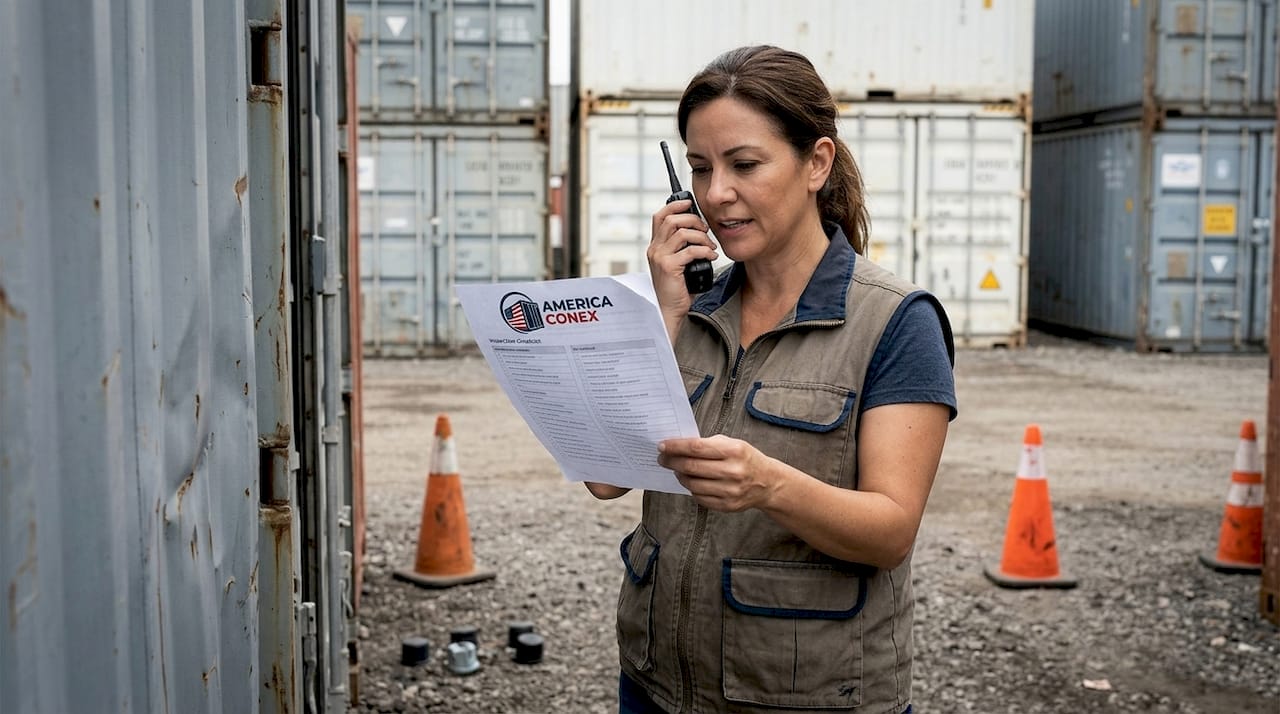
Pro Tip: Request quotes in writing and ask specifically for a line-item breakdown. This makes comparison easier and gives you clear leverage when negotiating. To save on container costs, timing matters too. Seasonal demand tends to spike in spring and summer, so ordering in fall or winter often yields better pricing. Understanding cargo worthy container options can also help you match condition to actual need rather than defaulting to higher-grade units unnecessarily.
Step-by-step: How to get the best container pricing
To turn insight into results, here's a hands-on process to secure the best container deal in 2026.
Step 1: Define your requirements before reaching out Know your container size, quantity, preferred condition, delivery location, and timeline before contacting any supplier. Vague requests produce vague quotes that are hard to compare.
Step 2: Request quotes from at least three providers Don't settle for the first number you hear. Get three to five itemized quotes from different suppliers. Make sure each quote covers the same specs so comparisons are apples to apples.
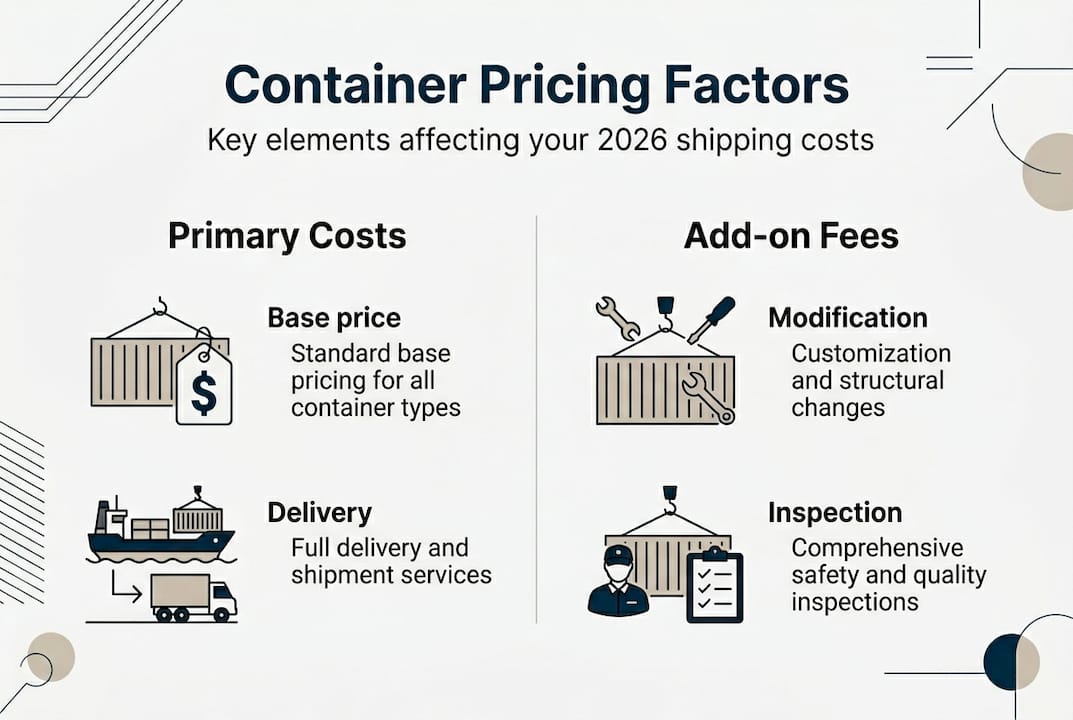
Step 3: Evaluate total cost, not just the sticker price Calculate delivery fees, modification costs, inspection fees, and any documentation charges. A lower base price can quickly become the more expensive option once all fees are counted.
Step 4: Negotiate with data Suppliers expect negotiation. Use competing quotes as leverage. Ask about volume discounts, off-season pricing, or bundled delivery if you're ordering multiple units.
Step 5: Confirm terms in writing Before any payment, get all pricing, delivery timelines, and container specifications in a written agreement. Verbal commitments aren't enforceable when disputes arise.
Step 6: Review your transport options Cost-saving container transport strategies like consolidating orders and optimizing your shipping route can cut costs substantially. If you're moving multiple containers, coordinating deliveries from a single depot trip significantly reduces logistics spend.
"Understanding your shipping route options and consolidating orders can cut costs substantially." Businesses that plan their logistics proactively consistently outperform reactive buyers on total cost.
Pro Tip: If you're managing multiple job sites, ask your supplier about staged deliveries from a single bulk order. It often costs less than ordering each unit individually on separate dates.
Verifying and optimizing your container investment
After locking in a deal, it's essential to continually verify you're maximizing return on your container investment.
Buying or renting a container is not a set-it-and-forget-it decision. Costs accumulate through storage inefficiency, maintenance delays, and contract terms that no longer reflect your actual usage. Effective storage and ongoing process reviews help businesses maintain lower long-term container costs.
Here's how to run a smart audit of your current container setup:
- Review all active container agreements every six months for outdated terms or pricing that no longer matches market rates
- Check whether containers on-site are being actively used. Idle units still cost money through rental fees or lost resale value
- Assess maintenance costs. Rust treatment, seal replacements, and cleaning are predictable expenses you can budget for proactively
- Track how often containers are relocated. Frequent moves add transport costs that compound quickly over a year
| Review area | Action | Potential saving |
|---|---|---|
| Idle containers | Return or resell unused units | High |
| Contract terms | Renegotiate after six months | Medium |
| Maintenance | Schedule proactive upkeep | Medium |
| Transport routing | Consolidate and optimize deliveries | High |
One of the biggest decisions you'll face is whether to rent or buy. The rent or buy decision depends heavily on project duration and cash flow. For short-term needs under six months, renting often costs less when you factor in resale hassle and storage overhead. For projects lasting a year or more, ownership typically delivers better unit economics.
Reviewing your container storage efficiency process regularly is not just about cutting costs. It also speeds up retrieval, reduces damage risk, and keeps your team working instead of hunting for gear.
Why the real key to container pricing isn't just negotiation
Here's a perspective most buyers miss: negotiation is a tactic, not a strategy. You can haggle your way to a slightly better quote and still end up overpaying over a full project cycle because the bigger picture was never addressed.
The businesses we see consistently managing container costs well are not the most aggressive negotiators. They're the most organized. They know their usage patterns, they review contracts regularly, and they build supplier relationships that give them access to inventory before it hits the open market. That's a structural advantage that one-time price cuts simply can't replicate.
Chasing the lowest upfront number is tempting, especially when project budgets are tight. But a cheaper container that arrives late, requires immediate repair, or gets hit with unexpected fees ends up costing more than a fairly-priced unit from a reliable supplier. Smart cost-saving strategies prioritize total value over sticker shock.
The businesses outpacing competitors on container costs in 2026 are the ones treating this as an ongoing operational discipline, not a one-time purchase decision. That shift in mindset is worth more than any single negotiation win.
Ready to simplify your 2026 container sourcing?
You now have the framework to evaluate pricing, compare options, and lock in deals that protect your margins. The next step is putting it into practice with a supplier who makes the process straightforward.
At America Conex, we offer transparent pricing across our full inventory of used WWT, one-trip, and cargo worthy containers in both 20ft and 40ft configurations. With over 30 depot locations nationwide, we deliver fast and price competitively no matter where your project is based. Whether you're sourcing one unit or planning a large-scale procurement, our team helps you compare options and avoid the hidden fees that throw budgets off track. Explore America Conex container offers and get a clear quote that shows everything upfront.
Frequently asked questions
What is the average price of a shipping container in 2026?
The average price ranges from $2,500 to $6,000, depending on size, condition, and location. 2026 pricing trends show that fuel costs and supply chain factors are keeping prices elevated compared to pre-2023 norms.
How can businesses save money on container purchases?
Compare multiple providers, consider used WWT units instead of new, and optimize your delivery routing. Consolidating orders and buying off-season are two of the fastest ways to reduce container costs without sacrificing quality.
Should I rent or buy containers for my project?
For projects under six months, renting is often the smarter financial move. For longer-term or recurring needs, buying typically offers better value. The rent vs. buy comparison depends heavily on your cash flow and how often you'll reuse the units.
What hidden fees should I watch out for in container pricing?
The most common surprises include delivery fees, depot handling charges, inspection certifications, and port documentation costs. Always request a fully itemized quote and check for common hidden fees before signing any agreement.