
TL;DR:
- Shipping containers offer superior security, reducing equipment theft by up to 90 percent.
- Container storage provides flexible, portable, and cost-effective on-site solutions for various projects.
- The main advantage is gaining control over operations, reducing dependency on third-party facilities.
Equipment theft costs U.S. construction and agricultural businesses billions of dollars every year, and traditional storage methods are a big part of the problem. Padlocked sheds, open lots, and off-site warehouses leave tools and machinery exposed to theft, weather damage, and costly retrieval delays. Container storage flips that equation. Built from heavy-gauge steel and designed for the harshest conditions on earth, shipping containers offer a level of protection that most conventional options simply cannot match. In this article, we cover the security advantages, logistical flexibility, daily convenience, and key regulatory considerations you need to make a smart storage decision for your operation.
Table of Contents
- Why security is the top reason to choose container storage
- Logistics made simple: Portability and flexibility benefits
- On-site access and daily convenience for teams
- What most people miss: Nuances, regulations, and edge cases
- The real reason container storage wins for most US businesses
- Get secure and flexible equipment storage with America Conex
- Frequently asked questions
Key Takeaways
| Point | Details |
|---|---|
| Superior security | Container storage dramatically reduces equipment theft and protects valuable assets on-site. |
| Flexible and portable | Containers adapt to changing project needs and can move easily between locations. |
| 24/7 access | Having equipment on-site in a secure container means instant retrieval and less downtime. |
| Nuanced decisions | Understand permit needs and when climate-sensitive items require extra precautions. |
Why security is the top reason to choose container storage
When a piece of equipment goes missing from a job site, the financial hit is immediate and compounding. You pay for the replacement, you delay the project, and your crew stands idle. Security is not a nice-to-have for contractors and farm operators. It is a bottom-line issue.
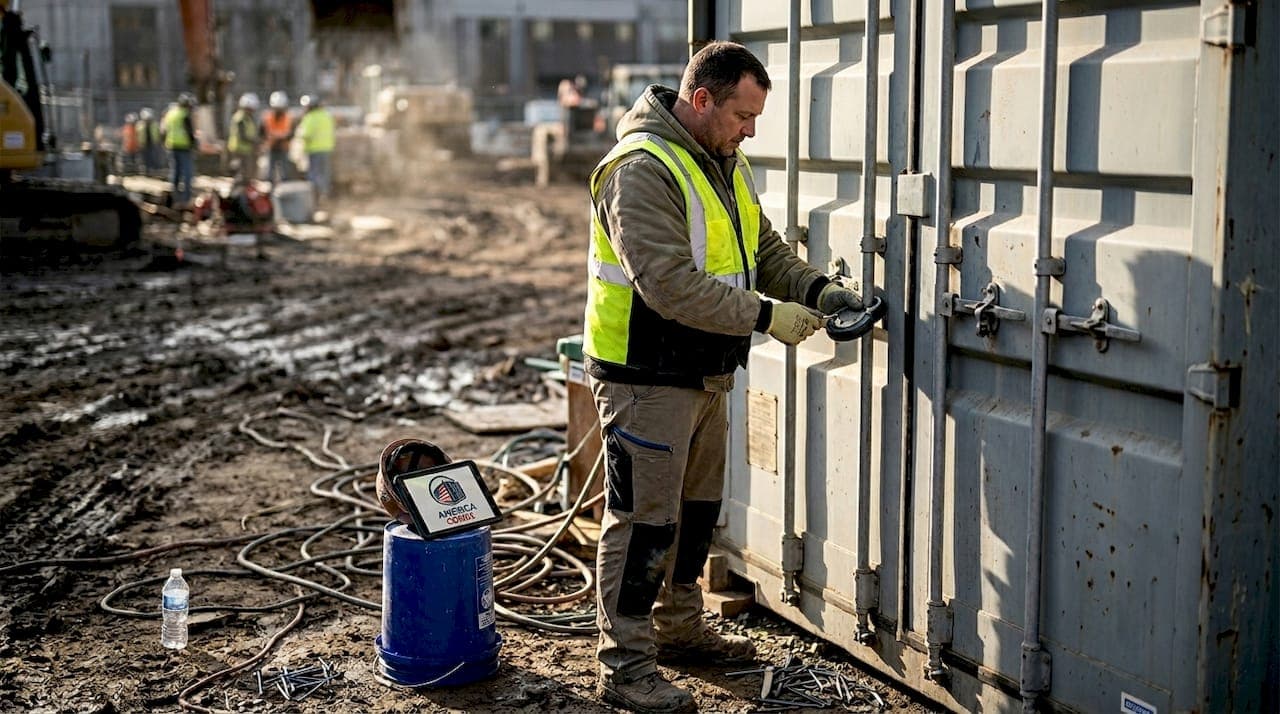
Shipping containers are built to survive ocean voyages, which means they are engineered to resist far more than a bolt cutter. The walls are made from Corten steel, a material that resists rust and corrosion even in wet or coastal environments. The doors feature heavy-duty locking bars that span the full height of the door frame, making forced entry extremely difficult. Tamper-resistant lock boxes, which are welded steel shrouds that cover the padlock, add another layer of protection against angle grinders and pry bars.
"The structural integrity of a steel shipping container creates a passive security barrier that most opportunistic thieves will not attempt to breach. Pair that with a quality padlock and a lock box, and you have a system that outperforms most commercial storage sheds by a wide margin."
Container storage reduces equipment theft by up to 90% in tracked cases, a number that reflects both the deterrent effect and the physical difficulty of breaking in. For businesses running high-value tools and machinery, that reduction translates directly to lower insurance premiums and fewer project disruptions.
Top security features for businesses and contractors:
- Corten steel walls and roof resist cutting and corrosion
- Full-height locking bars on double cargo doors
- Welded lock box shrouds for padlock protection
- Optional interior anchor points for securing individual equipment pieces
- Ground-level placement options that eliminate ladder access vulnerabilities
Explore secure storage solutions to see how container specs translate into real-world protection for your site.
Pro Tip: Add a secondary disc lock inside the lock box in addition to your primary padlock. Disc locks have no exposed shackle, making them nearly impossible to cut. Pair this with a battery-powered alarm sensor on the door and you have a two-layer deterrent that costs less than $100 to set up.
Logistics made simple: Portability and flexibility benefits
Security matters, but so does getting your storage where you need it, when you need it. One of the biggest hidden costs in equipment management is the time and fuel spent moving gear between a central warehouse and the active job site. Container storage eliminates that back-and-forth.
A standard 20ft or 40ft container can be delivered directly to your site by a tilt-bed or flatbed truck and placed in hours. When the project wraps, the same container gets picked up and relocated to your next site or stored at a depot. You are not locked into a lease on a building you no longer need.
| Feature | Container storage | Traditional shed | Off-site warehouse |
|---|---|---|---|
| On-site delivery | Yes | Limited | No |
| Relocatable | Yes | No | No |
| Stackable | Yes | No | No |
| Scalable by unit | Yes | No | Yes |
| Ownership option | Yes | Yes | No |
| Resale value | 60-75% after 5-10 yrs | Low | None |
Containers are modular, stackable, and retain 60-75% value after 5 to 10 years of use, which means buying a container is closer to an asset purchase than an operating expense. That is a fundamentally different financial calculation than renting warehouse space.
Scenarios where container portability delivers real value:
- Short-term construction projects that move between locations every few months
- Agricultural operations that need seasonal storage near active fields
- Growing companies that need to add storage capacity without building infrastructure
- Multi-site businesses that need consistent, standardized storage across locations
If you are weighing your options, our guide on whether to rent or buy containers breaks down the financial tradeoffs clearly. For a full breakdown of container dimensions and specifications, the standard container guide is a useful starting point.
Pro Tip: If you plan to stack containers on a permanent yard, confirm that your ground is level and compacted. Stacking on soft or uneven ground can cause door misalignment over time, which affects both security and usability.
On-site access and daily convenience for teams
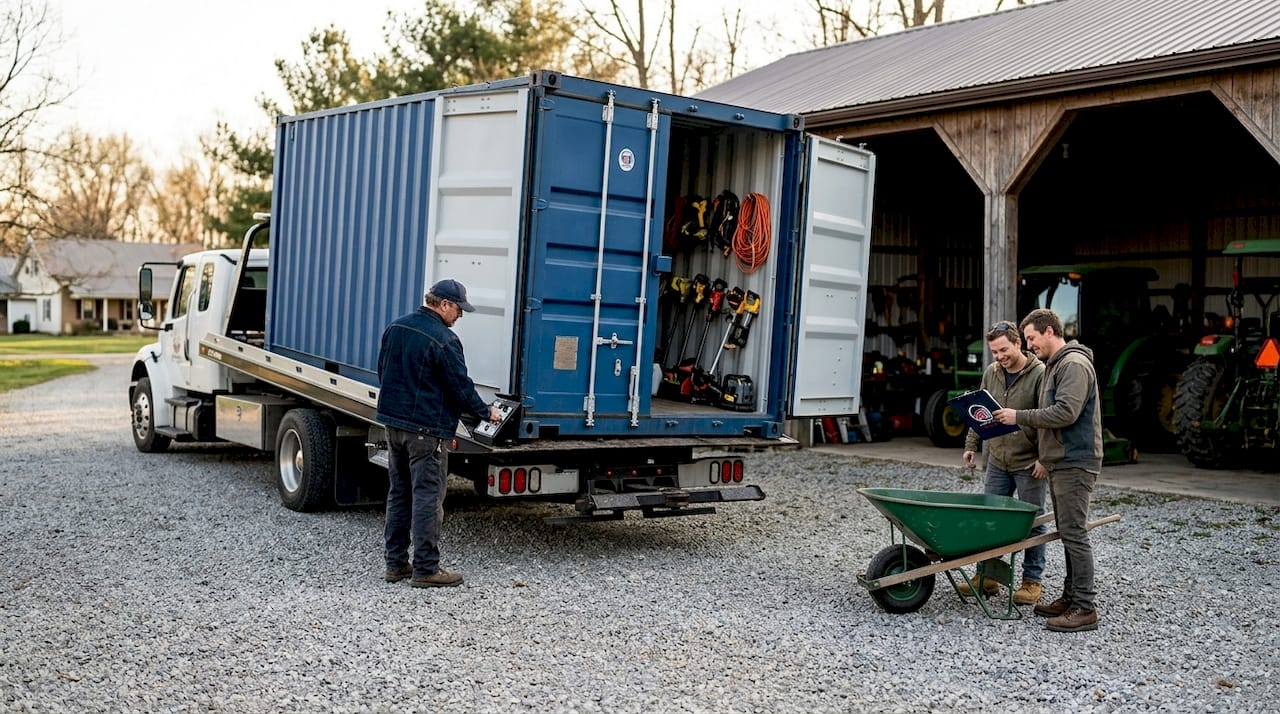
Time is money on any job site or farm. Every trip your crew makes to an off-site facility to retrieve a tool or piece of equipment is time not spent on productive work. On-site container storage puts everything within walking distance, and that convenience adds up fast.
On-site container storage eliminates trucking costs and reduces time spent retrieving equipment, giving your team 24/7 access without coordinating with a third-party facility. There are no warehouse hours to work around, no check-in procedures, and no waiting for a forklift operator.
| Cost factor | Container storage | Off-site warehouse |
|---|---|---|
| Monthly access cost | Included | $200-$800+ per month |
| Fuel for retrieval trips | Minimal | High |
| Labor time lost per trip | Near zero | 1-3 hours per trip |
| After-hours access | Always available | Often restricted |
Steps for setting up on-site container storage:
- Identify a level, accessible area on your site with enough clearance for delivery truck access.
- Confirm ground conditions. Gravel or compacted soil is ideal. Soft ground may require timber sleepers.
- Arrange delivery with your container supplier and confirm placement orientation for door access.
- Install your locking hardware before moving equipment in.
- Create a simple inventory list and post it inside the door for fast retrieval.
- Assign one team member as the access point of contact for accountability.
For a deeper look at how container placement and organization affect team output, the article on container storage workflow efficiency covers practical layout strategies.
Pro Tip: Organize your container by frequency of use. Place the tools and parts your crew needs daily near the door, and store seasonal or backup equipment toward the rear. Color-coded shelving or labeled bins cut retrieval time dramatically on busy sites.
What most people miss: Nuances, regulations, and edge cases
Container storage works extremely well for most equipment, but it is not the right answer in every situation. Understanding the edge cases before you commit saves you from expensive surprises.
When container storage may not be the best fit:
- Equipment that requires precise climate control, such as certain electronics or calibrated instruments
- Very large machinery that exceeds standard container dimensions
- Sites with extremely restricted access where a delivery truck cannot maneuver
- Locations with strict aesthetic or zoning rules that prohibit containers entirely
One of the most common and easily overlooked issues is condensation. Steel containers can experience temperature swings that cause moisture to build up inside, which can damage tools, electronics, and machinery with sensitive components. The good news is that this is a solved problem.
"Condensation in containers is manageable with basic ventilation modifications. Adding louvered vents or a small dehumidifier addresses the issue in most climates. For equipment that is highly sensitive to humidity, spray foam insulation on the interior walls and ceiling is an affordable and effective upgrade."
Permits are rarely needed in rural U.S. locations, but urban job sites and some suburban areas do require zoning approval or a temporary use permit before placing a container. The process is usually straightforward, but skipping it can result in fines or forced removal.
Before delivery, pre-inspect your site for overhead power lines, underground utilities, and drainage patterns. A container placed in a low spot can collect water underneath, which accelerates corrosion on the base rails. If you want to brush up on the terminology used in container specifications and condition grades, the shipping container terms guide is a practical reference.
The real reason container storage wins for most US businesses
Here is something the standard comparison articles rarely say out loud: the biggest advantage of container storage is not the steel walls or the lock box. It is the control it gives you over your own operation.
When your storage is on-site and owned by you, you stop being dependent on third-party schedules, facility hours, and rental agreements that can change. We have seen businesses reduce insurance claims significantly after switching to container storage, not just because of theft reduction, but because equipment stored on-site in a sealed container suffers less weather damage and fewer handling incidents.
The counterintuitive lesson is this: container storage looks like a simple product decision, but it is actually an operational decision. Businesses that treat it that way, planning for placement, organization, and future scalability, get far more value from it than those who just drop a box on a lot.
That said, container storage is not the answer for every situation. If your equipment is highly specialized, climate-sensitive, or your sites are in dense urban areas with strict codes, you need a more nuanced plan. Staying current on container ROI trends helps you make that call with real data rather than assumptions.
Pro Tip: Future-proof your storage by choosing a container size slightly larger than your current needs. Upgrading later costs more in delivery and logistics than simply starting with more space.
Get secure and flexible equipment storage with America Conex
If this article has clarified your thinking on equipment storage, the next step is finding the right container for your specific operation.
America Conex supplies new and used shipping containers for sale across the United States, with access to 30+ depots for fast, reliable delivery to your job site or property. We offer 20ft and 40ft units in standard and high cube configurations, including one-trip, wind and water tight, and cargo worthy grades. Whether you need a single unit for a short-term project or multiple containers for a permanent yard, we can help you find the right fit. Check out our tips on how to save on container costs before you buy, and reach out to our team for a straightforward quote.
Frequently asked questions
How much does container storage reduce the risk of equipment theft?
Container storage reduces theft by up to 90% due to its tamper-resistant steel construction and heavy-duty locking systems, making it one of the most effective deterrents available for job sites.
Are permits required to place a container on my property?
Permits are rarely required in rural areas, but urban and suburban job sites may need zoning approval, so always check local regulations before scheduling delivery.
How flexible are container storage units for different project needs?
Containers are modular and stackable, and you can choose to rent or purchase based on whether your need is temporary or long-term, making them adaptable to nearly any project scale.
What precautions are needed for storing climate-sensitive equipment?
For equipment sensitive to humidity or temperature, adding louvered vents, a dehumidifier, or interior insulation to your container keeps conditions stable and protects your gear from moisture damage.