
TL;DR:
- Used containers offer comparable durability for stationary storage at 60 to 80% of new container costs.
- The choice depends on specific use cases, budget, and preferences for condition and modifications.
- Inspections and understanding condition grades are essential when purchasing used containers to ensure reliability.
Choosing between a new and used shipping container feels straightforward until you actually start pricing them out and weighing your specific needs. The instinct to go new is understandable, but it often leads buyers to overpay for features they simply don't need. Some experts note that used containers can offer equal durability for stationary storage at 60 to 80% of the cost of new, while others point out that new containers eliminate the unpredictability of hidden repairs, especially for complex modifications. This guide breaks down both sides clearly so you walk away with a decision that actually fits your budget, your timeline, and your real-world goals.
Table of Contents
- What makes a container 'new' or 'used'?
- Cost comparison: New vs used containers
- Durability and reliability insights
- Best use cases for new vs used containers
- Our take: How to confidently choose what's right for you
- Shop new and used containers with confidence
- Frequently asked questions
Key Takeaways
| Point | Details |
|---|---|
| Definition differences | A new container is typically one-trip and damage-free, while used containers have wear from multiple journeys. |
| Cost savings | Used containers offer substantial price reductions, making them ideal for budget-minded buyers. |
| Durability factors | Both new and used containers are durable, but new options provide greater predictability for modifications and conversions. |
| Project suitability | Choose new for projects needing cosmetic perfection or alterations, and used for cost-effective, secure storage. |
What makes a container 'new' or 'used'?
Before you compare prices or lifespans, you need a clear understanding of what these labels actually mean in the industry. The terms "new" and "used" are straightforward in concept but carry specific meanings when you're buying a shipping container.
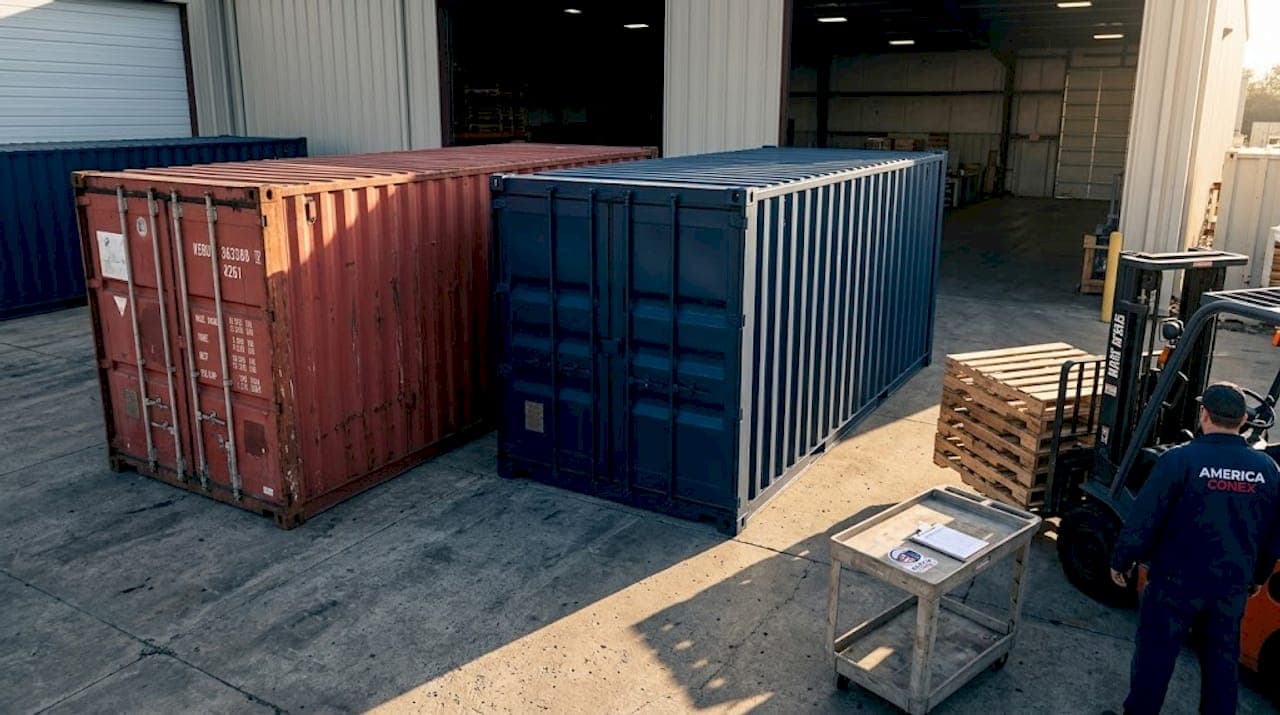
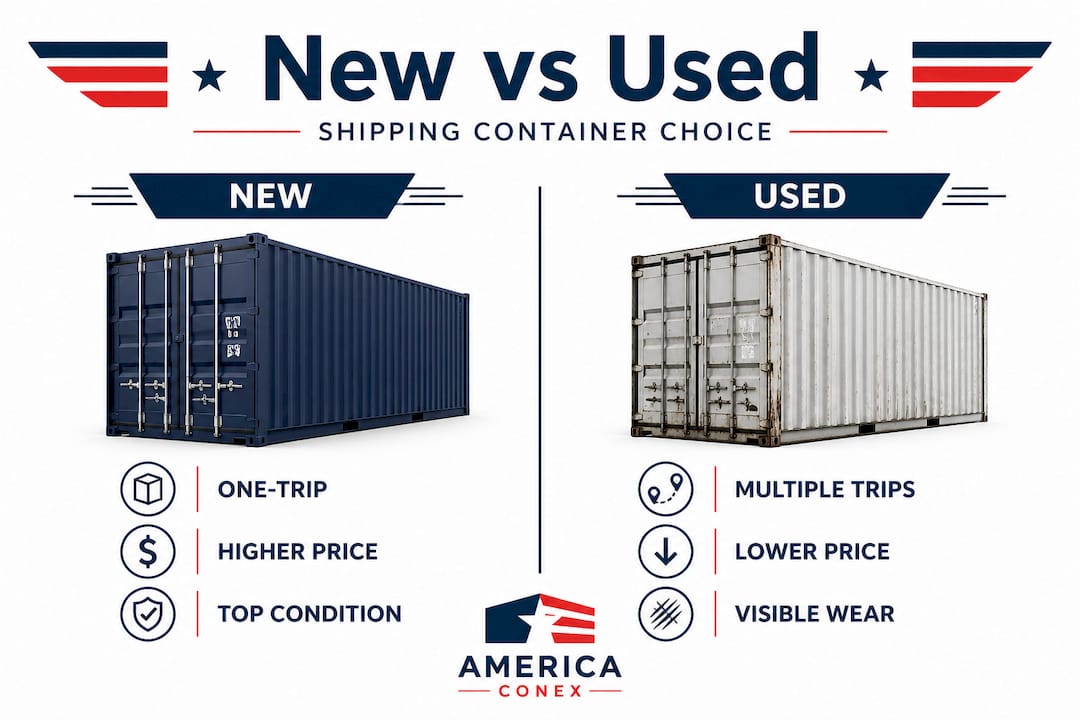
A "new" container in the shipping container world is almost always referred to as a one-trip container. These units were manufactured at a factory, typically in China, loaded with cargo, shipped to a port in the United States, and then taken out of active shipping rotation. They've made exactly one journey, which means they arrive in near-perfect condition with minimal surface wear, tight door seals, and floors that haven't been subjected to years of forklift damage. One-trip containers are the closest thing you'll find to factory-fresh without ordering a custom build.
A "used" container has completed multiple trips across international shipping lanes and has been exposed to loading, unloading, stacking, and the general wear that comes with a working life at sea. The appearance varies widely. Some used units look nearly pristine; others show dents, surface rust, patched welds, and weathered paint. This is where condition grading becomes essential for making an informed purchase.
The shipping industry uses a few key grading terms you'll want to understand before shopping:
- Wind and watertight (WWT): The container keeps wind and water out but may have cosmetic damage like dents and rust patches. Ideal for stationary storage where appearance isn't critical.
- Cargo worthy (CW): Meets international shipping standards and can be used for active freight transport. Inspected and certified for structural integrity.
- Grade A / Grade B / Grade C: Informal ratings used by many suppliers to describe cosmetic condition. Grade A used containers look very good; Grade C units show heavy wear but are still structurally sound.
Familiarizing yourself with shipping container terminology before you buy prevents costly misunderstandings when talking to suppliers. As condition ratings show, the right choice consistently aligns with your use case and budget rather than simply defaulting to what sounds most impressive.
Pro Tip: Always ask your supplier to confirm the specific grade in writing before purchasing. "Used" alone tells you almost nothing about the container's real condition.
Both one-trip and used containers come in standard sizes: 20ft and 40ft in standard height (8ft 6in) and high cube variants (9ft 6in). High cube units give you an extra foot of interior clearance, which matters significantly for certain storage and conversion projects.
Cost comparison: New vs used containers
Now that you know the definitions, let's examine the numbers. How much can you really save or spend by choosing new or used?
In 2026, the price gap between one-trip and used containers remains significant. A used 20ft WWT container typically runs between $1,500 and $2,800 depending on location and condition. A comparable one-trip 20ft unit generally costs between $3,200 and $4,500. For 40ft containers, used units often fall in the $2,200 to $3,800 range, while one-trip versions commonly land between $4,500 and $6,500.
| Container type | Size | Used (WWT) avg. price | One-trip avg. price | Approximate savings |
|---|---|---|---|---|
| Standard | 20ft | $1,500 to $2,800 | $3,200 to $4,500 | 40 to 55% |
| Standard | 40ft | $2,200 to $3,800 | $4,500 to $6,500 | 40 to 50% |
| High cube | 20ft | $1,800 to $3,200 | $3,500 to $5,000 | 35 to 50% |
| High cube | 40ft | $2,800 to $4,200 | $5,000 to $7,500 | 40 to 55% |
Prices vary by region, depot proximity, and current supply levels, but the pattern is consistent. Used containers deliver durability for stationary storage at roughly 60 to 80% of the cost of new, making them a genuinely compelling option for budget-conscious buyers. Learning more about saving on container costs can help you stretch your investment even further.
Beyond the sticker price, total cost of ownership matters. A used container in Grade B condition may need $200 to $600 in repairs upfront: floor treatment, door seal replacement, or spot painting to prevent rust progression. A one-trip container typically needs nothing out of the box.
Pro Tip: If you're buying used, budget an additional 10 to 15% of the purchase price for inspection, minor repairs, and any modifications needed for your specific use.
Resale value is another factor worth considering. One-trip containers retain their value better over time because their condition is more predictable to future buyers. A well-maintained used WWT container still holds decent resale value, but the margin narrows the more wear it shows. If you plan to sell in three to five years, the investment in a one-trip unit can make financial sense over the longer term.
Durability and reliability insights
Having reviewed costs, let's dig into what those dollars buy in terms of durability and real-world reliability.
Shipping containers are built to withstand the harshest conditions on earth. Corten steel construction, also called weathering steel, forms a protective oxidized layer that actually resists further corrosion over time. This applies to both new and used containers, which is why even older units can remain structurally sound for decades when properly maintained.

A one-trip container, given proper care, can realistically last 25 to 30 years in storage or light use. A used container in good condition, regularly inspected and treated for rust, can deliver 15 to 20 or more years of reliable service. The difference shrinks substantially when maintenance is part of your ownership plan.
| Use case | Recommended container type | Expected lifespan | Notes |
|---|---|---|---|
| Static storage (non-critical goods) | Used WWT | 15 to 20+ years | Minor maintenance required |
| Static storage (sensitive equipment) | Used CW or one-trip | 20 to 25+ years | Inspect seals annually |
| Active shipping and freight | Cargo worthy or one-trip | 10 to 15 active years | Must meet CW certification |
| Site offices and conversions | One-trip strongly preferred | 20 to 30+ years | Predictable structure for modifications |
| Container homes | One-trip | 25 to 30+ years | Hidden defects in used units add risk |
"The real durability question isn't new versus used. It's how well the container has been maintained and how closely the condition matches the application." This is the standard we apply when helping customers select the right unit.
Some experts argue that used containers deliver equal durability for storage at 60 to 80% of the cost, while others emphasize that new containers eliminate the unpredictability of hidden repair surprises, particularly for complex conversions. Both positions are defensible, and both reflect real risks buyers face.
For straightforward equipment storage containers, a Grade A or Grade B used unit is often entirely appropriate. The container keeps your equipment dry, secure, and protected. The minor cosmetic wear on the exterior has zero impact on that function.
Where used containers introduce genuine risk is in structural modifications. Cutting openings for windows, doors, or HVAC requires clean, predictable steel. A used container with patches, previous weld repairs, or uneven wall thickness complicates that work and can lead to structural weak points if not carefully managed by an experienced fabricator.
Key signs of a reliable used container worth buying:
- Doors open and close smoothly without significant resistance
- Rubber gaskets are pliable and form a proper seal, not cracked or brittle
- No active rust holes or perforations in the walls, floor, or roof
- Floor boards are solid without soft spots or rot
- Previous repairs are clean and professionally welded, not patched with sealant or tape
Best use cases for new vs used containers
Understanding performance factors, let's see how the decision plays out in common storage and shipping scenarios.
The honest answer, as industry data confirms, is that the right choice depends almost entirely on your use case and budget. Neither type is universally superior.
When a one-trip container is the right call:
- Container conversions and modifications. Building a container home, retail pop-up, or office requires cutting and welding. Starting with a structurally pristine unit eliminates guesswork and reduces fabrication risk.
- High-value or sensitive cargo. Pharmaceuticals, electronics, and archival materials benefit from the tighter seals and cleaner interior environment of a one-trip unit.
- Visible or customer-facing applications. If the container is part of your brand presentation, a food stall, retail store, or event space, appearance genuinely matters and one-trip containers look the part.
- Long-term investment with resale in mind. If you plan to sell in several years, one-trip containers hold their value better and are easier to market.
- Active international shipping. For regular freight movement, one-trip or certified cargo worthy containers meet international standards without question.
When a used container is the smarter choice:
- General stationary storage. Tools, equipment, inventory, seasonal goods, and documents don't need a pristine container. A solid WWT unit does the job at a fraction of the cost.
- Job site storage. Construction sites are hard on everything. Buying a used container for job site use means you're not worrying about the cosmetic wear that will inevitably accumulate anyway.
- Short to medium-term projects. If you only need storage for one to five years, paying a premium for a one-trip container rarely makes financial sense.
- Budget-limited purchases. Nonprofits, small farms, rural property owners, and startups often need functional storage without a large capital outlay. Used containers solve that problem directly.
- Multiple container purchases. If you need five or ten containers, buying used can free up significant capital for other priorities.
Pro Tip: Use a simple checklist before committing. Write down your intended use, your timeline, your budget ceiling, your modification plans, and your sensitivity to cosmetic imperfection. The answers almost always point clearly to one option over the other.
Exploring your transport container options and understanding renting vs buying containers are also worth reviewing before you finalize your decision, especially if your needs are temporary or project-based.
Our take: How to confidently choose what's right for you
Here's the thing most container articles won't tell you: buyers who obsess over the "new vs used" label often miss the actual decision that matters, which is whether the container they're buying fits their real-world requirements.
We've worked with customers who bought one-trip containers for basic outdoor storage of landscaping equipment. They paid double what a solid WWT unit would have cost and got zero additional functional value for that extra spend. We've also seen buyers chase the cheapest used unit available without inspecting it, only to discover a compromised floor and doors that wouldn't lock properly. Both mistakes are common and both are avoidable.
The smarter framework is to be honest about three things: what you're storing or shipping, how long you need the container, and whether cosmetic condition actually impacts your use case. That honest assessment eliminates 80% of the confusion.
One underappreciated option is the mixed fleet approach. Larger operations that need multiple containers often benefit from buying one-trip units for their primary, customer-facing, or modification applications while filling out their storage capacity with reliable used WWT containers at lower cost. This approach optimizes both function and budget without treating every container purchase as if it has the same requirements.
The 2026 container market brings its own pricing pressures, with supply and demand fluctuations affecting the gap between new and used pricing in different regions. This makes it even more important to work with a supplier who has broad depot access and transparent pricing, so you're getting real market value rather than a single-depot markup.
As industry analysis consistently shows, the choice aligns with your use case and budget every time. There is no universal winner. There is only the right container for your specific situation.
Our hard-won advice: inspect before you buy when purchasing used, get the condition confirmed in writing, and prioritize function over the label on the paperwork. A container that does exactly what you need at a price that makes sense is always the right container, regardless of how many trips it's made.
Shop new and used containers with confidence
Knowing the difference between new and used containers is only half the equation. The other half is finding a supplier with real inventory, transparent pricing, and the logistics to deliver to your location quickly.
At America Conex, we supply both one-trip and used shipping containers for sale across the United States, with access to 30+ strategically located depots for fast, competitive delivery. Whether you need a Grade A used WWT unit for straightforward storage, a one-trip high cube for a conversion project, or a certified cargo worthy container for active freight, we have the inventory and the expertise to match you with the right unit. Browse current stock, get transparent pricing, and request a quote today. No pressure, just the right container at the right price.
Frequently asked questions
Do used containers last as long as new containers?
With proper maintenance, used containers offer similar longevity for static storage, but they may show signs of wear faster under heavy use or frequent relocation compared to one-trip units.
Which type is better for modifications, like container homes?
New containers are strongly preferred for conversions because their predictable condition avoids hidden repair surprises, structural inconsistencies, and the complications that come with welding on previously patched steel.
Are used containers safe for storing sensitive equipment?
A wind and watertight used container is generally safe for equipment storage; always inspect for active rust, floor integrity, and door seal condition before committing to a purchase based on your use case.
How much can I save by buying used instead of new?
Used containers typically cost 40 to 60% less than one-trip units, with the exact savings varying by size, condition grade, region, and current market supply.