
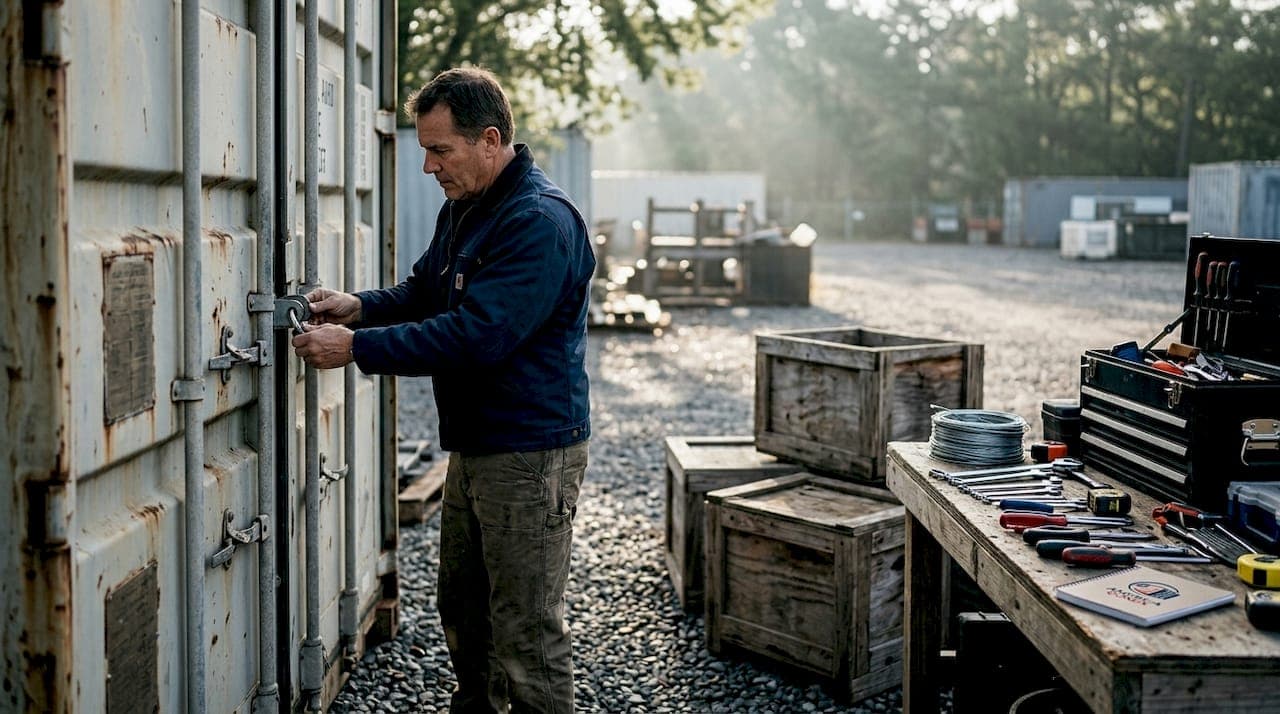
TL;DR:
- Cargo theft exceeding $1.3 billion in the U.S. highlights the need for layered security on container sheds. Proper assessment of valuables, location, anchoring, and environmental layers can significantly reduce theft risks. Combining high-quality locks, secure anchoring, and environmental controls creates the most effective protection.
Cargo and equipment theft is no longer just a big-logistics problem. Property owners and contractors storing tools, materials, and machinery in shipping container sheds are squarely in the crosshairs, with cargo theft exceeding $1.3 billion in losses across the U.S. in 2023 alone. The painful reality is that most break-ins succeed not because thieves are sophisticated, but because security was an afterthought. This guide walks you through a practical, layered approach to protecting your container shed, from choosing the right locks to anchoring your unit correctly and setting up your site to discourage unwanted attention before it starts.
Table of Contents
- Evaluating your container shed's security needs
- Top locking solutions for container sheds
- Anchoring and securing your container shed to the ground
- Layered security: Lighting, surveillance, and site setup
- Quick comparison: Security options at a glance
- A practical perspective on real-world container shed security
- Next steps: Container shed solutions that do more
- Frequently asked questions
Key Takeaways
| Point | Details |
|---|---|
| Lock choice matters | Investing in heavy-duty, closed-shackle locks greatly improves theft resistance for container sheds. |
| Proper anchoring is critical | Secure containers only at their corner castings to prevent both unauthorized entry and accidental movement. |
| Layer security measures | Combine locks, anchoring, lighting, and cameras for maximum deterrence and protection. |
| Assess your real risks | Adjust your security investment to the value and exposure of what you’re storing—not every shed needs the same methods. |
Evaluating your container shed's security needs
Before you select a lock or anchoring method, it is important to know what you are protecting and what risks you face. A one-size-fits-all approach rarely works in the field, and spending money on heavy-duty security for a shed storing low-value supplies is just as wasteful as using a flimsy padlock to guard $50,000 worth of power tools.
Start with what is inside. Construction tools and materials rank among the highest-risk stored items because they are portable, valuable, and easily resold. According to industry data, U.S. cargo theft incidents average a staggering $188,000 per event, and job site containers are a frequent target. If your shed holds compressors, generators, welding equipment, or expensive lumber, your security setup needs to match that value.
Next, look at your location. A container shed sitting behind a locked fence in a monitored industrial park faces different risks than one parked on an open lot along a rural road. Key location factors to assess include:
- Visibility from the street. Containers visible from public roads get more attention from opportunistic thieves.
- Proximity to other buildings or workers. Busy sites with regular foot traffic are naturally harder to target.
- Fencing and perimeter control. A fenced lot adds a deterrent layer even before someone reaches your container.
- Onsite presence. Unmanned sites overnight or on weekends are at the highest risk.
Review your loss history. If your company has experienced previous theft from job sites or storage areas, that pattern tells you something. Even checking local police reports or asking neighboring businesses about incident rates in the area gives you useful context.
Finally, think honestly about your access patterns. A container you open twice a day has different lock requirements than one you access once a week. Heavy-duty crossbar locks offer exceptional resistance, but they also take more time to open. If speed of access is critical, that factors into your choice.
Exploring secure container storage options can help you think through the full range of setup decisions, not just locks. For a broader overview of strategies, reviewing top secure storage solutions gives useful context for both residential and commercial applications.
Pro Tip: Pair every physical barrier with at least one environmental layer, such as lighting or a camera. Thieves avoid sites where there are multiple things that can slow them down or expose them.
Top locking solutions for container sheds
Once you have determined your main risks, it is time to choose locks that address them best. The lock market for shipping containers has grown significantly, and the options now range from simple padlocks to sophisticated internal locking bars. Here is a breakdown of what works, what does not, and when to use each type.
-
Crossbar locks (lockboxes or container lock boxes). These external systems brace across both container doors, making it nearly impossible to pry the door open without heavy equipment. Crossbar locks resist pry attacks and deliver a strong visual deterrent, which is often enough to make a thief move on. The tradeoff is access time. Expect to spend 30 to 60 seconds opening versus a few seconds with a standard padlock.
-
Closed-shackle padlocks. These are the workhorses of container security. The shackle (the U-shaped loop) is almost fully enclosed by the lock body, making bolt cutters nearly useless. Heavy-duty closed-shackle padlocks from brands like Abloy and ABUS resist cutting, drilling, and picking. Standard open-shackle padlocks should be avoided entirely on container doors, regardless of price.
-
Internal locking bars. These systems mount inside the container and lock the doors from within, so there is nothing visible externally to attack. They are ideal for high-security needs or when you want to remove the visual target entirely. The downside is a more complex installation and the fact that a lost key can be a significant problem.
"The best lock is the one matched to your actual risk level. A $500 crossbar lock on a container storing $2,000 of supplies is overkill, but a $20 padlock on $40,000 worth of equipment is negligence."
Pros and cons at a glance:
- Crossbar locks: High deterrence, excellent pry resistance, weather-exposed, slower access.
- Closed-shackle padlocks: Strong cut and pick resistance, fast access, must be used with a quality hasp, some weather exposure.
- Internal locking bars: Concealed, tamper-resistant, complex installation, no visual deterrent.
For guidance on how container quality and security go hand in hand, it is worth understanding the condition of your container's door hardware before investing in premium locks. Worn hinges or damaged door seals can undermine even the best locking system.
Pro Tip: Always pair your padlock with a shrouded or recessed hasp, which protects the lock body from angle grinder attacks. The hasp is often the weakest link, not the lock itself.
Anchoring and securing your container shed to the ground
Locking the doors is not enough. Smart anchoring keeps your shed safe against both thieves and the elements. A container that is not anchored can be nudged, shifted, or in extreme cases, lifted with the right equipment. On open job sites, this risk is real.
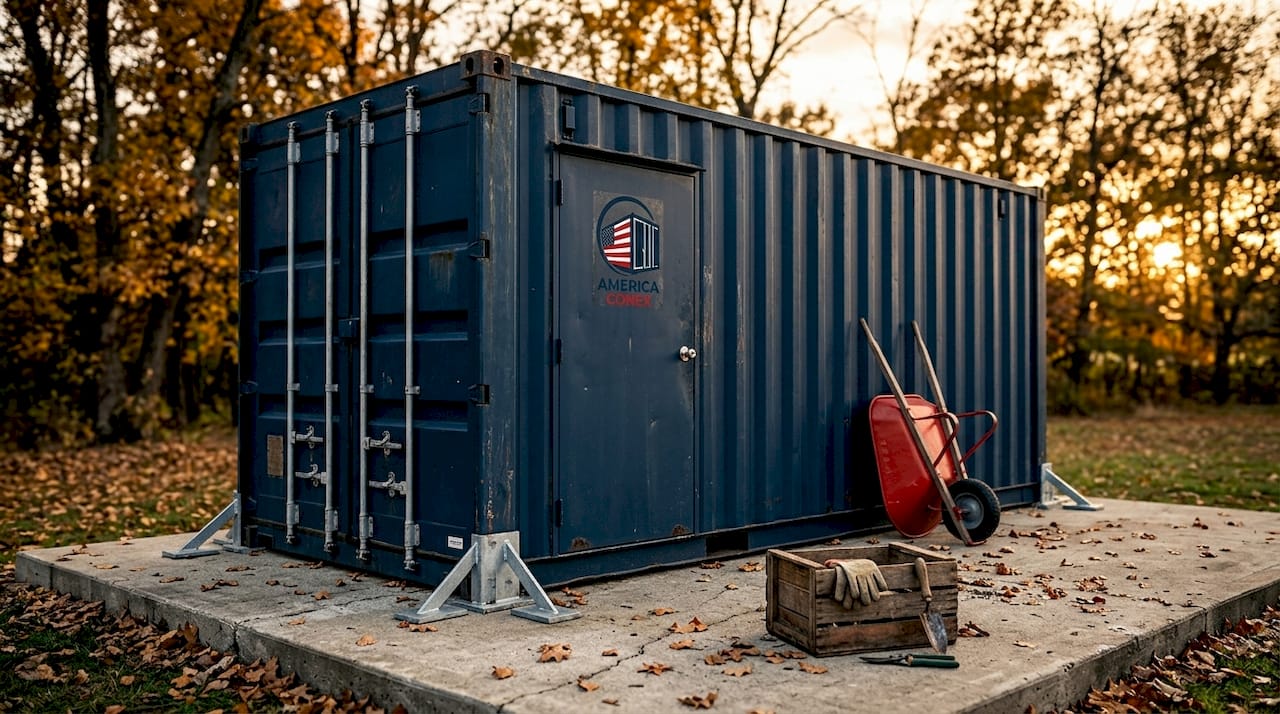
Why anchoring matters more than most people think. Containers are engineered to stack and be moved, which means their structure is designed for flexibility at the corners. Containers must be anchored at all four corner castings using ground anchors or concrete footings. Anchoring at any midpoint compromises the structural integrity of the steel frame and can cause warping over time, which then creates gaps around the doors and panels.
Here is how the most common anchoring options compare:
| Anchoring method | Ease of install | Permanence | Security level | Best for |
|---|---|---|---|---|
| Ground anchors (auger type) | Easy, no concrete needed | Moderate | High | Temporary or semi-permanent sites |
| Concrete footings | Requires prep time | Permanent | Very high | Long-term or permanent placements |
| Twist locks on pads | Moderate | Moderate | High | Containers on gravel or paved surfaces |
| Tie-down straps | Very easy | Low | Moderate | Temporary placement only |
Common mistakes that cost contractors dearly:
- Anchoring only two corners instead of all four, which leaves the container able to pivot.
- Using improper materials such as lumber blocks instead of steel ground anchors.
- Skipping anchoring entirely on short-term placements, then forgetting to install it when the container becomes permanent.
- Ignoring the ground substrate. Soft soil requires longer auger anchors or wider footings to hold.
For a deeper look at how professional container depot practices handle placement and anchoring, you will find that the standards used commercially translate directly to job site setups. Reviewing shed installation best practices also provides useful grounding (pun intended) for proper setup procedures.
Anchoring essentials checklist:
- Always anchor at all four corner castings, not anywhere in between.
- Use steel ground anchors or poured concrete footings for any permanent or semi-permanent setup.
- Check anchor integrity seasonally, especially after heavy rain or frost.
- Level your container properly before anchoring. An uneven container puts stress on door frames and makes locks harder to operate.
Layered security: Lighting, surveillance, and site setup
Physical measures deter most threats, but a truly secure site finds strength in numbers through clever layers. When you combine locks and anchoring with environmental controls, you create a situation where a thief faces not one obstacle but several, and each additional layer dramatically increases the chance they will move on.
Lighting is your cheapest deterrent. Motion-activated lights that trigger when someone enters your container area are inexpensive and remarkably effective. Dusk-to-dawn LED floodlights cover the entire perimeter continuously. The goal is to eliminate dark corners and ensure that anyone approaching your container is immediately visible. Well-lit sites get skipped in favor of darker targets.
Cameras and alarm systems do double duty. A visible camera signals that activity is being recorded. Modern wireless cameras can alert your phone in real time, letting you respond or contact authorities immediately. Alarm systems with vibration sensors on the container itself can detect tampering even before a door is opened. Even a professionally installed system is far cheaper than replacing $188,000 in stolen equipment, which is the average cargo theft loss per incident in the U.S.
Security callout: One theft incident can cost your project $188,000 on average. A complete lighting and camera setup rarely exceeds $2,000 to $5,000.
Keep your surroundings clear. Overgrown vegetation, stacked pallets, and parked vehicles near your container create hiding spots and block sightlines. A clean, open perimeter means fewer places to conceal an approach. Schedule regular walk-arounds to check for anything that has shifted or obscures your view of the container doors.
Understanding how efficient storage workflow intersects with site layout can help you design a setup that is both operationally smooth and naturally harder to compromise. When your containers are positioned thoughtfully within a site, access control becomes easier to manage.
Easy steps to boost site security with minimal investment:
- Install motion-activated floodlights on all sides of the container.
- Mount a visible camera at door height, angled to capture faces and license plates.
- Add a vibration alarm to the container doors.
- Clear vegetation and debris within 10 feet of the container.
- Post visible warning signage about camera surveillance.
- Lock the site gate separately from the container itself.
For guidance on what to look for when making smart shed purchases, reviewing product and security features together makes the decision process smoother from the start.
Quick comparison: Security options at a glance
To make your decision process even clearer, here is how the main security options stack up:
| Security method | Upfront cost | Deterrence level | Ease of use | Best scenario |
|---|---|---|---|---|
| Closed-shackle padlock | Low ($40 to $150) | High | Very easy | All container types, daily access |
| Crossbar lock system | Medium ($150 to $400) | Very high | Moderate | High-value storage, infrequent access |
| Internal locking bar | Medium ($200 to $500) | Highest | Harder to install | Maximum security, low-visibility need |
| Ground anchors | Low to medium | Medium | Easy to moderate | Semi-permanent job site placement |
| Concrete footings | Medium to high | Very high | Requires planning | Permanent site installation |
| Motion lighting | Very low ($50 to $200) | High | Very easy | Any container, any location |
| Camera system | Low to medium | High | Easy to moderate | Sites with power or solar access |
| Perimeter fencing | High | Very high | Requires setup | Long-term commercial or residential use |
The most effective approach combines at least one item from each category: a quality lock, proper anchoring, and one environmental layer. That combination covers the three most common ways thieves approach a container shed.
A practical perspective on real-world container shed security
Here is something most security guides will not tell you: the combination of internal and external security is not just "better." It completely changes the risk calculus for a potential thief. An external crossbar lock tells a thief there is something worth protecting. But pair that with a concealed internal bar and motion lighting, and you have a container that looks like far too much trouble.
The external lock vs. internal system debate often comes down to visibility needs versus tamper resistance. In our experience working with contractors and property owners across the country, the best setups use both. A highly visible crossbar lock on the outside acts as the deterrent. An internal bar acts as the backup if someone decides to test it anyway.
Access time is a real operational factor that gets ignored in most advice. A contractor pulling double shifts does not want to spend three minutes unlocking and relocking a container every few hours. Matching your lock choice to your actual daily workflow is not laziness. It is smart security planning. A lock that stays open because it is inconvenient is worse than no lock at all.
The anchoring story is where we see the most avoidable losses. Many property owners view anchoring as overkill for a "temporary" placement, then leave the container in place for two years without ever installing anchors. We have seen containers shifted or toppled in high-wind events and in one memorable case, moved off a site entirely using a rented loader. Anchoring is not about permanence. It is about making your container physically harder to move or manipulate.
Finally, the "any padlock will do" myth costs people money every year. A $15 hardware store padlock has a shackle that can be cut in under five seconds with bolt cutters you can buy at any hardware store. The residential container security decisions you make in the first week of placement tend to stick. Invest properly at the start.
Next steps: Container shed solutions that do more
If you want to go further or need help implementing these strategies, here is how you can get started.
![cta_image]
At America Conex, we supply new and used shipping containers that are built to hold up in demanding environments, and our team knows what it takes to set up a container that is genuinely secure from day one. Whether you need a 20ft used WWT unit for a single job site or a fleet of 40ft high-cube containers for a large commercial property, we can source and deliver from our network of 30+ depots nationwide. If you are thinking through the total cost picture, our guide on how to save on container costs walks through practical ways to get maximum value. When you are ready to move forward, explore our full range of quality shipping containers and get a straightforward quote with no pressure and no surprises.
Frequently asked questions
What's the best lock for a shipping container shed?
A heavy-duty closed-shackle padlock from brands like Abloy or ABUS offers the strongest resistance to cutting, drilling, and picking, making it the go-to choice for most container sheds.
How should a container shed be anchored?
Always anchor at all four corner castings using ground anchors or concrete footings. Anchoring at midpoints weakens the container's structural frame and should never be done.
Does lighting make a significant difference for container shed security?
Yes. Motion-activated lighting is one of the most cost-effective deterrents available, forcing potential intruders into visibility and making surveillance cameras far more effective at capturing usable footage.
How common is theft from container sheds?
Theft from storage sites and job locations is a serious and growing problem. U.S. cargo theft surpassed $1.3 billion in losses in 2023, with construction tools and equipment among the highest-risk categories targeted by organized theft rings and opportunistic criminals alike.