

TL;DR:
- Fast container delivery varies based on location, container type, and logistics technology, not just next-day service.
- Planning, early booking, and site preparation are more reliable strategies for timely delivery than rushing for speed.
- Expedited shipping costs 15-20% more and is valuable mainly for high-priority projects or avoiding delays.
Most business owners assume "fast container delivery" means next-day service, similar to a courier package. The reality is more layered. Delivery speed depends on where you are, what type of container you need, how you book, and whether your vendor has the right infrastructure to execute. Expedited trucking typically runs 2-3 days while standard service takes 3-5 days, but even those windows shift based on demand, location, and logistics technology. This guide breaks down what fast container delivery actually means, what drives costs up or down, and what steps you can take to get the best outcome for your business.
Table of Contents
- Defining fast container delivery
- Key factors that impact delivery speed
- Cost vs speed: What businesses need to understand
- Best practices for securing fast delivery
- Our real-world take: Speed isn't always what it seems
- Fast, reliable container delivery with America Conex
- Frequently asked questions
Key Takeaways
| Point | Details |
|---|---|
| Fast is relative | What qualifies as 'fast' delivery changes by location, needs, and provider capacity. |
| Tech boosts speed | AI and real-time tracking help shave days off container delivery and reduce costs. |
| Cost-speed trade-off | Faster shipments cost more but sometimes offer better ROI for urgent business needs. |
| Best practices matter | Booking early, preparing documents, and site readiness are key to smooth, rapid delivery. |
| Vendor selection counts | Picking the right provider can optimize both delivery time and overall project success. |
Defining fast container delivery
The word "fast" means different things depending on your situation. A construction manager who needs a container on a job site by Friday has a completely different definition than an importer routing cargo from a foreign port. Getting clear on your delivery type is the first step toward realistic expectations.
For local storage delivery, fast typically means 1-3 business days within a metro area with good depot coverage. For job site delivery, timing depends on truck type availability and site accessibility. For international shipping, fast ocean freight still takes weeks, but expedited routing can shave several days off the standard timeline.
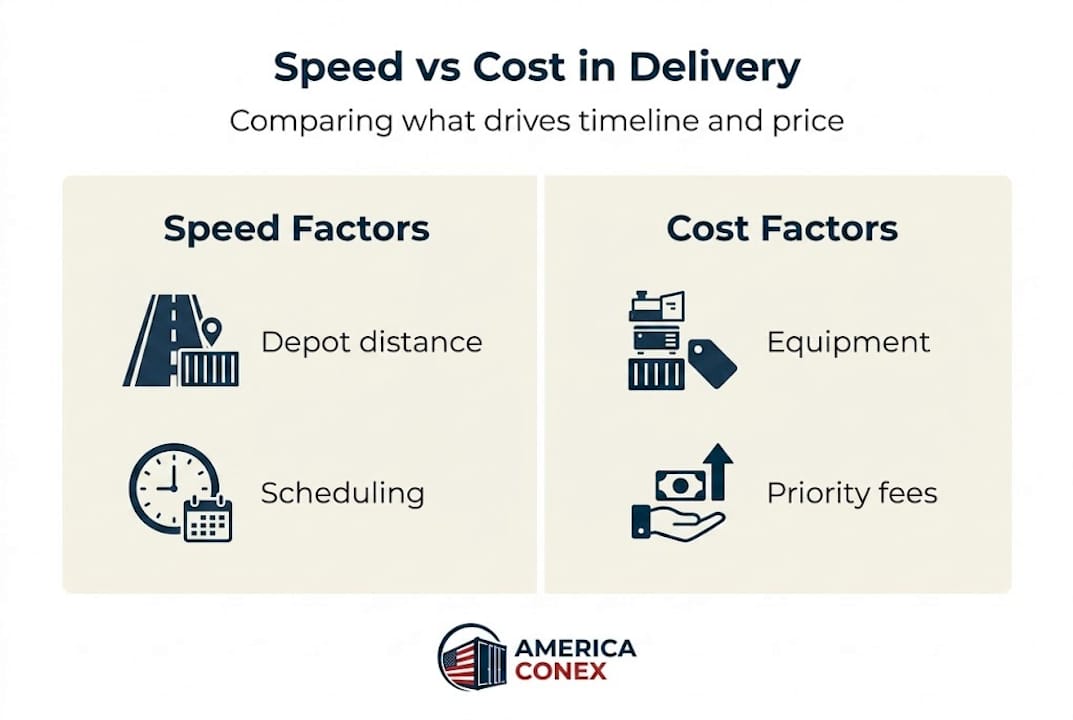
Here is a quick comparison of common delivery windows by method:
| Delivery type | Standard timeline | Expedited timeline |
|---|---|---|
| Local trucking | 3-5 business days | 2-3 business days |
| Regional transport | 5-7 business days | 3-4 business days |
| Ocean freight (international) | 20-35 days | 15-25 days |
| Air freight | 3-7 days | 1-3 days |
A few factors directly shape these windows regardless of what a vendor promises:
- Depot proximity: The closer the depot to your site, the shorter the delivery window. A shipping container delivery overview from a nearby depot cuts transit time significantly.
- Truck type: Tilt-bed trucks are faster for standard drops. Crane trucks take more coordination but are necessary for tight or elevated placements.
- Port congestion: If a container is moving through a busy port, customs clearance and dock availability can add days.
- Container availability: One-trip or WWT containers in stock ship faster than units that need inspection or prep.
- Service tier selected: Not all providers offer expedited options, so confirm before you book.
One of the most common misconceptions is that "fast" automatically means guaranteed next-day delivery. That is rarely the case outside of major cities with high depot density. Understanding shipping container terms like "cargo worthy" versus "one-trip" also matters, since container condition affects how quickly a unit clears inspection and gets dispatched.
Pro Tip: Always ask your provider for a specific delivery window in writing, not just a verbal estimate. Vague promises like "within the week" can cost you valuable project time.
For businesses storing equipment or inventory, secure container storage at a nearby depot can serve as a bridge while you wait for site delivery, keeping your operations moving without stalling.
Key factors that impact delivery speed
Understanding what drives speed helps you make smarter decisions at the booking stage, not after a delay has already hit your schedule.
Technology is reshaping logistics. Modern container operations increasingly rely on AI-powered tools to improve efficiency. AI optimization improves crane efficiency and stability by 10%, and improved algorithms cut truck delivery costs by 4.89 to 10.96% compared to manual routing. That translates into more predictable scheduling and fewer wasted hours on-site.
Here are the core variables that most directly affect how fast your container arrives:
- Booking timing: Peak seasons, particularly late summer and Q4, see demand spikes that push standard timelines out. Book early during peak season to lock in your preferred delivery date.
- Transport mode: Truck-only is fastest for local delivery. For long-distance moves, hybrid intermodal options using rail and truck offer comparable speed with meaningfully lower costs. You can review cost-saving transport methods to see which mode fits your route.
- Weather and traffic: These are unpredictable but manageable with buffer time built into your project plan.
- Port congestion: A bottleneck at one port can ripple across an entire regional supply chain.
- Real-time tracking: Vendors with live tracking systems let you monitor progress and catch problems early.
"Real-time tracking and AI-optimized routing are no longer premium features. They are becoming the baseline for competitive container logistics in 2026."
Keeping tabs on 2026 container market trends also helps you anticipate seasonal demand shifts before they affect your delivery window. If you know a supply crunch is likely in Q3, you can adjust your booking strategy accordingly.
Pro Tip: Use a provider that offers real-time tracking so you can proactively communicate with your team and adjust site prep schedules if a delay appears.
For businesses with recurring storage needs, improving storage workflow at the receiving end also reduces the friction that slows down delivery confirmation and container placement.
Cost vs speed: What businesses need to understand
Speed costs money. That is not a surprise. But knowing exactly how much, and when it is actually worth paying, is where most businesses leave money on the table.
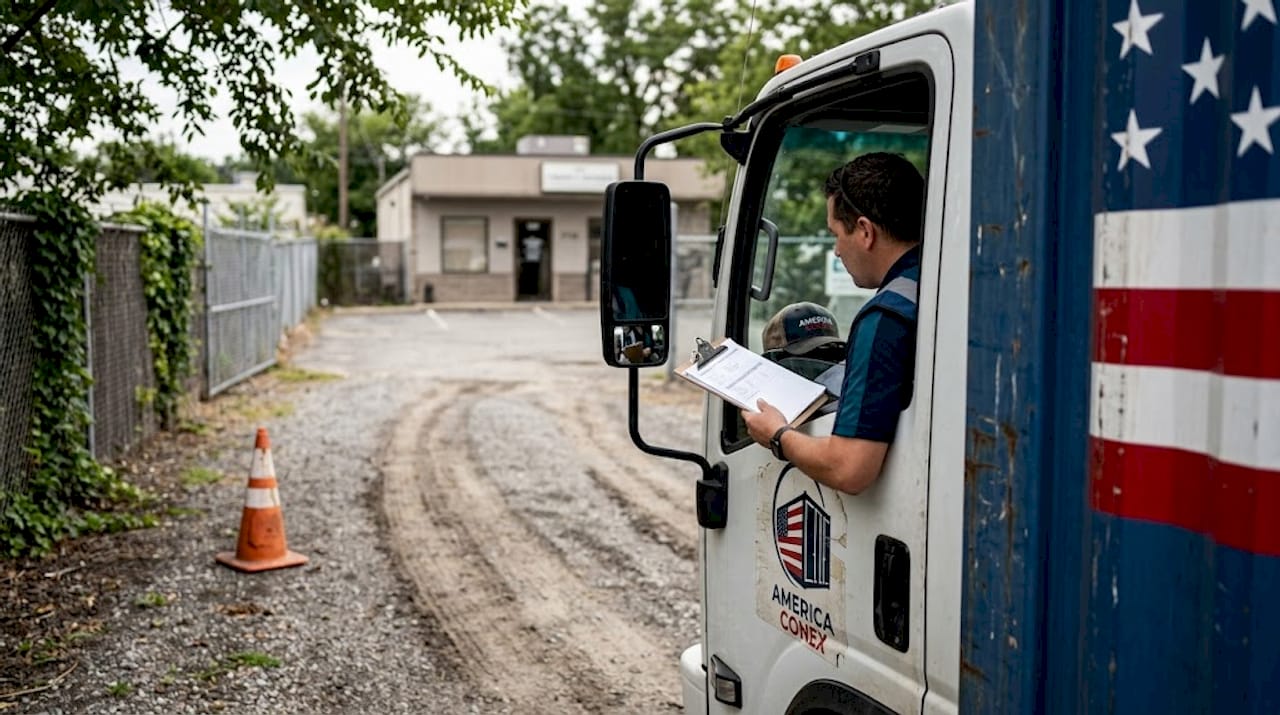
Here is a breakdown of common delivery cost ranges:
| Delivery method | Estimated cost range | Notes |
|---|---|---|
| Tilt-bed truck (local) | $300 to $800 | Best for standard drops |
| Crane or flatbed (specialty) | +$200 to $1,000 added | Required for difficult placements |
| Fast ocean freight | 15-20% more than standard | Still 70% less than air freight |
| Air freight | Highest available cost | For true emergencies only |
When does paying more for speed actually make sense? Use this four-step evaluation:
- Calculate the cost of delay. If a construction crew sits idle for two days waiting on a container, what does that cost in labor and lost productivity? If it exceeds the expedited delivery fee, pay for the faster option.
- Assess the project's time sensitivity. A storage container for year-round inventory can wait a few extra days. A job site container needed before a pour cannot.
- Compare the delivery premium to project value. A $400 expedited fee on a $200,000 project is a rounding error. On a $5,000 project, it deserves more scrutiny.
- Explore algorithm-optimized routing. AI-driven dispatch has been shown to cut truck costs by up to 10.96% compared to manual scheduling. Choosing vendors who use this technology can offset part of your speed premium.
For teams actively managing budgets, saving on container costs is possible without sacrificing timeline if you book smart and communicate clearly. When mode selection is flexible, reviewing cost-saving transport methods gives you leverage to negotiate better rates.
The bottom line: pay for speed when the cost of delay is provably higher than the delivery premium. In every other case, optimize through planning.
Best practices for securing fast delivery
Knowing what affects speed and cost is only useful if you act on it before your delivery window closes. These practices give you the best shot at getting your container on time and without extra fees.
Step-by-step booking strategy:
- Book as early as possible, especially during high-demand periods. Peak season surges in demand mean inventory and truck availability tighten fast.
- Confirm container availability for your specific type (20ft, 40ft, high cube, WWT, one-trip) at the nearest depot before committing to a project timeline.
- Get the delivery window in writing. Verbal confirmations are not reliable for project scheduling.
- Verify all required documentation is complete before dispatch day. Missing paperwork is one of the leading causes of last-minute delays.
- Communicate site access requirements clearly. Gate width, overhead clearance, surface type, and truck turning radius all affect what equipment gets dispatched and when.
Site readiness checklist:
- Clear, level surface with enough room for the truck to maneuver
- No overhead obstructions (power lines, trees, overhangs)
- Confirmed gate or driveway access for the truck type being used
- A designated contact person on-site at delivery time
- Confirmed knowledge of local permit requirements if the container will be permanent
For ongoing job site needs, reviewing efficient site storage guides helps you set up a placement that works both logistically and operationally. If you need flexible long-term options, equipment storage solutions can help you think through what type and size best fits your workflow.
Pro Tip: Prep your delivery location before dispatch day. A container truck that arrives to find an uncleared or inaccessible site may charge a redelivery fee, which adds cost and days to your timeline.
For those managing residential or smaller-scale projects, residential container delivery tips offer practical prep guidance tailored to non-commercial sites.
Our real-world take: Speed isn't always what it seems
After working with business owners across construction, retail, agriculture, and manufacturing, one pattern stands out. The clients who experience the fewest delays are rarely the ones who paid extra for the fastest service. They are the ones who planned carefully, communicated clearly, and set up their sites before the truck ever left the depot.
The "rush delivery" option gets marketed as the solution to every scheduling problem. But more often than not, the scheduling problem itself was avoidable. A project that suddenly needs a container in 24 hours usually got to that point because of a booking that was delayed by a week.
Fast delivery has real value. No one is disputing that. But it is a risk management tool, not a project management strategy. Buying speed after a misstep costs significantly more than building process discipline upfront.
In our experience, workflow optimization tips that address how teams communicate and prep for delivery reduce costly surprises far more effectively than any expedited shipping option. The best outcomes come from pairing smart planning with a vendor who has the infrastructure to deliver reliably, whether that is in two days or five.
Fast, reliable container delivery with America Conex
If your business needs containers delivered quickly, reliably, and without the usual guesswork, America Conex is built for exactly that. With 30+ strategically placed depots across the country, we keep delivery windows tight and inventory available across a wide range of container types including WWT, one-trip, cargo worthy, and both standard and high cube units in 20ft and 40ft sizes.
Our team walks you through every step, from selecting the right container for your use case to coordinating delivery logistics with your site. We offer transparent pricing with no surprises, and our delivery process is designed to keep your project on schedule. Explore your options or request a quote today and see how straightforward container delivery can be when you work with the right partner.
Frequently asked questions
How long does fast container delivery typically take?
Expedited trucking usually delivers in 2-3 days, while standard service runs 3-5 days. Exact timing depends on your location, depot proximity, and the container type you need.
Why does delivery speed cost more?
Faster delivery requires priority scheduling, dedicated equipment, and specialized logistics coordination, which is why expedited service typically runs 15-20% above standard pricing. It still costs far less than air freight alternatives.
How can I avoid delays in container delivery?
The most effective steps are booking early during peak demand periods, confirming all paperwork upfront, and having your delivery site cleared and accessible before dispatch day.
Are hybrid delivery options really faster or just cheaper?
Hybrid intermodal methods using rail and truck combined often match or exceed truck-only speed on long-distance routes while delivering meaningful cost savings, making them a smart default for cross-country moves.