
TL;DR:
- Proper container layout, stacking, and weight distribution are essential for efficient operations.
- Clear zoning, labeling, and digital inventory systems reduce retrieval errors and improve safety.
- Safety compliance, regular inspections, and staff training are crucial for damage prevention and legal adherence.
Misplaced cargo, slow retrieval times, and unexpected damage don't just cause frustration on a job site or in a logistics yard. They cost real money. A single mislabeled container or a poorly planned stack can trigger hours of rework, equipment delays, and compliance headaches that ripple across your entire operation. The good news is that most of these problems trace back to a handful of fixable process gaps. This article covers the proven best practices for container layout, organization, cargo securing, safety compliance, and technology integration that project managers and business owners can act on immediately.
Table of Contents
- Prioritize smart container layout and stacking
- Organize with zones, labels, and inventory systems
- Secure cargo with best-in-class methods
- Integrate safety compliance and regular inspections
- Leverage technology and yard management systems
- Why storage success is about people, not just processes
- Upgrade your container storage strategy with America Conex
- Frequently asked questions
Key Takeaways
| Point | Details |
|---|---|
| Smart layout matters | Planning container placement by height, weight, and accessibility is key for safety and efficiency. |
| Track inventory rigorously | Zoning, labeling, and up-to-date counts prevent costly errors and delays in fast-paced sites. |
| Security starts inside | Properly blocked and braced cargo, along with regular inspections, are your insurance against damage. |
| Leverage digital tools | Modern yard management systems boost utilization and free up time for your team. |
| People drive results | Regular training and clear communication ensure best practices become daily habit, not a checklist. |
Prioritize smart container layout and stacking
Now that you know why container storage can make or break operations, let's start with the ground rules for physical arrangement.
The first decision in any yard is where each container goes. Without a deliberate layout plan, yards fill up reactively, and soon you're moving three containers just to access one. Digital mapping tools let you assign zones before the first unit arrives, reserving high-traffic spots for containers that need frequent access and pushing long-term storage to the perimeter. This single step eliminates most of the daily reshuffling that drains labor hours.
Stacking height is the next variable to control. Taller stacks look efficient on paper but create serious problems in practice. Container relocations increase non-linearly with stacking height, and optimizing via reservations and scheduling can cut costs by 35%. That's not a marginal gain. It means a well-planned two-high stack often outperforms a chaotic four-high one in total cost per move.
Weight distribution is equally critical. Proper weight distribution requires placing the heaviest items on the floor, keeping the front-to-back split no greater than 60/40, and maintaining a 50/50 side-to-side balance. Ignoring this rule risks structural damage to the container floor and dangerous tilting during lifts.
When it comes to crane operations, the choice between Rubber Tired Gantry (RTG) and Rail Mounted Gantry (RMG) cranes matters for larger yards. RTGs offer flexibility and can reposition across the yard, making them better for dynamic operations. RMGs move faster on fixed rails and suit high-volume, predictable flows. Understanding which system your yard uses shapes how you plan row widths and access lanes.
Key layout principles to apply from day one:
- Reserve 3-meter access lanes between every two rows of containers
- Label each stack position before containers arrive, not after
- Rotate stock so older units stay accessible at the front
- Limit stacks to three high for standard operations unless certified equipment is present
- Review your container storage workflow regularly to catch bottlenecks early
Yard utilization benchmarks to track:
| KPI | Target range | Warning threshold |
|---|---|---|
| Yard space utilization | 60–75% | Above 85% |
| Truck turnaround time | 30–60 min | Above 90 min |
| Trailer dwell time | 2–48 hours | Above 72 hours |
| Dock utilization | 70–85% | Below 60% |
Pro Tip: Never fill your yard beyond 75% capacity. That last 25% of open space is what allows you to reposition containers without a full-scale reshuffling operation.
Organize with zones, labels, and inventory systems
With your containers arranged strategically, the next step is optimizing how contents are organized and tracked.
Zoning is the backbone of fast retrieval. When every team member knows that tools live in Zone B and raw materials live in Zone D, search time drops dramatically. More importantly, clear zones reduce the chance of workers entering the wrong area, which is a real safety concern in active yards. A well-structured container depot organization system prevents costly mix-ups between incoming and outgoing stock.
Effective labeling goes beyond a marker on a door. Color-coded systems work well for large teams because they communicate category information at a glance. Numeric systems pair well with digital inventory maps, allowing managers to cross-reference physical locations with software records instantly. Implementing labeling, inventory lists, and zone organization for areas like intake, quick-grab, inventory, and tools dramatically speeds up retrieval and reduces errors on busy sites.
Common container zone types for construction and logistics:
- Intake zone: Where all new deliveries land for inspection before being sorted
- Quick-grab zone: High-turnover items that workers need multiple times per shift
- Inventory zone: Bulk storage for materials not needed immediately
- Tool zone: Equipment, PPE, and site tools with sign-out tracking
- Hazmat zone: Segregated area for chemicals or flammables with proper signage
Digital inventory tracking takes this further. A simple spreadsheet beats nothing, but a dedicated inventory app connected to barcode or QR code labels gives you real-time visibility across multiple containers and sites.
| Method | Speed of retrieval | Error rate | Cost | Scalability |
|---|---|---|---|---|
| Manual paper lists | Slow | High | Very low | Poor |
| Spreadsheet tracking | Moderate | Moderate | Low | Limited |
| Barcode/QR system | Fast | Low | Moderate | Good |
| Full digital YMS | Very fast | Very low | Higher | Excellent |
Pairing a strong labeling system with site storage quality standards ensures that the containers themselves stay in the condition needed to protect what's inside.
Secure cargo with best-in-class methods
Smart organization is only half the battle. Keeping cargo safe from damage or loss is just as crucial.
Cargo shifts during transit and storage cause more damage than most operators realize. Vibration, sudden stops, and uneven stacking all create forces that move unsecured loads. The consequences range from broken materials to collapsed stacks that injure workers. Understanding why shifts happen is the first step to stopping them.
Blocking, bracing, lashing, and dunnage are the four core methods for keeping cargo stable. Blocking uses rigid materials placed against cargo to stop forward and backward movement. Bracing adds diagonal support to resist side-to-side forces. Lashing uses straps or chains anchored to container walls to hold loads in place. Dunnage, such as air bags or foam padding, fills empty space so cargo cannot shift into gaps.
Step-by-step cargo securing process:
- Plan your load order before opening the container doors
- Place the heaviest, most stable items on the floor against the front wall
- Build upward with progressively lighter items
- Fill horizontal gaps with dunnage bags before adding the next layer
- Apply lashing straps to anchor tall or irregularly shaped items
- Brace any items that could tip sideways during transport
- Conduct a final visual check before sealing the doors
Overloading and under-securing are the top causes of container damage, and pre-planning your load order can achieve 15 to 20% better space utilization. That improvement directly reduces the number of containers you need per shipment.
"The most expensive cargo securing mistake is not the one that causes damage. It's the one you almost had, but caught too late to prevent a pattern." This mindset, focused on near-misses as learning opportunities, separates reactive operations from truly safe ones.
Pro Tip: Use cargo security tips to evaluate whether your current containers meet cargo-worthy standards before loading high-value materials.
Integrate safety compliance and regular inspections
Securing your cargo is just one part of a bigger responsibility. Compliant facilities and frequent inspections protect everyone on site.
Compliance is not just a legal checkbox. It directly affects your liability exposure, insurance rates, and the safety record that clients and partners evaluate when choosing vendors. A single OSHA citation for an unsafe container yard can cost thousands of dollars and trigger follow-up inspections that disrupt operations for weeks.
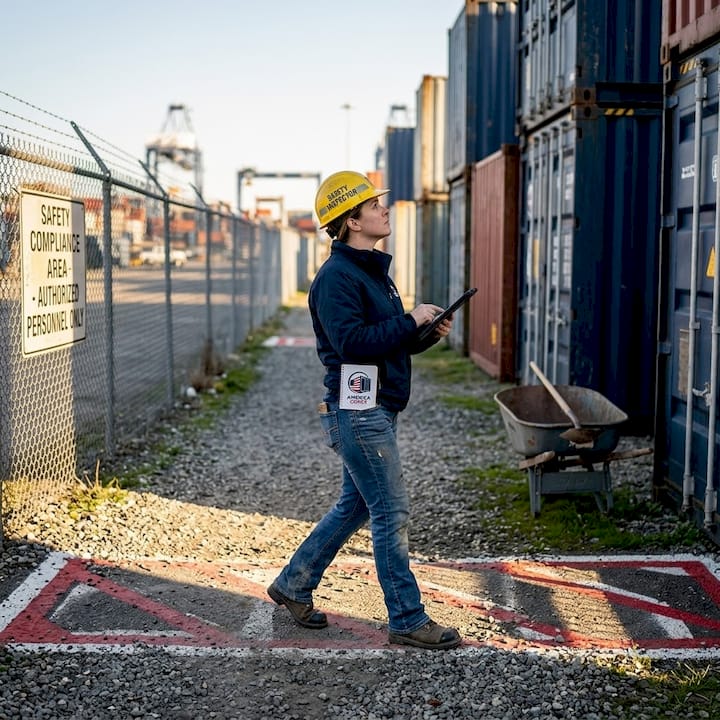
OSHA guidelines for container yards require regular inspections, posted weight capacities, trained operators, protection against environmental hazards, and strict segregation of flammable materials. Each of these requirements exists because a real incident happened somewhere that made the rule necessary.
Step-by-step container safety inspection checklist:
- Check structural integrity: doors, hinges, corner castings, and floor condition
- Verify posted weight limits are visible and accurate for each stack position
- Confirm all operators have current training documentation on file
- Inspect tie-down points and lashing anchors for corrosion or damage
- Review flammable material storage for proper separation and ventilation
- Test lighting in all active zones, especially near entry and exit points
- Document findings and assign corrective actions with deadlines
Hazardous material segregation deserves special attention. Flammables must be stored away from ignition sources, in ventilated containers, and clearly marked with the appropriate signage. Mixing chemical storage with general inventory is one of the most common and most dangerous compliance failures in construction yards.
Familiarizing your team with OSHA container terms ensures that safety briefings land clearly and that workers understand exactly what each standard requires of them.
OSHA fine context: Serious violations carry penalties up to $16,131 per incident as of 2026. Willful or repeated violations can reach $161,323 per violation. For a mid-size logistics operation, a single avoidable citation can cost more than a full year of compliance training.
Leverage technology and yard management systems
After establishing a culture of compliance and safety, forward-thinking operations turn to technology for the next performance leap.
Digital layout planning removes the guesswork from yard management. Instead of relying on a site supervisor's memory or a hand-drawn map, you get a live view of every container's position, status, and scheduled movement. Planning layouts digitally and using YMS for real-time tracking with regular maintenance alerts transforms reactive yards into predictable, optimized operations.
A Yard Management System (YMS) connects your physical yard to a digital dashboard. Dispatchers can see which containers are available, which are scheduled for pickup, and which need inspection, all without walking the yard. This visibility cuts truck wait times and eliminates the "where is that container?" calls that interrupt every shift.
Vertical racking adapts better than fixed shelving for dynamic construction and logistics needs, and adding lighting and ventilation improves usability significantly. Modular racking systems inside containers allow you to reconfigure storage as project needs change, which is a major advantage over permanent shelving that locks you into one layout.
Features of a future-ready container yard:
- Real-time GPS or RFID tracking on all active containers
- Automated alerts for containers approaching dwell time limits
- Digital check-in and check-out logs for every container movement
- Integration with dispatch and scheduling software
- Modular interior racking that reconfigures without tools
- LED lighting and passive ventilation in all enclosed storage units
- Mobile access so managers can review yard status from any location
Combining these tools with a focus on container cost savings creates a compounding effect. Better organization means fewer moves. Fewer moves mean lower labor costs. Lower labor costs mean more budget for the technology that drives the next round of improvements.
Pro Tip: Start with a basic YMS before investing in RFID hardware. The process discipline you build while learning the software will make hardware integration far smoother when you're ready to scale.
Why storage success is about people, not just processes
Here's the perspective that most operational guides skip: the best layout plan, the most advanced YMS, and the most detailed inspection checklist will underperform if your team doesn't own the system.
We've seen yards with state-of-the-art software where containers still ended up in the wrong zone because no one reinforced the labeling protocol after a crew change. We've also seen yards running on spreadsheets and color-coded tape that outperformed digitally managed competitors because every worker understood why the system mattered and felt accountable for maintaining it.
The real differentiator is ongoing training and frontline feedback loops. A one-time safety briefing fades within weeks. Monthly 15-minute walkthroughs where crew members point out what's working and what isn't create a living system that adapts to real conditions. One logistics manager we know averted a serious stacking incident not because of a sensor alert, but because a forklift operator flagged an unusual lean during a routine feedback session. That conversation cost five minutes. The repair it prevented would have cost five figures.
High turnover is the enemy of institutional knowledge in construction and logistics. When a new crew arrives, they don't inherit the logic behind your zone layout. They inherit the physical result of it, which looks arbitrary without context. Building short onboarding walkthroughs into your standard process, paired with adaptable storage approaches that reduce complexity for new team members, is what makes best practices stick across personnel changes.
Technology amplifies good habits. It doesn't replace them. Invest in your people first, then layer in the tools.
Upgrade your container storage strategy with America Conex
If you're ready to put these insights into action, America Conex can help you optimize your next storage project.
At America Conex, we supply new and used shipping containers to construction teams and logistics operations nationwide, backed by 30+ strategically located depots for fast, reliable delivery. Whether you need a wind and water tight unit for on-site storage, a one-trip container for sensitive materials, or a cargo-worthy unit for active shipping, we have the inventory and the expertise to match your project requirements. Our team understands the operational demands covered in this article, and we can help you select containers that support your shipping container workflow tips from day one. Reach out for transparent pricing and same-week delivery options.
Frequently asked questions
What is the best way to prevent container cargo from shifting during transit?
Use blocking, bracing, lashing, and dunnage to secure cargo tightly so it stays stable through movement and stacking. Pre-planning your load order before packing is the single most effective step you can take.
How often should container yards be inspected for safety compliance?
Inspect regularly per OSHA guidelines, and conduct additional checks after any incident or significant change in yard layout. Monthly formal inspections with documented findings are a practical minimum for active sites.
What KPIs are important for monitoring container storage efficiency?
Watch trailer dwell times (2 to 48 hours), truck turnaround (30 to 60 minutes), and keep yard space utilization between 60 and 75% to maintain operational flexibility without wasting capacity.
How do digital yard management systems help with container storage?
YMS provides real-time tracking, layout planning, and maintenance alerts that replace manual guesswork with data-driven decisions. The result is faster truck turnaround and fewer costly container relocations.
What are key elements of an effective inventory labeling system for containers?
Use clear zones, visible labels, mapped inventory lists, and digital trackers. Zone organization with labeled intake, quick-grab, and inventory areas gives every team member a shared reference point for fast, accurate retrieval.