

TL;DR:
- Choosing the right container depends on its intended use, size, condition, and future needs.
- Inspection, transparent pricing, and reputable sellers are crucial to avoid hidden costs and poor-quality units.
- Prioritize seller reliability and warranties over the lowest price to ensure a dependable purchase.
Buying a shipping container sounds straightforward until you realize how many variables can quietly drain your budget or leave you with a unit that doesn't fit your needs. The market is crowded, pricing is inconsistent, and sellers range from highly reputable to outright unreliable. First-time buyers especially can overpay, accept poor-quality units, or get hit with surprise delivery fees that blow up their budget. Whether you need a container for personal storage, a job site, or active shipping, this guide walks you through every step of the selection process, from defining your needs to closing the deal safely.
Table of Contents
- Define your needs and container types
- Evaluate condition: New vs. used containers
- Understand pricing factors and hidden costs
- Compare sellers: Warranties, reputations, and service
- Finalize the deal: Secure payments and delivery logistics
- Our expert take: Don't chase the lowest price at all costs
- Find your ideal container with America Conex
- Frequently asked questions
Key Takeaways
| Point | Details |
|---|---|
| Match type to use | Choose container size and type based on specific personal or business needs. |
| Evaluate condition closely | Inspect carefully for damage, especially with used containers. |
| Account for all costs | Factor in transportation, modifications, and fees, not just the sticker price. |
| Vet sellers thoroughly | Check warranties, reviews, and transaction safeguards before committing. |
| Prioritize reliability | Value long-term performance and support over just the lowest cost. |
Define your needs and container types
Before you browse a single listing, get clear on what you actually need the container to do. That single question shapes every decision that follows, including size, condition, and budget. Choosing the right container type depends on its intended use, whether that's storage, conversion, or active shipping.
Here are the most common container types and what they're best suited for:
- Standard dry containers: The most widely available option. Used for general storage, job site equipment, and dry goods shipping. Available in 20ft and 40ft lengths.
- High cube containers: One foot taller than standard units (9.5ft interior height vs. 8.5ft). Ideal for bulky items, workshop conversions, or retail pop-ups where vertical space matters.
- Open top containers: No fixed roof, which makes loading oversized cargo like machinery much easier. A specialty choice for industrial use.
- Refrigerated containers (reefers): Temperature-controlled units for perishable goods. Higher cost and require power hookup.
- Flat rack containers: No side walls, used for heavy or oddly shaped freight like vehicles or construction materials.
Size is often where buyers make their first mistake. A 20ft container offers roughly 1,170 cubic feet of space, while a 40ft unit nearly doubles that at about 2,390 cubic feet. For most residential storage needs, a 20ft is plenty. For business inventory, equipment, or multi-purpose use, a 40ft gives you room to grow. International container sizes follow ISO standards, so you can compare options with confidence across suppliers.
Pro Tip: When in doubt, size up. Renting or buying a second container later costs far more than choosing a slightly larger unit upfront. Future-proofing your purchase by going one size bigger is almost always worth it.
Evaluate condition: New vs. used containers
With your ideal container type in mind, the next decision is whether to opt for new or used, and how to evaluate quality before committing.
Used containers are typically much more affordable, but quality varies greatly. A one-trip container (essentially new, used once for overseas shipping) sits at the premium end. Standard used units range widely depending on age, prior cargo, and how they were maintained.
Key inspection points to check before buying:
- Exterior rust: Surface rust is normal and manageable. Deep rust or holes are serious structural red flags.
- Dents and structural damage: Minor dents are cosmetic. Large dents near door frames or corners can compromise weather resistance.
- Door seals and hinges: Worn seals let in water and pests. Test that doors open, close, and lock smoothly.
- Flooring condition: Most containers use hardwood floors. Look for rot, soft spots, or chemical staining from prior cargo.
- Interior odors: Strong chemical smells can indicate the container previously carried hazardous materials.
Always ask for cargo-worthy container grades documentation if you plan to use the container for active shipping. A cargo-worthy certification means the unit has been inspected and meets international transport standards.
Inspections for corrosion, flooring, and door seals are critical for used units. Don't skip this step, even if the price looks great. A full container inspection checklist can help you cover every angle systematically.
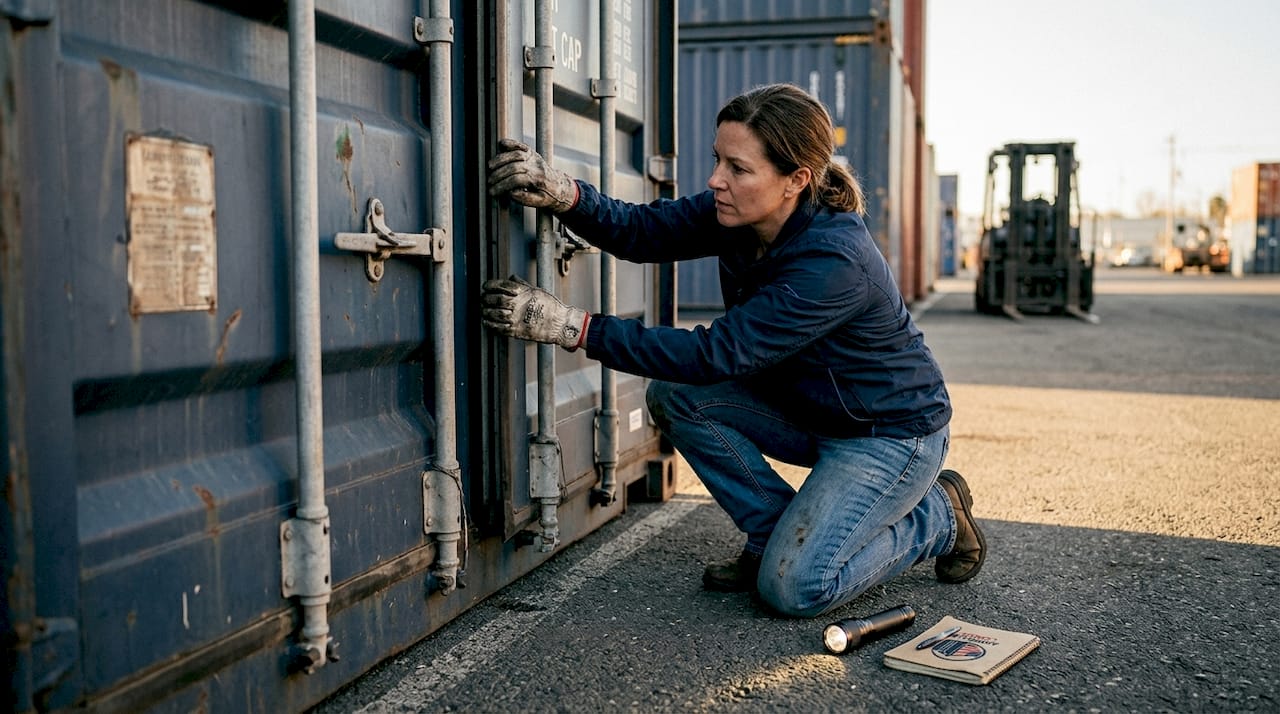
Pro Tip: If you're buying remotely, always request a video walkthrough or detailed photo set covering all four exterior sides, the interior floor, and the door seals. Any reputable seller will accommodate this without hesitation.
Understand pricing factors and hidden costs
After picking the right condition, buyers need to understand what goes into the final price and avoid surprises at checkout.
Location, condition, and transportation have the biggest impact on final container cost. Here's a general price range breakdown to help you benchmark offers:
| Container type | Size | Estimated price range |
|---|---|---|
| Used WWT | 20ft | $1,500 to $2,800 |
| Used WWT | 40ft | $2,200 to $3,800 |
| Cargo worthy | 20ft | $2,000 to $3,500 |
| Cargo worthy | 40ft | $3,000 to $4,800 |
| One-trip (new) | 20ft | $3,500 to $5,500 |
| One-trip (new) | 40ft | $5,000 to $8,000 |
Prices shift based on your region, current steel market conditions, and seasonal demand. Coastal areas with high port activity often have lower base prices due to container availability. Inland locations typically pay more.
Extra costs buyers frequently overlook:
- Delivery fees: This is the big one. Average delivery can add 20% to 30% to a container's base cost depending on distance and terrain.
- Site preparation: You'll need a level, firm surface. Gravel, concrete, or compacted soil are all viable, but prep work costs money.
- Permits: Some municipalities require permits for permanent container placement. Check local zoning rules before you buy.
- Modifications: Adding doors, windows, ventilation, or electricity all add to the total spend.
- Insurance: Often overlooked, but worth factoring in for high-value units or business use.
For a full container cost breakdown by region and use case, do your research before accepting any quote. Always ask for an all-in price that includes delivery to your specific address. Comparing base prices without delivery is like comparing flights without baggage fees. You need the full number to make a fair call. Familiarize yourself with shipping container pricing terms so you can read quotes accurately and spot inflated line items.
Compare sellers: Warranties, reputations, and service
Knowing true costs, the next step is to size up sellers and their service offers before you hand over any money.
Warranties, service, and after-sales support differ widely among container suppliers. Here's a simple framework for comparing your options:
| Criteria | Strong seller | Average seller | Weak seller |
|---|---|---|---|
| Warranty | 30 to 90 days written | Verbal only | None offered |
| Customer reviews | 4.5+ stars, verified | Mixed, few reviews | No reviews or hidden |
| Delivery guarantee | Written, time-bound | Estimated only | Vague or no commitment |
| Documentation | Full paperwork provided | Partial | Missing or unclear |
| Modifications available | Yes, in-house | Referral only | No |
Before committing to any seller, ask these questions directly:
- What does your warranty cover, and for how long?
- Do you provide a delivery guarantee in writing?
- Can you share customer references or verified reviews?
- What documentation comes with the container?
- Are you certified or affiliated with any industry organizations?
Transparent pricing and verified reviews are the two strongest signals of a trustworthy seller. Be cautious of anyone who avoids direct answers or pushes you to close quickly. For more guidance on vetting container sellers, look for sellers who are upfront about container grades and can provide inspection records on request.
Finalize the deal: Secure payments and delivery logistics
After choosing a reputable seller, the final stretch is securing the purchase and arranging a smooth drop-off.
Verifying payment security and delivery details prevents common buying scams. Follow these steps to close safely:
- Request a formal invoice that itemizes the container price, delivery fee, and any add-ons. Never pay from a verbal quote alone.
- Use a traceable payment method. Bank wire, credit card, or ACH transfer all create a paper trail. Avoid cash or wire transfers to unfamiliar accounts.
- Get a receipt and confirmation of the container's serial number (CSC plate) tied to your purchase.
- Confirm delivery terms in writing, including the date window, driver contact, and what happens if the delivery is delayed.
- Request title or bill of sale documentation at the time of payment.
For delivery logistics, prepare your site in advance:
- Clear a path at least 14ft wide and 60ft long for the delivery truck to maneuver.
- Ensure the ground is level and firm enough to support the container's weight (roughly 5,000 lbs empty for a 20ft unit).
- Confirm you don't need a crane or forklift for placement, or arrange one ahead of time.
- Be present at delivery to inspect the unit before signing off.
For helpful delivery logistics tips and safe payment guidance, review what reputable suppliers recommend before finalizing your order. For higher-value purchases, also review safe payments for containers to understand your protections as a buyer.
Pro Tip: Insist on written delivery conditions and ask about insurance coverage for damage during transport. If the seller can't confirm this in writing, that's a red flag worth taking seriously.
Our expert take: Don't chase the lowest price at all costs
We've seen it play out more times than we'd like. A buyer finds a container listed $400 cheaper than everyone else, skips the inspection, accepts vague delivery terms, and ends up with a unit that leaks, smells, or arrives two weeks late with no one to call. That "savings" evaporates fast.
The real cost of a bad container purchase isn't just the repair bill. It's the downtime, the frustration, and the time spent chasing a seller who's already moved on. Cheap deals that skip warranties and service aren't deals at all. They're risks dressed up as savings.
Our advice: treat the seller relationship as part of the product. A supplier who answers questions clearly, provides documentation, and stands behind their containers is worth paying a bit more for. You're not just buying steel. You're buying reliability.
If you're still weighing your options, it's also worth reading up on renting versus buying containers before you commit. Sometimes the smartest purchase is knowing when not to buy at all.
"I went with the cheapest quote and regretted it within a week. The next time I paid a little more for a supplier with real reviews and a written warranty. Night and day difference." — Experienced container buyer
Find your ideal container with America Conex
You've done the research. Now it's time to put it to work. At America Conex, we make the buying process straightforward, from selecting the right unit to getting it delivered to your door.
We offer a full range of new one-trip containers, used WWT units, and cargo-worthy options in both 20ft and 40ft sizes, with high cube availability across our nationwide depot network. Every quote we provide is all-in, so you know exactly what you're paying before you commit. No surprise fees, no vague delivery windows. Browse our shipping containers for sale or reach out to our team for a fast, no-pressure quote tailored to your location and needs.
Frequently asked questions
How can I check the quality of a used shipping container before buying?
Request detailed photos, inspection reports, and if possible, view the container in person or via live video to check for rust, dents, and worn seals. Inspections for corrosion and door seals are critical steps that no reputable seller should refuse.
What are the most common extra costs when buying a shipping container?
Buyers should budget for delivery fees, site preparation, and optional modifications beyond the sticker price. Location and transportation alone can add 20% to 30% to your total spend.
Is it safer to buy from a local dealer or online?
As long as you verify the seller's reputation, ask for references, and secure safe payment, both options can work. Payment security and delivery details should always be confirmed in writing regardless of where you buy.
What is a 'cargo worthy' container and should I buy one?
A cargo-worthy container meets standards for secure international shipping and reliable onsite storage. Warranties and container grades vary by supplier, so always ask for documentation before purchasing one.