

TL;DR:
- Container pricing varies based on condition, size, location, delivery fees, and market trends.
- Buying long-term or with modifications often saves money, while renting suits short-term needs.
- Understanding total costs and timing market conditions helps buyers get the best value.
Container pricing is one of those topics where most buyers walk in with one number in mind and walk out surprised. Whether you're a business owner looking for job site storage or an individual planning a move, the assumption that containers have a fixed, predictable price can cost you real money. Prices vary based on condition, size, location, delivery fees, and even the time of year you buy. Understanding how container pricing actually works puts you in a much stronger negotiating position and helps you avoid overpaying for something that doesn't even match your needs.
Table of Contents
- What is container pricing?
- Factors that impact container pricing
- Comparing common pricing models: buy vs. rent
- Choosing the right container for your needs
- How smart buyers save on container pricing
- Our perspective: Why container pricing isn't as simple as it seems
- Get the best container value with America Conex
- Frequently asked questions
Key Takeaways
| Point | Details |
|---|---|
| Container pricing varies | Costs depend on type, condition, location, and market trends. |
| Buy vs. rent wisely | Choose your pricing model based on usage frequency, duration, and flexibility needs. |
| Right container matters | Match container type and quality to your use for best value. |
| Save with strategy | Smart timing, negotiation, and hybrid ownership can significantly reduce costs. |
What is container pricing?
Let's clear up a common source of confusion right away. When people search for "container pricing" online, they sometimes land on results about cloud computing services. Azure Container Apps pricing refers to software resource costs and has absolutely nothing to do with physical shipping or storage containers. We're talking about steel boxes on wheels, not virtual machines.
For physical containers, container pricing refers to the structured cost of purchasing, leasing, or renting shipping and storage containers. That definition sounds simple, but the actual price you pay is made up of several components that most buyers don't think about until they get a quote.
Here's what container pricing typically includes:
- Unit cost: The base price of the container itself, which varies by size, condition, and type
- Delivery fees: The cost to transport the container from a depot to your location
- Pickup fees: If you're renting, the cost to retrieve the container when you're done
- Modifications: Custom add-ons like shelving, ventilation, extra doors, or paint
- Permits and site prep: Sometimes required depending on your local municipality
Containers also fall into different categories, and each carries its own pricing logic. Shipping containers are built to move cargo across oceans and must meet specific international standards. Storage containers are often retired from shipping service and repurposed for stationary use. Understanding shipping container terminology before you buy saves you from paying a premium for specs you don't actually need.
Key insight: The price tag on a container is rarely the full cost. Always ask for a total delivered cost before comparing quotes from different suppliers.
Factors that impact container pricing
With a clear definition in hand, it's time to look at what actually drives the cost of containers. The short answer: a lot of things. The longer answer is where it gets interesting.
Condition is the biggest price driver. Containers are graded by their physical state and certification level:
- One-trip containers: Essentially brand new, used once to ship goods from overseas. These carry the highest price but the best condition.
- Cargo-worthy (CW): Certified for international shipping, inspected for structural integrity. Priced higher than storage-only units.
- Wind and watertight (WWT): Retired from shipping but still weatherproof. The most affordable option for stationary storage.
- As-is containers: Sold without guarantees. Cheapest upfront but can carry hidden repair costs.
Market forces matter more than most buyers realize. Steel prices directly affect what suppliers pay for inventory, and those costs flow downstream to you. Steel and import trends provide real insight into where container prices are heading, which means watching commodity markets can actually help you time a purchase.
Pro Tip: If steel prices are rising, buy sooner rather than later. If they're falling, waiting a few weeks could save you hundreds on a single unit.
Geographic location plays a big role. Containers are abundant near major ports like Los Angeles, Houston, and Savannah. The further you are from a depot, the more you'll pay in delivery fees. Suppliers with more depot locations can offer lower delivery costs because the container doesn't have to travel as far. Staying informed about 2026 market trends helps you anticipate regional price swings before they hit.
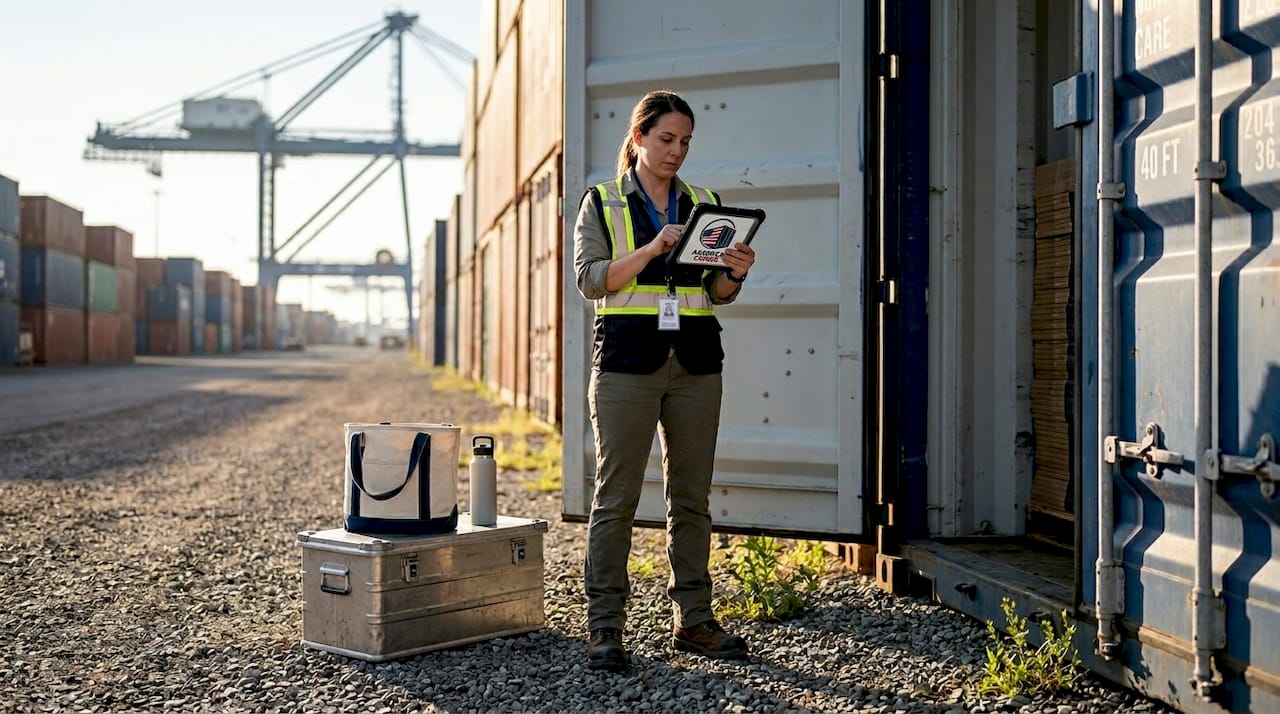
Age and prior use also factor in. A container that hauled chemicals or food products may require cleaning or lining before it's suitable for your use. Always ask about the cargo history. And if you're planning modifications, factor those costs in early. Retrofitting a container after purchase is almost always more expensive than ordering custom features upfront.
Finally, don't overlook saving on shipping container costs by bundling orders. Buying two or more containers from the same supplier often unlocks volume discounts that aren't advertised.
Comparing common pricing models: buy vs. rent
Understanding what affects price is crucial, but how you pay also matters. Let's compare your main options.
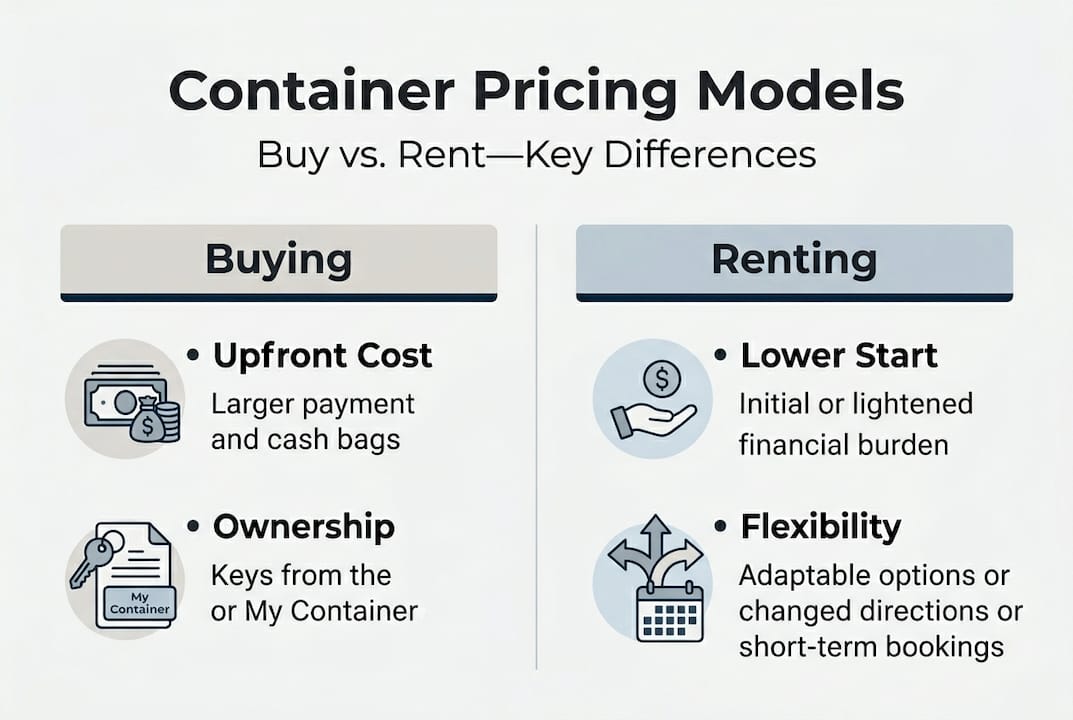
| Feature | Buying | Renting |
|---|---|---|
| Upfront cost | Higher | Lower |
| Long-term cost | Lower | Higher over time |
| Flexibility | Low (you own it) | High (return when done) |
| Customization | Full control | Limited by rental terms |
| Best for | Long-term or permanent use | Short-term or seasonal needs |
Buying a container makes sense when you need it for more than a year or plan to modify it significantly. You own the asset, you control what happens to it, and over time the per-day cost drops to nearly nothing. Renting works well for temporary job sites, seasonal inventory overflow, or one-time events where you don't want to manage resale afterward.
Here's how to think through the decision:
- Estimate your usage period. If it's under 12 months, renting is usually cheaper in total.
- Factor in modification needs. Heavy customization almost always favors buying.
- Consider storage at end of use. If you have no place to keep it, renting avoids the resale hassle.
- Look at your cash flow. Renting preserves capital; buying builds equity in a physical asset.
- Check your location. In areas with high delivery costs, buying and keeping the container long-term spreads that one-time fee over years.
For businesses with fluctuating demand, the smartest move is often a hybrid. Purchasing a core fleet and renting for peak periods can maximize savings without locking up capital in units that sit idle half the year. Our rent or buy decision guide walks through this in more detail.
Pro Tip: If you're a business that rents containers every summer, run the numbers on buying one unit outright. After two to three seasons, ownership usually wins on total cost.
Choosing the right container for your needs
Now that you know your buying and renting options, let's focus on finding the right container for your specific application.
| Container type | Typical price range (purchase) | Best use case |
|---|---|---|
| 20ft WWT | $1,500 to $3,000 | On-site storage, small businesses |
| 40ft WWT | $2,500 to $4,500 | Large storage, inventory overflow |
| 20ft One-trip | $3,500 to $5,500 | Shipping, high-value storage |
| 40ft One-trip | $5,000 to $8,000 | International shipping, premium storage |
| 20ft Cargo-worthy | $2,500 to $4,000 | Active shipping routes |
| 40ft High cube | $4,000 to $7,500 | Tall cargo, retail pop-ups |
Note: Prices vary by region, market conditions, and supplier. Always request a current quote.
Matching container condition to its intended use is one of the most important decisions you'll make. Paying for a cargo-worthy container when you only need ground-level storage is money wasted. On the flip side, using a beat-up WWT container for international shipping will get your cargo rejected at the port.
Here's a quick guide to matching container class to use case:
- Shipping internationally: Always use cargo-worthy or one-trip containers. Certification is non-negotiable.
- Job site storage: WWT containers are ideal. They're weatherproof, affordable, and easy to deliver.
- Long-term secure storage: One-trip or WWT in good condition. Check for container quality for storage before committing.
- Retail or event use: High cube containers offer extra vertical space and look better for customer-facing setups.
- Active shipping: Review cargo-worthy containers explained to understand what certification actually covers.
Size matters too. A 20ft container fits most residential driveways and smaller job sites. A 40ft unit needs more clearance for delivery and placement but offers double the storage at a fraction of the per-square-foot cost.
How smart buyers save on container pricing
Once you've chosen the right container, make sure you're not overpaying. Here's how smart buyers trim costs without sacrificing quality.
- Buy in low-demand regions. Containers near major ports are plentiful and cheaper. If you're inland, ask suppliers about sourcing from port-adjacent depots and rolling the delivery cost into a negotiated total.
- Time your purchase strategically. Late fall and winter tend to be slower seasons for container sales. Suppliers are more motivated to move inventory, which gives you negotiating leverage.
- Negotiate delivery terms. Ask if you can pick up the container yourself or meet the driver at a closer location. Even a few miles can reduce delivery costs significantly.
- Optimize your fleet by buying core units and renting for peak demand. This is the single most effective strategy for businesses managing variable storage needs.
- Bundle orders. Ordering multiple containers at once almost always triggers a volume discount. Even if you don't need the second unit right away, the savings may justify early purchase.
Pro Tip: Ask your supplier about containers that are already at a nearby depot. Units sitting in local inventory often come with reduced delivery fees and faster turnaround.
Also think about workflow efficiency tips when planning your container layout. A well-organized container setup reduces the time your team spends searching for materials, which has a real dollar value. And if you're moving containers between locations, reviewing container transport savings can cut your logistics costs meaningfully.
Our perspective: Why container pricing isn't as simple as it seems
After working with thousands of buyers across the country, one thing stands out: the people who get the best deals are not the ones who find the lowest advertised price. They're the ones who understand context.
A $1,800 container in a region with $900 delivery fees is more expensive than a $2,200 container with $300 delivery. A WWT container that needs $600 in repairs before it's usable isn't actually cheaper than a one-trip unit. These are the kinds of calculations that generic price charts never show you.
We've also seen buyers get burned by timing. Purchasing during a steel price spike or right before a major port disruption can inflate costs by 15 to 25 percent compared to buying just a few months earlier or later. The market moves. Your strategy should too.
The smartest approach is to build a relationship with a supplier who gives you honest, transparent pricing and tells you when the market favors buying versus waiting. Generic online price lists are a starting point, not a strategy. Combining flexible container cost strategies with a trusted supplier is what consistently delivers the best total value.
Get the best container value with America Conex
If you want reliable pricing and expert service, here's how America Conex can help.
At America Conex, we supply new and used shipping containers nationwide, with access to 30+ depots across the country for fast, cost-effective delivery. Whether you need a WWT unit for job site storage, a one-trip container for secure shipping, or a high cube for a commercial project, we offer transparent pricing with no hidden fees. Our team helps you match the right container to your actual needs, not just the cheapest option on the lot. Explore your options or request a quote today at America Conex and get a container that works as hard as you do.
Frequently asked questions
What components make up container pricing?
Container price covers not just the unit itself but also delivery, pickup, modifications, and any required permits. Always ask for a fully itemized quote before comparing suppliers.
Is there a difference between shipping and storage container pricing?
Yes. Cargo-worthy containers are priced higher because they require certification and inspection for active shipping use, while WWT storage containers are more affordable since they're retired from shipping service.
How can businesses save money on container pricing?
The most effective strategy is a hybrid model: buy your core units and rent additional containers only during peak demand. Monitoring market trends and working with a supplier who offers volume discounts also helps reduce total spend, as hybrid buy and rent strategies consistently outperform either approach alone.
Is cloud container pricing related to physical container pricing?
No. Cloud container pricing refers to virtual software resources like those offered by Microsoft Azure and has no connection to the cost of physical shipping or storage containers.