
TL;DR:
- Portable storage units are weather-resistant, lockable containers delivered directly to your location, allowing flexible loading before pickup. They simplify logistics, reduce costs, and enhance security for homeowners, businesses, and movers, with options for international shipping and secure jobsite storage. The service's value lies in provider-managed logistics and security, making it a smarter alternative to traditional storage and DIY moving methods.
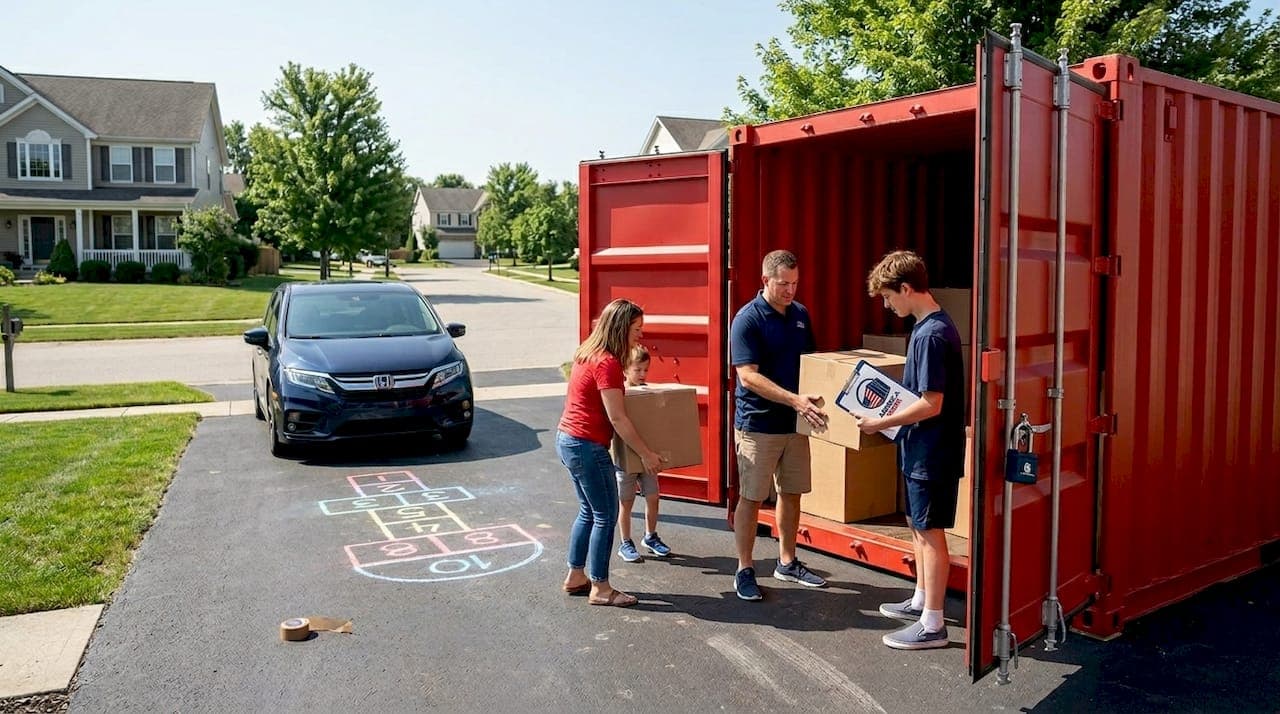
Most people picture a flimsy plastic shed or a beat-up trailer when they hear the words "portable storage." That image couldn't be further from reality. Portable storage units are weather-resistant, lockable containers that a provider delivers directly to your location, letting you load on your own schedule before the provider handles all pickup, warehousing, and delivery logistics. It's a full-service system, not a makeshift fix, and understanding exactly how it works can save you serious time, money, and stress whether you're moving across town, securing a jobsite, or shipping goods internationally.
Table of Contents
- What is portable storage? A clear definition
- How portable storage works: Step-by-step workflow
- Secure portable storage for jobsites and businesses
- Portable storage for moving and international shipping
- What most people miss about portable storage: It's logistics plus security
- Find your secure portable storage solution
- Frequently asked questions
Key Takeaways
| Point | Details |
|---|---|
| Provider-managed convenience | Portable storage units are delivered to your location and picked up by the provider, minimizing your transport effort. |
| Secure storage options | Containers offer lockable doors and weather resistance onsite or in provider-managed warehousing for optimal security. |
| Flexible logistics | Storage solutions adapt to home, job site, or international shipping needs, including customs and freight support. |
| Reduced risk of theft | Jobsite-focused portable storage includes enhanced locks and access control to prevent nighttime losses. |
| Expert guidance matters | Choosing the right provider is as important as selecting the right container, impacting logistics and security outcomes. |
What is portable storage? A clear definition
With the misconception addressed, let's define exactly what portable storage is and how it differs from traditional storage options.
At its core, portable storage is a provider-managed container service. A company delivers a sturdy, weather-resistant container to your home or business. You load it at your own pace. Then the provider picks it up and either stores it at a secure facility or ships it to your next destination. You never have to rent a truck, hire movers for transport, or make multiple trips to an off-site unit.
"Portable storage is a weather-resistant, lockable container that a company delivers to your home or business so you can load items at your location, then the company either stores the container off-site or delivers it to your next location."
That single workflow change eliminates one of the biggest headaches in moving or temporary storage: the logistics burden. You focus on packing. The provider handles everything else.
Who benefits most from portable storage?
- Homeowners staging a property for sale or undergoing renovations
- Businesses managing seasonal inventory overflow
- Contractors and construction crews needing on-site tool and material storage
- Families and individuals making long-distance or cross-country moves
- Companies with international shipping needs requiring secure interim storage
The security features matter just as much as the convenience. Quality portable storage containers use reinforced steel construction, heavy-duty locking mechanisms, and weatherproof seals that protect contents from rain, wind, and dust. These aren't temporary sheds. They're the same basic structure as the secure container storage solutions used in commercial logistics worldwide.
One often-overlooked advantage is cost. Because the provider manages transport, you avoid the expense of renting a truck, paying for fuel, and hiring additional labor. When you factor in transporting containers cost-savings, the total price of a managed portable storage service frequently beats the DIY approach once you add up every hidden expense.
How portable storage works: Step-by-step workflow
Now that you know what portable storage is, here's how the entire process works, step by step, and how it compares to standard storage or moving approaches.
The workflow is straightforward, and that simplicity is the whole point. Here's what a typical portable storage experience looks like from start to finish:
- Request and schedule delivery. You contact the provider, choose a container size, and set a delivery date. Most providers offer 20ft and 40ft options in standard or high cube configurations.
- Container arrives at your location. The provider drops the container at your driveway, job site, or designated spot. No special equipment is needed on your end.
- You load the container. Take a day, a weekend, or however long you need. There's no rushing to return a rental truck by a certain hour.
- Provider picks up the container. Once you're done loading, the provider retrieves the container on your schedule.
- Container is stored or shipped. The typical workflow ends with the container being stored at a secure warehouse, shipped to a new address, or returned to you loaded with your belongings at a new location.
- Delivery to the final destination. The provider delivers the container to your new home, business, or job site. You unload. Done.
For long-distance moves, the model becomes even more valuable. Portable containers can be shipped by freight across the country, which means you don't have to drive a loaded truck hundreds of miles or coordinate with multiple moving companies. The provider handles the freight logistics while you travel separately.
Portable storage vs. traditional options
| Feature | Portable storage | Traditional self-storage | Rental truck |
|---|---|---|---|
| Delivery to your location | Yes | No | No |
| You load on your schedule | Yes | Yes | No (time-limited) |
| Provider manages transport | Yes | No | No |
| Offsite secure warehousing | Yes | Yes | No |
| International shipping option | Some providers | No | No |
| No driving required | Yes | No | No |
For streamlining your container storage workflow, the managed model consistently outperforms the DIY approach in both time savings and total cost when transport is factored in.
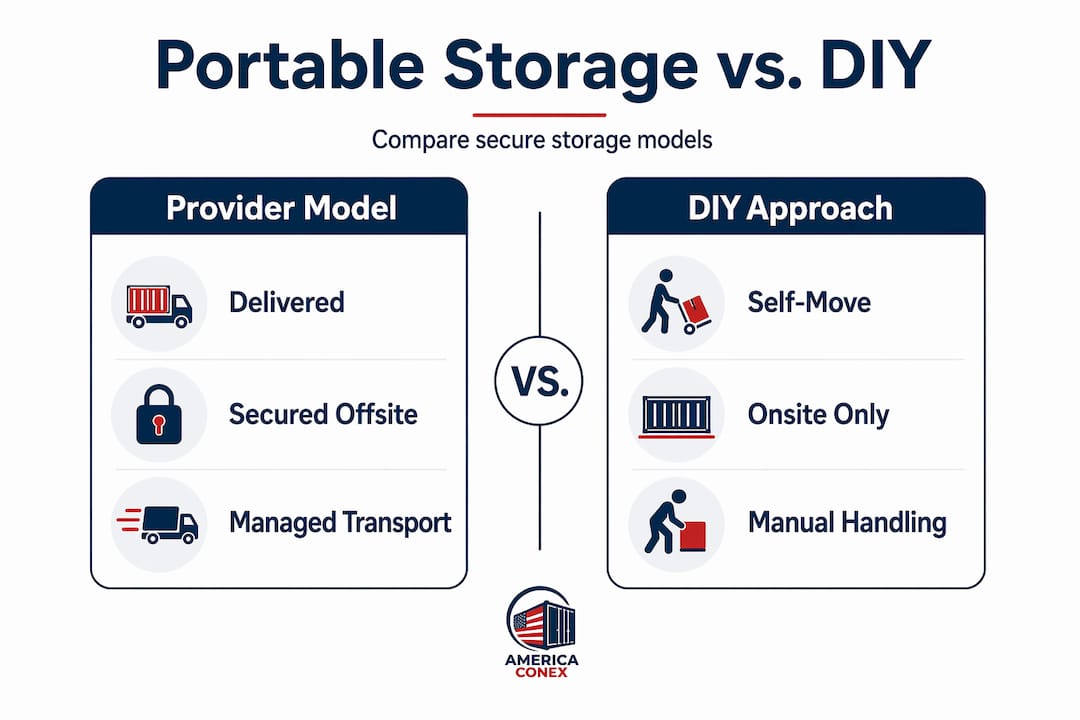
Pro Tip: Unless you need to access your items daily, choosing offsite storage through your provider reduces the risk of theft, weather damage, and unauthorized access compared to keeping the container on your property long-term.
Secure portable storage for jobsites and businesses
For businesses and work crews, portable storage brings vital security and flexibility. Let's look at how to maximize these benefits.
Construction sites and commercial job sites are high-value targets. Tools, equipment, and materials represent significant capital investment, and losing them to theft or weather damage can derail a project timeline and budget instantly. Portable storage is widely used by businesses and contractors for exactly this reason: it keeps tools and materials accessible on-site without requiring repeated trips to an off-site storage facility.
Statistic to know: Industry data consistently shows that more than half of all jobsite theft occurs after hours, when equipment is left unsecured or in inadequate storage. A properly secured portable container dramatically reduces that risk.
The best practices for jobsite portable storage go beyond just dropping a container on-site:
- Use reinforced locks. Standard padlocks are not enough. Cross-bar locks or puck locks rated for outdoor use make forced entry significantly harder.
- Control access. Limit who has keys or combinations. Track who accesses the container and when, especially on large crews.
- Position the container strategically. Place it in a well-lit area within sight of security cameras or a site office. Avoid placing it in isolated corners where it's out of view.
- Add lighting. Motion-activated lights near the container discourage after-hours tampering.
- Document contents. Keep an inventory of what's stored inside. This matters for insurance claims if theft or damage does occur.
The container itself provides the first layer of defense. Steel construction, weatherproof seals, and heavy-duty door hardware mean your tools and materials stay dry and protected even during harsh weather. For businesses evaluating secure storage solutions, the combination of physical security and on-site accessibility is difficult to match with any other storage format.
Pro Tip: When evaluating containers for jobsite use, prioritize container quality for secure storage over price alone. A container with compromised door seals or weakened locking points is a liability, not an asset.
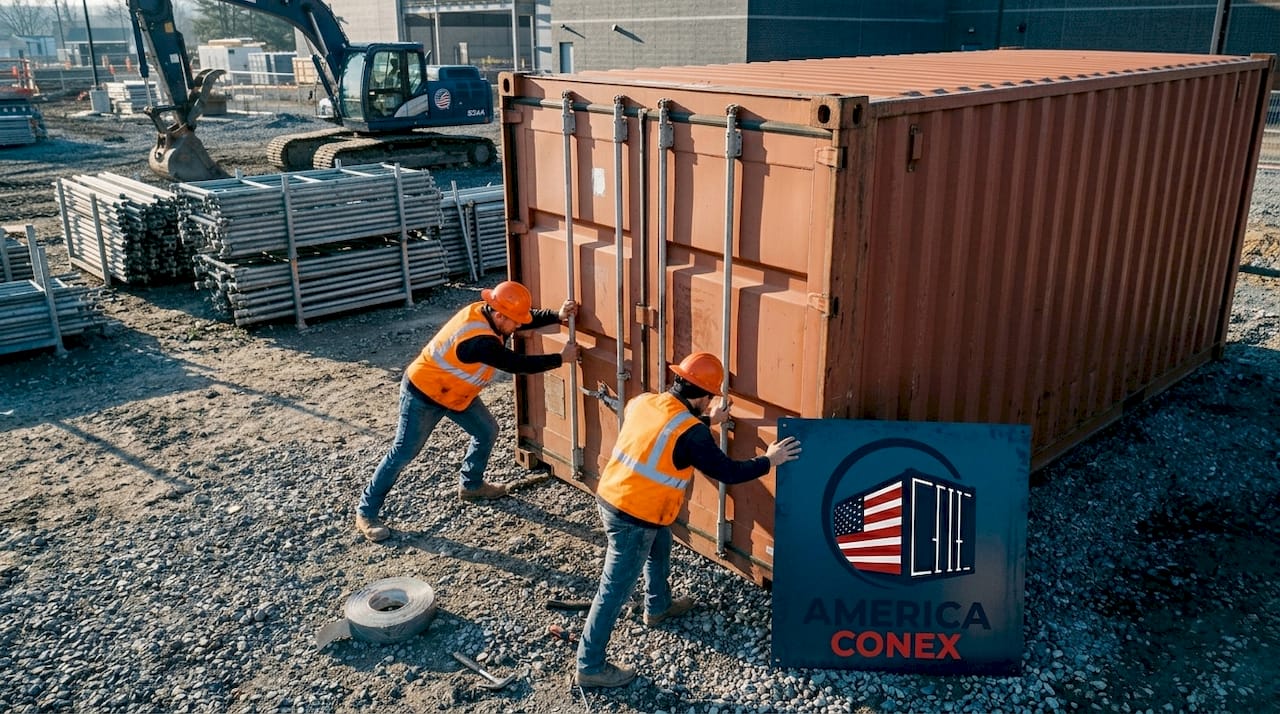
One underrated benefit for businesses is flexibility. A portable storage container can be repositioned as the project evolves. If your work moves from one end of a site to another, the container moves with it. That adaptability is something a fixed storage shed or off-site unit simply cannot offer.
Portable storage for moving and international shipping
Some portable storage companies go beyond domestic solutions, offering international shipping and storage. Here's how that process works and what you get.
Domestic moves are the most common use case, but the portable storage model scales remarkably well for international relocations. The core workflow stays the same: you load the container at your location, the provider picks it up, stores it securely if needed, and then ships it to your destination. What changes is the complexity of the logistics, and that's exactly where a managed provider earns its value.
Leading providers offer international shipping with options to store containers at a secure facility before shipping, along with support for customs clearance documentation. That last part matters more than most people realize. Customs paperwork errors are one of the most common causes of delays and added costs in international moves.
Key benefits of portable storage for international shipping:
- Consolidated logistics. One provider manages loading, secure storage, freight shipping, and delivery coordination.
- Secure interim warehousing. If your destination isn't ready when your container is packed, the provider holds it in a climate-controlled or weather-resistant facility.
- Customs support. Reputable providers guide you through documentation requirements, reducing the risk of clearance delays.
- Flexible timing. You're not locked into a single moving date. Pack now, ship when you're ready.
International portable storage at a glance
| Stage | What happens | Who manages it |
|---|---|---|
| Loading | You pack the container at your location | You |
| Interim storage | Container held at secure facility | Provider |
| Freight shipping | Container shipped by sea or land freight | Provider |
| Customs clearance | Documentation prepared and submitted | Provider (with your input) |
| Final delivery | Container delivered to destination address | Provider |
For anyone shipping goods internationally, understanding container depot secure shipping is essential. Depot networks determine how quickly your container can be picked up, stored, and routed to the right freight connection. A provider with a strong depot network delivers faster and at lower cost than one with limited coverage.
It's also worth knowing what type of container you need for international freight. Not all containers are rated for ocean or cross-border shipping. Cargo-worthy containers meet the structural and certification standards required for international transport, which is a distinct category from containers used purely for on-site or domestic storage.
What most people miss about portable storage: It's logistics plus security
Looking beyond technical details, here's the real reason portable storage is transforming how people move and secure their assets.
Most people evaluate portable storage by comparing container sizes and monthly rental rates. That's the wrong lens. The real value is in what you don't have to do. You don't have to rent a truck. You don't have to coordinate a moving crew for transport. You don't have to navigate freight brokers for a long-distance move. You don't have to worry about whether your items are sitting in an unsecured location overnight.
Portable storage is essentially "storage plus logistics handled by a provider": the container comes to you, you fill it, and the provider manages every step after that, including pickup, warehousing, and optional shipping to a destination. The customer's transport burden disappears entirely.
Here's the insight most articles skip: the quality of the provider matters as much as the quality of the container. A well-built container paired with a provider that has poor logistics, slow pickup times, or inadequate warehousing doesn't deliver the full value of the model. When you're evaluating options, ask about depot locations, pickup turnaround times, warehousing conditions, and whether they offer tracking or communication during transit.
Security is another area where provider practices matter as much as container hardware. A steel container with a quality lock is only as secure as the facility where it's stored. Ask providers about their warehousing security, who has access, and how they handle incidents. These questions separate serious providers from those who treat storage as an afterthought.
For those weighing long-term options, the rent vs. buy decision for containers is worth thinking through carefully. If your storage need is recurring or ongoing, owning a container outright often delivers better economics than paying monthly rental fees indefinitely. Providers like America Conex make it straightforward to compare both paths and find the right fit for your situation.
The bottom line: portable storage isn't a product category. It's a service model. Evaluate it as such, and you'll make a much smarter decision.
Find your secure portable storage solution
Whether you're securing a job site, preparing for a long-distance move, or managing seasonal business overflow, the right container makes all the difference.
America Conex supplies new and used shipping containers nationwide, with access to 30+ strategically located depots for fast, reliable delivery. From used wind and watertight units to one-trip containers in like-new condition, every container is built for real security and real-world use. Our 20ft and 40ft standard and high cube options cover everything from residential needs to commercial job sites to international freight. Explore America Conex secure containers to find the right unit for your project, or check out our residential container storage guide for practical guidance on sizing, placement, and setup. Transparent pricing, dependable delivery, and genuine support from start to finish.
Frequently asked questions
What are the main benefits of portable storage?
Portable storage delivers convenience, security, and eliminated transport burden because the provider handles delivery, pickup, and all logistics while you focus on loading and unloading at your own pace.
Can portable storage be used for international moves?
Yes. Leading providers offer international shipping options that include secure warehousing before shipment and customs clearance support to simplify cross-border moves.
How does portable storage enhance jobsite security?
Portable containers provide lockable, steel-reinforced, weather-resistant storage on-site for contractors, keeping tools and materials protected against theft and weather without requiring repeated trips to an off-site facility.
Do I have to store portable containers onsite, or can they be stored elsewhere?
You have both options. The typical workflow allows you to keep the container at your location or have the provider retrieve and store it at a secure warehouse until you need it again.