
TL;DR:
- Moisture damage, poor ventilation, and awkward access cause more inventory loss than theft in storage setups. Selecting proper site prep, locks, ventilation, and organization enhances container storage durability, security, and efficiency. Matching container type and features to specific needs and local regulations ensures cost-effective, reliable, and optimized storage solutions.
Most people assume their storage setup fails because of theft. The reality is more surprising: moisture damage, poor ventilation, and awkward access are responsible for far more lost inventory and ruined equipment than break-ins ever are. Whether you're a homeowner looking to reclaim your garage, a contractor securing tools overnight, or a business managing seasonal inventory, the details of your storage solution matter far more than most buyers realize before they commit. This guide cuts through the confusion and gives you a clear, practical framework for evaluating, setting up, and optimizing container-based storage.
Table of Contents
- What is a storage solution? Key concepts and definitions
- Core components of an effective shipping container storage solution
- Choosing the right storage container: Factors and trade-offs
- Operational efficiency: Maximizing access and logistics
- Why cost-cutting can backfire: What most people miss about storage solutions
- Ready to find your tailored container storage solution?
- Frequently asked questions
Key Takeaways
| Point | Details |
|---|---|
| Define your requirements | Identify what you need to store and any special access, temperature, or security needs up front. |
| Optimize for usability | Choose features like shelving, ventilation, and proper site setup to enhance efficiency and safety. |
| Understand trade-offs | Containers are flexible but may not be suitable for every need or environment due to zoning or insulation limits. |
| Invest for the long term | Prioritize durability and customization over the lowest price to avoid future headaches or costs. |
What is a storage solution? Key concepts and definitions
A storage solution is any system or infrastructure designed to safely, securely, and efficiently contain goods, tools, materials, or equipment. That definition sounds simple, but it covers a lot of ground. It includes everything from a basic shelving unit in a warehouse to a climate-controlled vault, and yes, a repurposed shipping container on a construction site counts too.
Shipping containers have become one of the most practical and flexible storage options available in the U.S. today. They're built from Corten steel, designed to survive ocean crossings, stacked on cargo ships, and dragged through ports in extreme weather. That kind of resilience translates directly into reliable ground-level storage. Standard shipping containers come in 20ft and 40ft lengths, and both sizes offer a self-contained, lockable, weatherproof unit that can be delivered right to your property.
Here's a quick breakdown of the most common storage needs containers serve:
- Residential decluttering: Clearing out garages, sheds, and basements without renting off-site space
- Business inventory: Storing overflow stock, raw materials, or seasonal merchandise on-site
- Construction tools and materials: Keeping equipment secure at job sites with locking steel doors
- Agricultural or farm use: Housing feed, seed, or machinery on rural properties
- Seasonal equipment: Storing boats, ATVs, landscaping gear, or holiday inventory
The key thing container storage for equipment gets right is security combined with accessibility. You don't need a facility lease or monthly rental fees. You own the unit, place it where you need it, and it works on your schedule. As one industry resource notes, successful container storage depends on foundational setup and choosing the right access and environmental features from the start.
Core components of an effective shipping container storage solution
Now that we've defined storage solutions and why shipping containers are favored, let's break down what makes a container solution reliable and high-performing.
A container is a steel box. What turns it into a functional storage solution is everything you do around and inside it. There are four non-negotiable components that separate a setup that works from one that causes headaches.
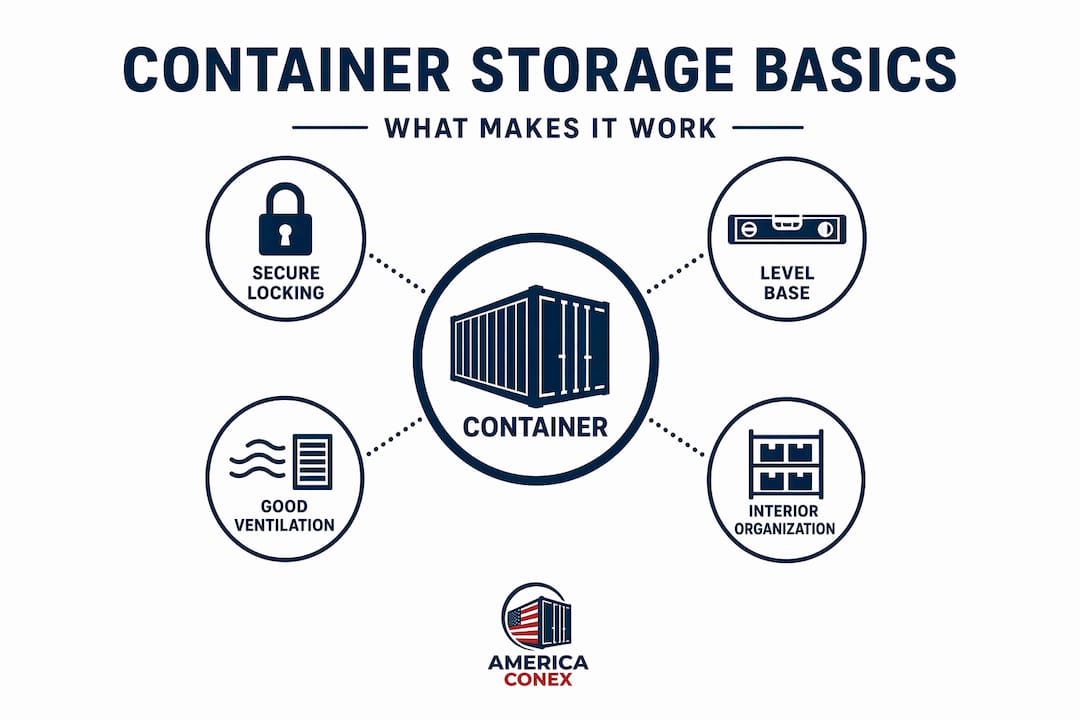
| Component | Why it matters | Common mistake |
|---|---|---|
| Level, stable base | Prevents door misalignment and structural stress | Placing on uneven ground without gravel or concrete |
| High-quality locks | Deters theft; secures contents overnight | Using only the factory lock bar without a padlock |
| Ventilation | Reduces condensation and moisture buildup | Sealing the container completely airtight |
| Shelving and organization | Maximizes usable space and retrieval speed | Stacking items loosely on the floor |
Base and site selection matter more than most buyers expect. A container placed on soft or uneven ground will shift with freeze-thaw cycles, which warps the door frame and makes the doors hard to open. A compacted gravel pad or concrete slab keeps the unit level year-round. Make sure delivery trucks can reach the site without damage to your landscaping or driveway.
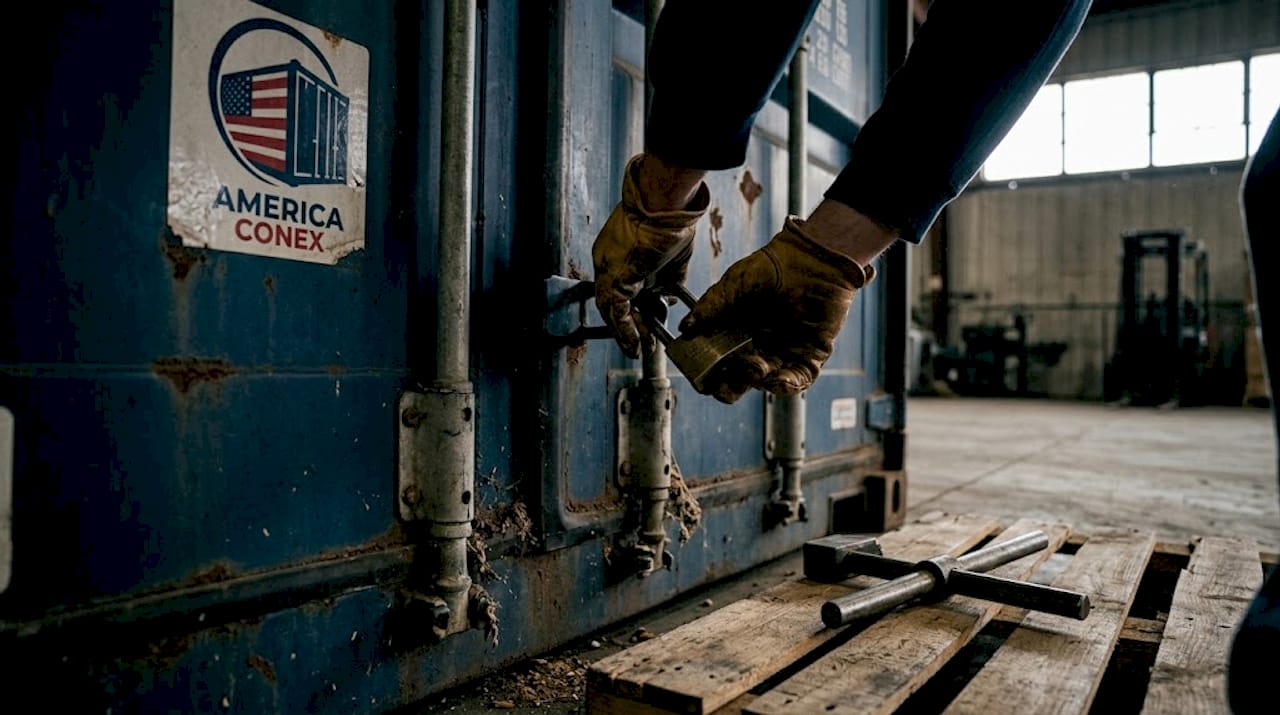
Security features go beyond the built-in door latches. A cross-bar lock or a shrouded padlock hasp makes cutting through the lock much harder. You can also look into container lock boxes, which are welded steel covers that hide the padlock entirely from pry tools. For higher-risk sites, motion sensor lighting and camera placement add another layer of deterrence.
Ventilation is the feature most buyers ignore until it's too late. Steel containers absorb solar heat during the day and cool rapidly at night. That temperature swing creates condensation inside the unit, which is sometimes called "container rain." Adding locks, ventilation, and shelving greatly improves performance, and passive vents installed near the roof line are often enough to manage moisture for general storage. For sensitive goods, insulation and ventilation are critical when contents are moisture or temperature sensitive.
Pro Tip: Paint the roof of your container white or a light reflective color. It can reduce interior temperatures by 10 to 15 degrees Fahrenheit during summer months, cutting down on condensation and protecting temperature-sensitive items without any mechanical system.
Here are the key add-ons worth considering based on your specific use case:
- Insulation (spray foam or panel-based): Essential for electronics, documents, or anything that warps or degrades with humidity
- Electrical hookup: Useful for lighting, power tools, or climate control equipment
- Shelving systems: Steel industrial shelving dramatically increases the usable cubic footage of any container
- Ramp or step kits: Improves ergonomics for frequent loading and unloading
Pairing smart organization with solid security is what makes residential storage setups worth the investment. For business applications, container quality and security directly affect operational reliability and insurance considerations.
Choosing the right storage container: Factors and trade-offs
Understanding the essential features is only part of the puzzle. Let's examine real trade-offs and make sense of when containers fit your needs and when they don't.
Containers are not the right answer for every situation. Containers face real limitations including insulation requirements, zoning restrictions, and access challenges that can make them impractical in certain contexts. Knowing those limits upfront saves money and frustration.
When containers work best:
- Secure outdoor storage where a building permit for a permanent structure isn't viable
- Semi-permanent to permanent use where the container won't be moved frequently
- Sites with enough clearance for a delivery truck and forklift or crane placement
- Locations with straightforward zoning that allows container placement
- Budgets that make buying outright more cost-effective than ongoing storage fees
When containers have limits:
- Items requiring strict climate control, like wine, pharmaceuticals, or sensitive electronics without additional HVAC
- Locations with strict homeowner association rules or urban zoning that prohibits container placement
- Sites where ground access is difficult, narrow, or weight-restricted
- Goods that need to be accessed multiple times per day at speed, where a warehouse racking system may be more practical
Here's a practical comparison of container options by size and condition:
| Option | Best for | Typical trade-off |
|---|---|---|
| 20ft used WWT | Tight spaces, personal use, budget buyers | May have cosmetic wear but structurally sound |
| 40ft used WWT | Business inventory, larger equipment storage | Needs more delivery clearance |
| 20ft one-trip | Sensitive goods, clean appearance needed | Higher upfront cost |
| 40ft high cube | Tall equipment, racking systems, oversized items | Premium price, more site space needed |
One of the most important decisions you'll face is whether to rent or buy. If your storage need is truly short-term (under six months), renting may make sense. But for most businesses and homeowners with an ongoing need, renting vs. buying containers often tips heavily in favor of buying, since purchase prices are frequently equivalent to just a few months of rental fees.
Pro Tip: Always verify local zoning regulations before ordering. Some counties classify containers as temporary structures and limit how long they can remain on residential properties. Others require setback distances from property lines. A five-minute call to your local planning office can prevent a costly removal order.
Operational efficiency: Maximizing access and logistics
With structure and core feature considerations covered, it's time to optimize for access and smooth daily operations.
For businesses and anyone who accesses their container frequently, workflow design is just as important as the physical container itself. How you arrange, label, and retrieve items determines whether your storage setup saves you time or costs it.
Two core strategies apply here:
-
FIFO (First In, First Out): You place older stock or inventory toward the front and newer arrivals toward the back. This works well for perishables, time-sensitive materials, or anything where rotation matters. It requires more deliberate loading but prevents waste.
-
Clustering: You group similar items or items used together in the same zone of the container. A contractor might cluster all electrical supplies in one area and plumbing fittings in another. Clustering speeds up retrieval when you know what category you need but don't follow a strict rotation sequence.
Research supports the value of these approaches. Stacking and retrieval strategies like FIFO or clustering significantly impact storage efficiency, especially when volume increases and retrieval frequency is high.
"The way you load a container on day one shapes every future retrieval. Spend 30 minutes planning your layout before the first item goes in, and you'll recover that time within the first week of operations."
Here are the access-related factors that have the biggest impact on day-to-day efficiency:
- Door placement and direction: Standard containers have rear double doors. If you need side access or additional entry points, plan for modifications before delivery.
- Aisle space: Leave at least 18 to 24 inches of clear aisle in a 40ft container if you're accessing items regularly. Cramming every inch of floor space eliminates the ability to move around safely.
- Lighting: A battery-powered LED strip or a hardwired light bar makes a significant difference in retrieval speed and safety, especially in low-light conditions.
- Labeling systems: Use large, waterproof labels on shelves and bins. Color coding by category is even faster when things are busy.
For teams improving container workflow, small investments in organization infrastructure pay off quickly. And if your operation involves moving and repositioning containers, understanding transport logistics keeps costs manageable when needs change.
Why cost-cutting can backfire: What most people miss about storage solutions
Here's the honest take that most storage guides skip: the lowest-priced container isn't always the best deal. It's often the most expensive decision in disguise.
We see this pattern consistently. A buyer focuses entirely on upfront price, grabs the cheapest used container available, skips the gravel base, skips ventilation, and loads it up. Six months later, they're dealing with a warped door that won't seal, rust blooms on the interior walls, and ruined inventory. The replacement or remediation cost far exceeds what proper setup would have cost from the start.
Cutting corners on the base, security hardware, and moisture control are the three most common mistakes. But there's a subtler error too: choosing a container that doesn't match the actual use case. A used WWT container is perfectly fine for storing landscaping equipment. It's not the right choice for archival documents or electronics without proper insulation added. Even a secure, weatherproof container can underperform if specialized requirements like access ergonomics or moisture control are ignored.
The best storage decision is one that matches the container condition, configuration, and location to your specific situation. Don't assume a one-size-fits-all approach. A 20ft one-trip container with proper shelving might cost more upfront than a beat-up used unit, but it serves a five-year storage need without maintenance surprises.
There are legitimate ways to save on container costs without sacrificing quality. Buying used in wind-and-watertight condition, choosing the right size rather than defaulting to the largest, and planning your site prep carefully are all smart strategies. The goal is value, not just price.
Smart buyers ask: what will it cost me if this solution fails? That question reframes the decision and usually points toward investing in quality and proper setup rather than racing to the bottom on price.
Ready to find your tailored container storage solution?
If this guide has helped clarify what you actually need from a container, the next step is working with a supplier who can match you with the right unit and back it up with reliable delivery.
At America Conex, we supply both new and used containers across the country through a network of 30+ strategically located depots. Whether you need a used WWT unit for a job site, a one-trip container for clean commercial storage, or a 40ft high cube for a large-scale operation, we can help you find the right fit at a competitive price. Our team can walk you through size selection, condition grades, and site prep requirements so you avoid the common pitfalls covered in this guide. Explore our full range of shipping containers for sale and get expert guidance on the setup that fits your actual needs, not just your budget.
Frequently asked questions
What is considered a storage solution?
A storage solution is any system designed to safely, securely, and efficiently store items, ranging from basic shelving to full shipping containers. The right setup depends on what you're storing, how often you need access, and the environment where it's placed.
Are shipping containers good for storage?
Yes, containers offer robust, weather-resistant storage that outperforms most alternatives for outdoor or semi-permanent use. Their effectiveness depends on key adaptations like ventilation, proper locks, and insulation for sensitive contents.
What are the biggest limitations of container storage?
Potential zoning constraints, the need for insulation in extreme climates, and limited site access can make containers impractical in some situations. Local rules and environmental factors should always be assessed before purchasing.
How can I increase container storage efficiency?
Use organized stacking or retrieval strategies like FIFO or clustering, and design your layout before the first item goes in. Simulation-based analysis confirms that stacking strategies have a measurable impact on retrieval speed and overall efficiency.
Do shipping containers need permits or special site preparation?
Many municipalities require permits or limit how long containers can remain on residential properties, so checking local codes first is essential. Zoning restrictions vary widely by county and city, and a level, compacted base is always required for long-term structural integrity.