
TL;DR:
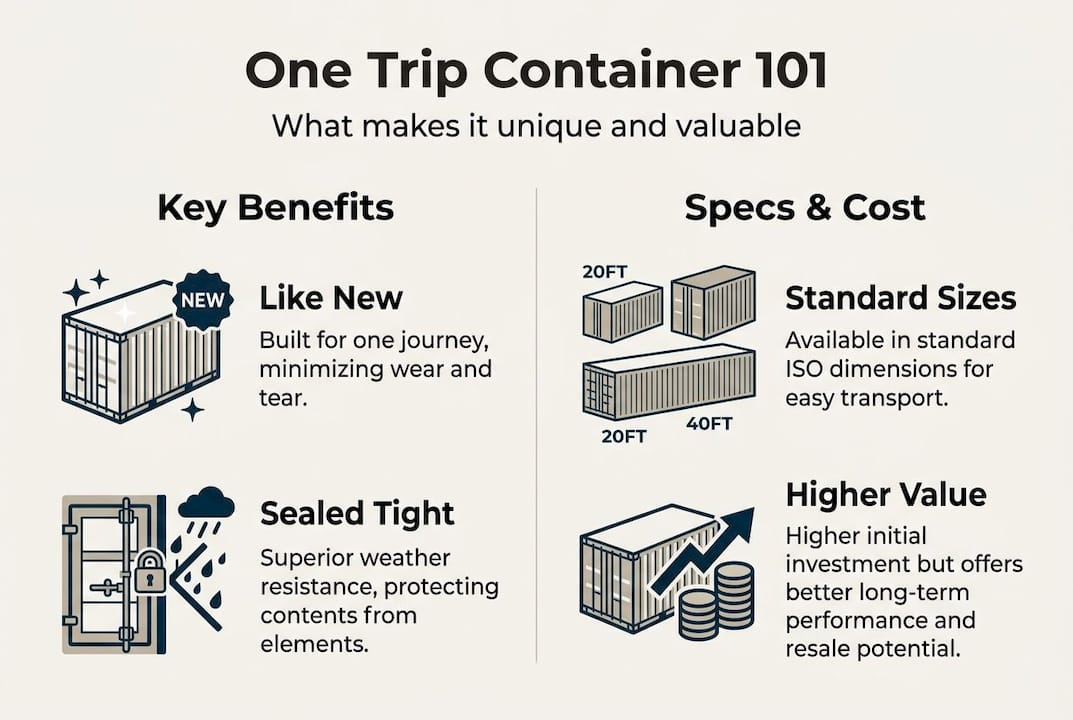
- A one trip container is a nearly new, single-use shipping unit that hasn't been reused or leased.
- Compared to used containers, one trip units offer better condition, resale value, and modification suitability.
- They are ideal for those seeking minimal maintenance, professional appearance, and long-term investment protection.
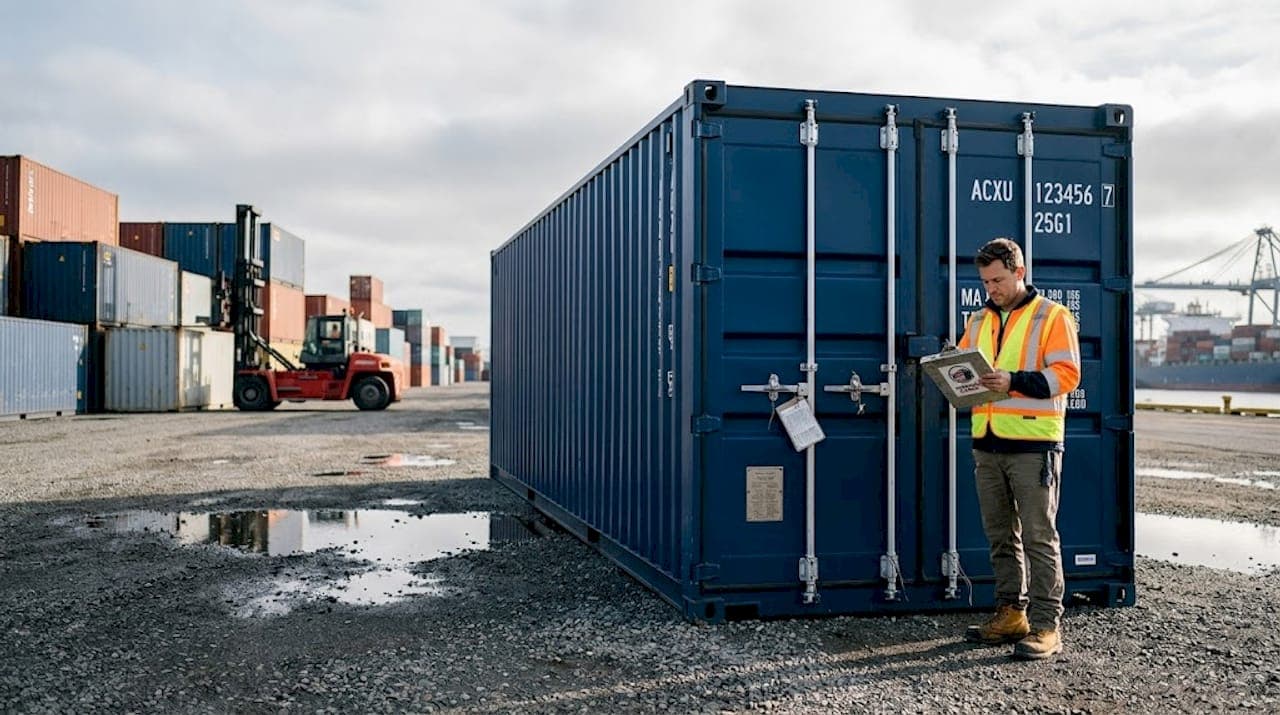
Most people hear "one trip container" and assume it means a container rented for a single one-way move. That's a costly misconception. A one trip container is a steel shipping container manufactured overseas, loaded with cargo for its first and only voyage to the United States, and then sold directly to buyers. It has never been reused, restacked, or leased. Understanding this distinction protects you from overpaying for the wrong product or, worse, accepting a worn-out unit when you expected something close to new. This guide walks you through exactly what defines a one trip container, how it compares to other options, and how to decide if it fits your needs.
Table of Contents
- What is a one trip container?
- How do one trip containers compare to used and new containers?
- When should you choose a one trip container?
- Buying a one trip container: budgeting, transport, and inspection tips
- The big picture: Why 'one trip' sometimes matters more than 'brand new'
- Find your perfect one trip container
- Frequently asked questions
Key Takeaways
| Point | Details |
|---|---|
| One trip explained | A one trip container has only been used for one shipment and arrives in nearly new condition. |
| Why it matters | Choosing a one trip container means lower maintenance, better resale value, and strong security. |
| Compare your options | One trip containers bridge the gap between used and new, balancing cost and reliability for most buyers. |
| Inspection is key | Always inspect or request photos of your container before purchasing, even if it is labeled as one trip. |
What is a one trip container?
A one trip container starts its life at a factory in China or another major manufacturing hub. It gets loaded with goods, sealed, and shipped across the ocean to a U.S. port. That single journey is the only cargo run it ever makes. Once it arrives and is unloaded, it enters the resale market. That's the entire history of a one trip container.
This is fundamentally different from a "one-way lease" container, which is a rental unit returned after a single trip under a leasing agreement. Mixing up these shipping container terms leads to real confusion when shopping, because the two products are priced and conditioned very differently.
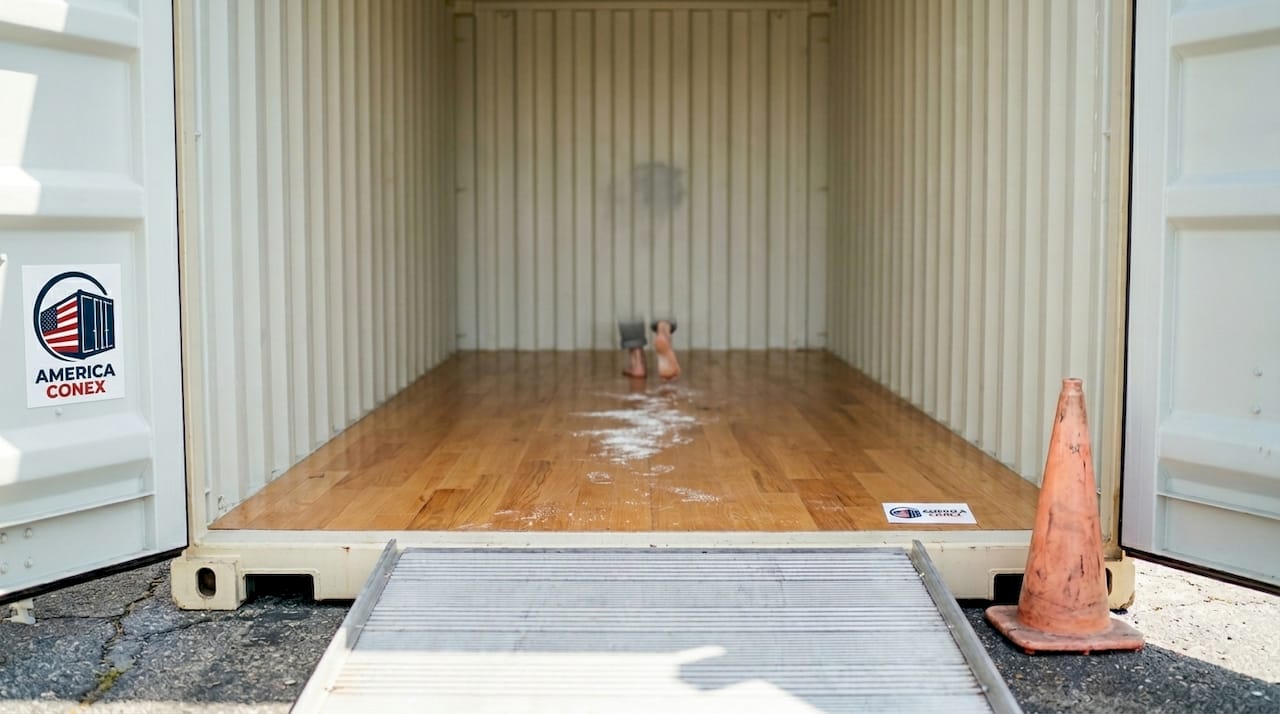
When you see a one trip container in person, the difference is obvious. The paint is fresh, the floors are clean hardwood or bamboo, the door seals are tight, and the locking hardware moves smoothly. There may be minor scuffs from port handling, but nothing structural. Think of it like a car with 200 miles on it. Technically used, but functionally brand new.
Here's how the three main container types compare side by side:
| Feature | One trip | Used (WWT/cargo worthy) | Brand new (factory order) |
|---|---|---|---|
| Condition | Near-new | Worn, repaired | Pristine |
| Price | Mid-range | Lowest | Highest |
| Availability | High | Very high | Low/custom order |
| Modification suitability | Excellent | Fair | Excellent |
| Resale value | Strong | Lower | Highest initially |
| Wait time | Short | Immediate | Weeks to months |
One trip containers come standard with the features that matter most for storage and shipping:
- Weatherproof steel construction rated for ocean-going conditions
- Lockable cargo doors with heavy-duty locking bars
- Cargo-worthy certification accepted for international shipping
- Clean interiors free from chemical residue or prior cargo contamination
"'One-trip' does not equal 'one-way' lease. For buyers prioritizing low maintenance and modifications, long-term ROI favors one-trip over used containers due to fewer repairs and stronger resale value."
Knowing what makes one trip containers different from other grades is the first step to making a smart purchase decision.
How do one trip containers compare to used and new containers?
With the basics covered, it makes sense to compare one trip containers to the other main options on the market. The choice between one trip, used, and brand new comes down to four factors: condition, durability, cost, and what you plan to do with the container.
| Category | One trip | Used | Brand new |
|---|---|---|---|
| Cosmetic quality | 9/10 | 5/10 | 10/10 |
| Structural integrity | Excellent | Good (if inspected) | Excellent |
| Upfront cost | Moderate | Low | High |
| Long-term maintenance | Low | Moderate to high | Very low |
| Best use case | Storage, mods, resale | Rugged outdoor use | Custom builds |
ROI favors one-trip containers for buyers who prioritize low maintenance and higher resale value over the long run. That's a meaningful advantage if you plan to sell the unit in a few years or convert it into a custom structure.
Here's a step-by-step way to think through which type fits your goals:
- Define your primary use. Storage, shipping, or modification? Each has different condition requirements.
- Set a realistic budget. Include delivery, site prep, and any planned upgrades.
- Assess your timeline. Used containers are available immediately. One trip containers are nearly as fast. Brand new units can take weeks.
- Think about resale. If you might sell in 3 to 5 years, one trip holds value better than used.
- Consider your location. Coastal and humid climates accelerate rust on containers with existing surface damage.
For residential storage, a used wind and water tight (WWT) container often does the job at a lower price point. For a business that needs a clean, professional-looking unit on a job site or retail lot, one trip is the obvious choice. For saving on container costs without sacrificing quality, one trip hits the sweet spot between used and brand new.
Pro Tip: If you're seriously considering a used container for rugged outdoor use, inspect it thoroughly before committing. Surface rust is manageable, but structural rust on corner castings or floor joists is a dealbreaker.
For buyers tracking container ROI trends heading into 2026, one trip units continue to outperform used containers in resale scenarios.
When should you choose a one trip container?
Once you know the differences, the next question is whether a one trip container is right for you. The answer depends on what you need the container to do and how long you plan to keep it.
One trip containers are the best fit when:
- You need a clean, professional appearance for a retail or office setting
- You're planning modifications like adding windows, insulation, or electrical
- You want minimal maintenance over the next several years
- You're storing sensitive goods that require a clean, odor-free interior
- You expect to resell the unit and want to protect your investment
- Your local climate is humid or coastal, where pre-existing rust accelerates damage
According to industry data, long-term ROI is superior for one-trip containers when modifications, security, and resale value are priorities. In fact, a significant portion of buyers who plan to modify containers specifically seek out one trip units because the clean walls and floors reduce prep work and material costs before any renovation begins.
Think about container storage efficiency as well. A one trip container's intact floor and seal integrity means you spend less time waterproofing or patching before you can actually use it.
For individuals who are still weighing whether to rent or buy containers, one trip units make the buy decision more attractive because you're getting a near-new asset that holds value.
Pro Tip: Before purchasing, think about your local weather patterns. A one trip container in a wet Pacific Northwest climate will outlast a used container with surface rust by several years, making the slightly higher upfront cost a genuine long-term saving.
If none of those scenarios apply and you just need basic covered storage on a tight budget, a used WWT container may serve you just fine. But for anything beyond simple storage, one trip is almost always the smarter starting point.
Buying a one trip container: budgeting, transport, and inspection tips
If you've decided a one trip container fits your needs, here's how to ensure a smooth buying experience from first quote to final delivery.
Budgeting basics: The purchase price is just the starting point. Factor in delivery fees (which vary by distance and access), site preparation such as gravel or concrete pads, and any planned modifications. A realistic budget for a 20ft one trip container in 2026 includes the unit cost, delivery, and a buffer for site work.
Inspecting a one trip container: Even near-new units deserve a thorough check. Follow these steps:
- Check the doors. Open and close both cargo doors. They should swing freely and latch without force.
- Inspect the floor. Look for soft spots, staining, or chemical odors that suggest cargo contamination.
- Examine the seals. Door gaskets should be intact, pliable, and free of cracks.
- Check for odor. Step inside and breathe. A clean one trip container smells like steel and wood, not chemicals.
- Review the exterior paint. Minor scuffs are normal. Deep rust spots or dents near corner castings are not.
- Verify documentation. Ask for the container's CSC plate and any available shipping records.
Thorough inspection is critical even for one trip units. While they're far less likely to have serious issues than used containers, verifying condition protects your investment.
For delivery, ask your provider about container transport options and whether tilt-bed or crane delivery is available for your site. Confirm access requirements, overhead clearance, and ground conditions in advance. Understanding secure container storage practices also helps you plan where and how to place your unit on arrival. If you want to understand what cargo worthy standards mean for your container's certification, it's worth reviewing before you sign anything.
Pro Tip: Always request recent interior and exterior photos before making final payment. A reputable supplier will provide them without hesitation. If they can't, that's a red flag worth taking seriously.
The big picture: Why 'one trip' sometimes matters more than 'brand new'
Beyond the benefits and steps, let's look at why experts often steer buyers toward one trip containers rather than pushing for brand new units.
Here's the honest take: most U.S. buyers do not need a factory-fresh container. What they need is a container that looks good, functions perfectly, requires minimal upkeep, and holds its value. One trip containers deliver all four of those things at a price point that brand new containers simply cannot match.
The buyers who genuinely need brand new are those with very specific cosmetic requirements, manufacturer warranties, or custom specifications that can't be met by existing inventory. That's a small group. For everyone else, one trip is the practical default.
"One-trip delivers near-new quality for less cost while preserving resale value for most buyers." That's not marketing language. It's the consistent finding when you compare total cost of ownership across container grades.
Used containers still have a place, especially for buyers on tight budgets who need basic outdoor storage and don't mind occasional maintenance. But the idea that used is always the budget-smart choice ignores repair costs, reduced resale value, and the extra prep work before modifications. Tracking container market insights for 2026 confirms that one trip pricing remains competitive, making the value case even stronger than it was a few years ago.
Find your perfect one trip container
Now that you understand what separates a one trip container from the alternatives, the next step is finding the right unit at the right price with reliable delivery.
At America Conex, we supply one trip containers in 20ft and 40ft standard and high cube configurations, delivered from 30+ depots across the United States. Whether you need secure portable storage, a clean unit for modifications, or a professional-grade container for your business, we make the buying process straightforward. Browse our full selection of shipping containers for sale and get a fast quote with transparent pricing and no surprises. Our team is ready to help you choose, deliver, and set up the right container for your specific situation.
Frequently asked questions
How can I tell if a container is truly 'one trip'?
Request the manufacturer's documentation and shipping records, and inspect the unit for minimal wear. Physical condition validates the one trip claim better than any label alone.
Are one trip containers better for modifications than used containers?
Yes. Clean walls, intact floors, and odor-free interiors mean less prep work before you start. Long-term ROI is best for modifications when starting with a one trip unit.
Do one trip containers cost more than used containers?
Yes, the upfront price is higher, but fewer repairs and higher resale make one trip containers more cost-efficient over time for most buyers.
Is a 'one trip' container new or used?
Technically used, since it completed one cargo voyage, but it delivers a near-new experience. Shipped only once from factory to destination means minimal wear and no reuse history.